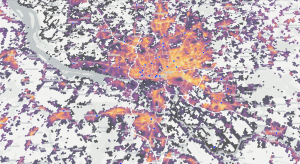
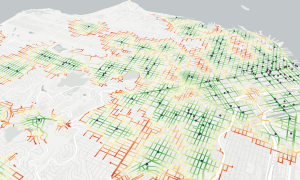










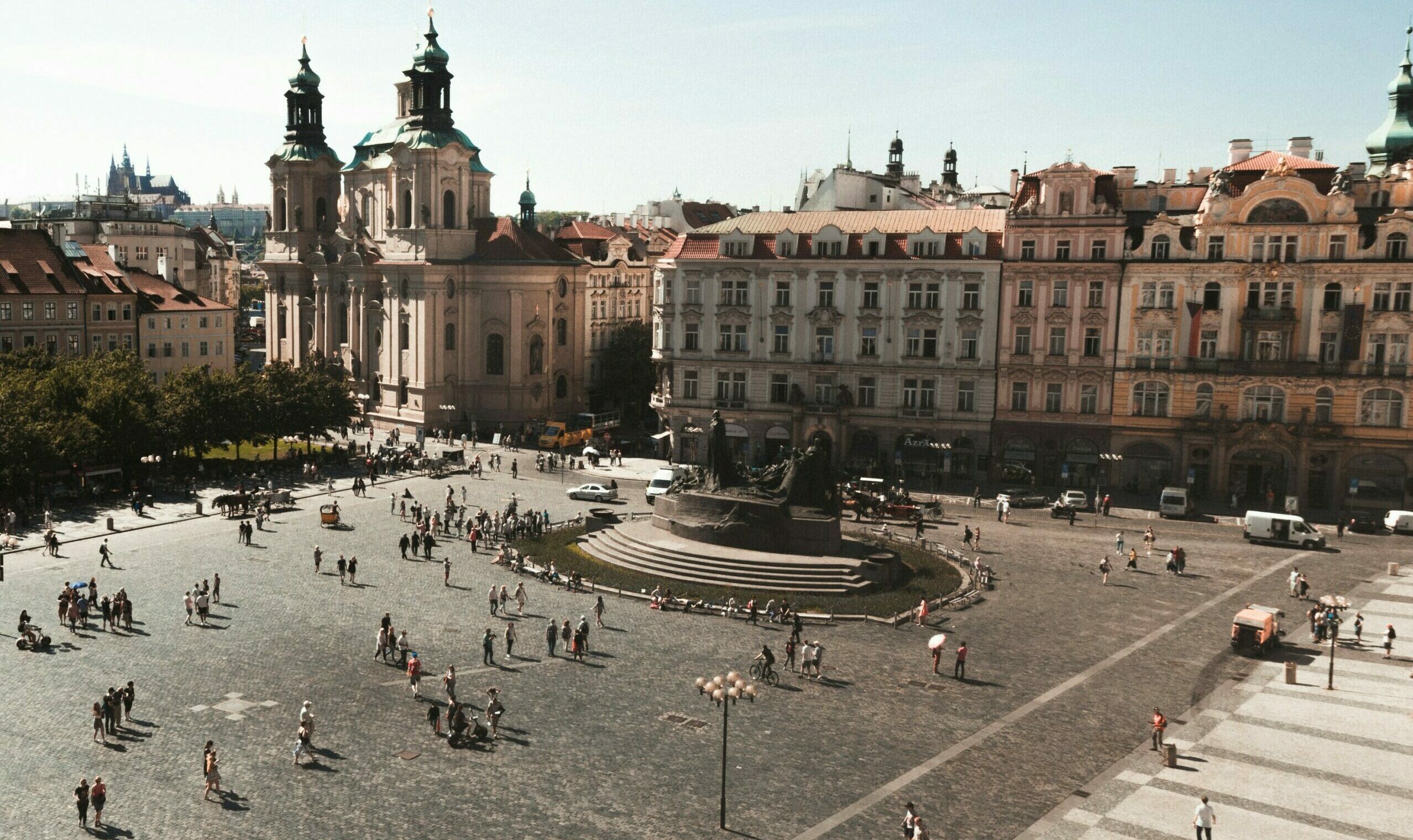
Choosing the right location is a key decision in retail expansion. Often, the busiest places are not always the most obvious. To support more confident retail site selection, this article ranks Czechia’s top footfall spots using Targomo’s 2025 foot traffic data.
The analysis is split into three top 10 rankings. First, we identify the busiest street-level locations in Czechia, with the highest average daily pedestrian flows. Second, we look specifically at tourist footfall, highlighting the places with the highest tourist flow. For both of these rankings, each figure refers to the busiest measured point in a small area, such as a street segment, square or intersection within roughly a 20-metre radius. The mall ranking uses a different metric: total average daily visitors across each shopping centre.
Terminology note: In this article, footfall refers to estimated pedestrian activity at a specific location. In Czech, similar concepts are often described as pěší provoz or návštěvnost, depending on whether the focus is street-level movement or visitor numbers.
Jump to:
Top 10 Footfall Spots in Czechia by Daily Pedestrian Traffic
The highest footfall locations in Czechia are concentrated in Prague, especially around Charles Bridge, Wenceslas Square, Anděl and Prague Castle. But the top 10 also shows strong pedestrian activity in Brno, Karlovy Vary and České Budějovice. For expansion teams, this ranking shows where daily movement is actually concentrated at street, square and intersection level.
| City | Place | Daily Footfall |
|---|---|---|
| Prague | Křižovnické náměstí | 72,380 |
| Prague | Václavské náměstí | 61,760 |
| Brno | Náměstí Svobody | 34,130 |
| Prague | Anděl, Smíchov | 27,510 |
| Prague | Hradčanské náměstí | 21,580 |
| Karlovy Vary | Mlýnské nábřeží | 15,450 |
| Karlovy Vary | T. G. Masaryka | 12,930 |
| Prague | Na Poříčí | 12,510 |
| České Budějovice | Lannova třída | 11,990 |
| Ústí nad Labem | Mírové náměstí | 9,150 |
1. Křižovnické Náměstí, Prague: 72,380 daily footfall
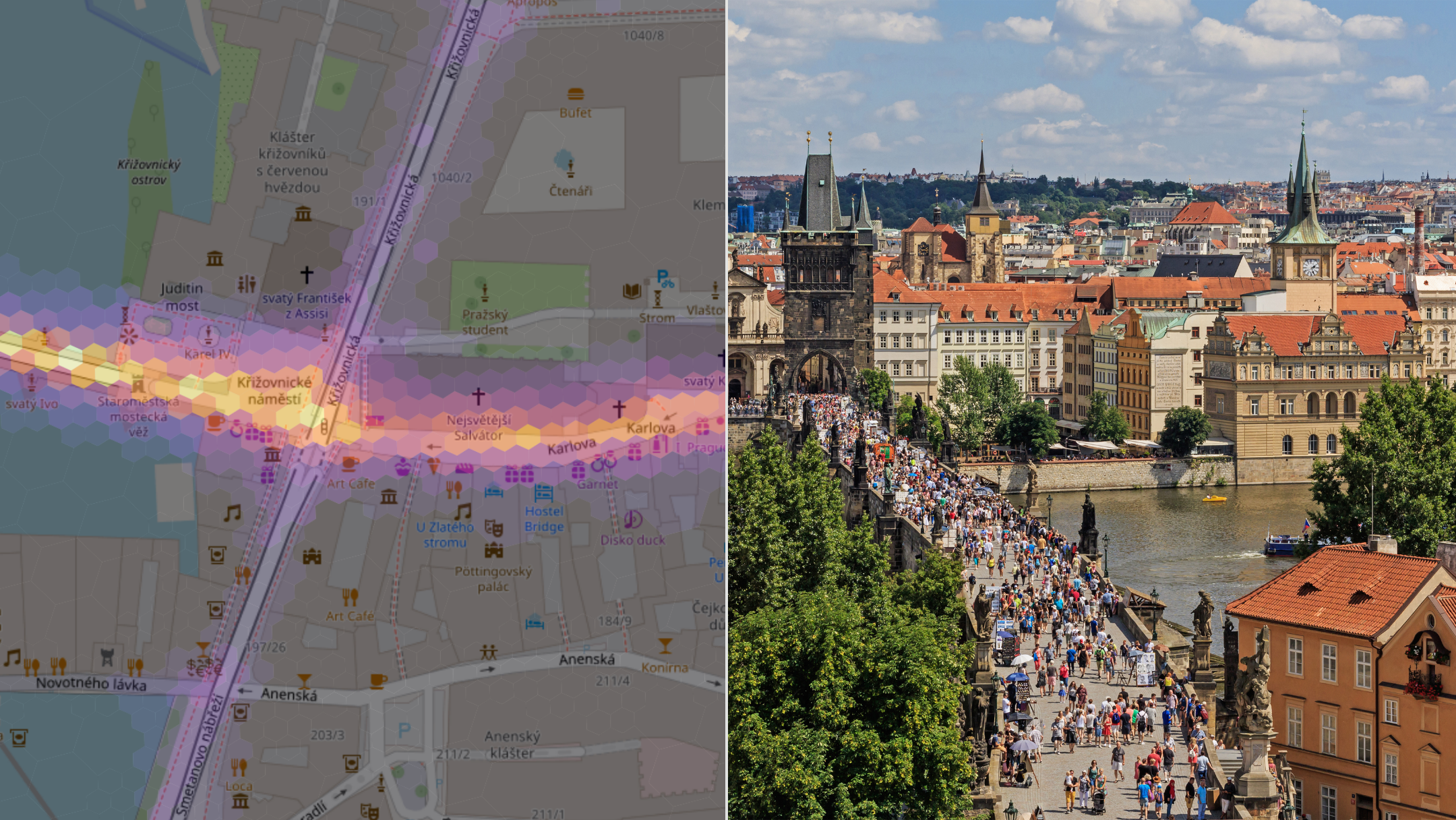
Křižovnické náměstí sits at one of the most heavily trafficked crossroads in the Czech Republic, where the eastern end of Charles Bridge (Karlův Most) meets the Old Town’s street network, with the Church of St. Francis of Assisi and the Old Town Bridge Tower on either side. Our data records more than 72,000 pedestrians passing through this compact square, making it the single busiest location in Czechia. The square acts as a natural funnel between Charles Bridge and Karlova Street, the main route leading toward Old Town Square, meaning that almost anyone crossing the river on foot passes directly through here. That combination of historic architecture, river views, and a position at the heart of Prague’s most-walked corridor explains why foot traffic here outpaces every other location in the country.
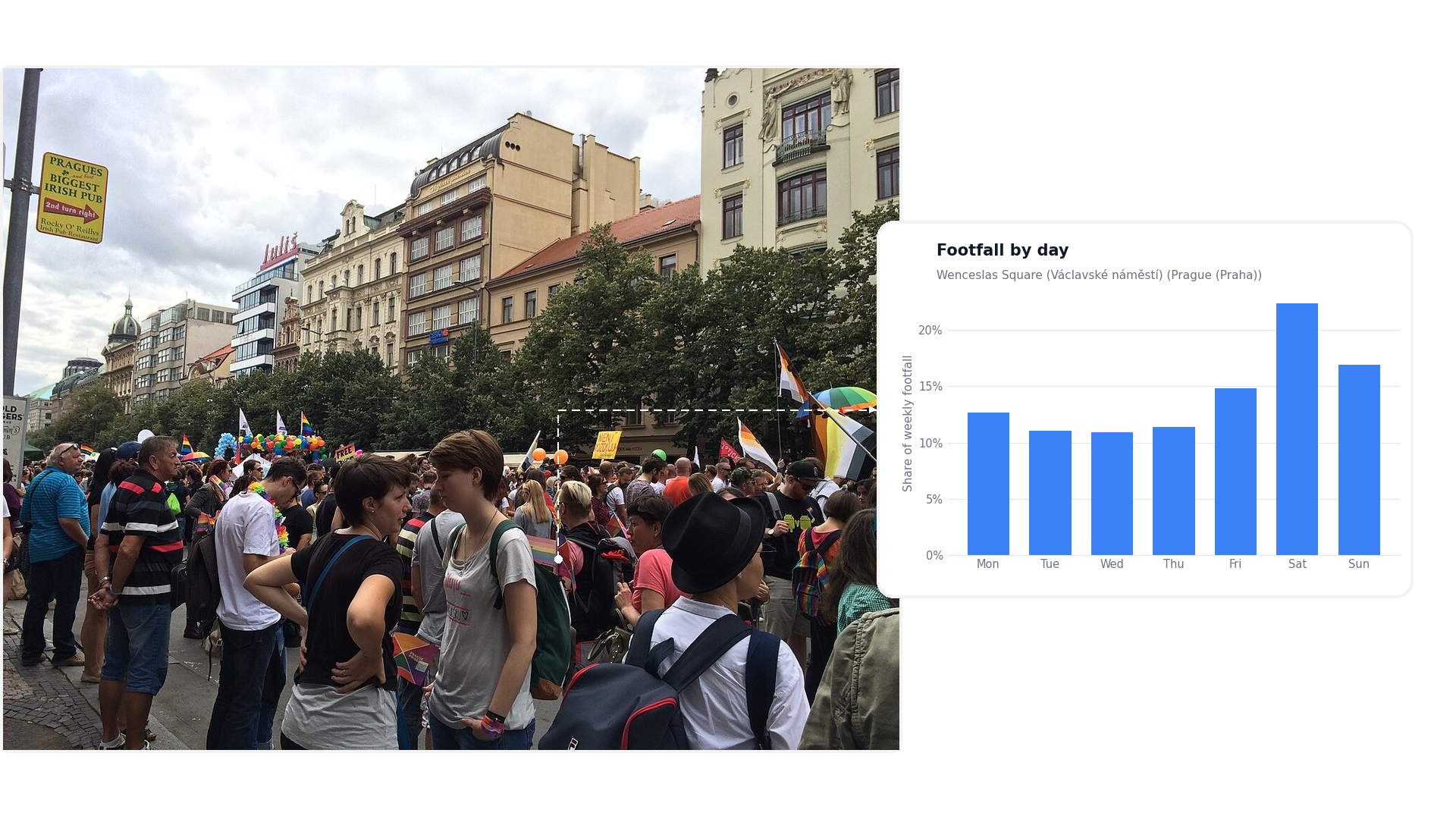
2. Wenceslas Square, Prague: 61,760 daily footfall
Václavské náměstí (Wenceslas Square) is the commercial and cultural spot of Prague’s New Town, a broad boulevard lined with shops, hotels, and restaurants stretching from the National Museum down to the Můstek metro junction. The strongest footfall is concentrated near Můstek, at the lower end of Wenceslas Square, where metro access, shopping passages, and pedestrian flows from Prague’s Old Town come together. With more than 61,000 people recorded here, Wenceslas Square is the country’s most frequented urban boulevard.
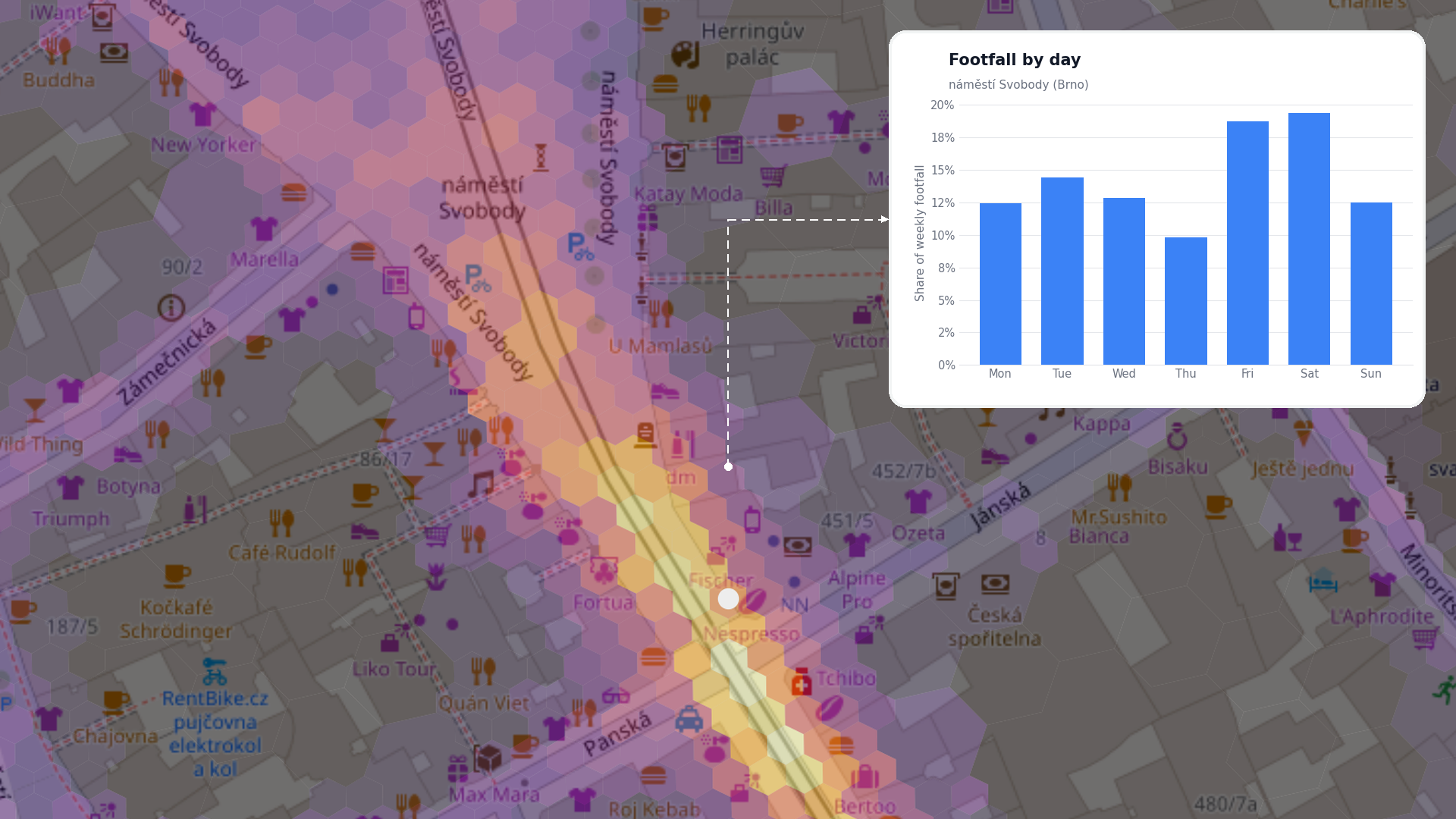
3. Náměstí Svobody, Brno: 34,130 daily footfall
Náměstí Svobody is the central square at the heart of Brno’s pedestrian retail core, flanked by the tram lines running along Masarykova and surrounded by a dense concentration of shops, banks, and fashion chains. Our data records more than 34,000 pedestrians at the lower section of the square near the junction with Masarykova, where foot traffic peaks as people move between the tram stops, náměstí Svobody’s retail frontages, and the connecting streets of Panská and Česká. The square draws a steady flow throughout the day thanks to its role as both a transit interchange and a shopping destination, with international brands and local retailers lining its arcaded buildings. That combination of public transport access and retail density makes náměstí Svobody the busiest location in Brno.
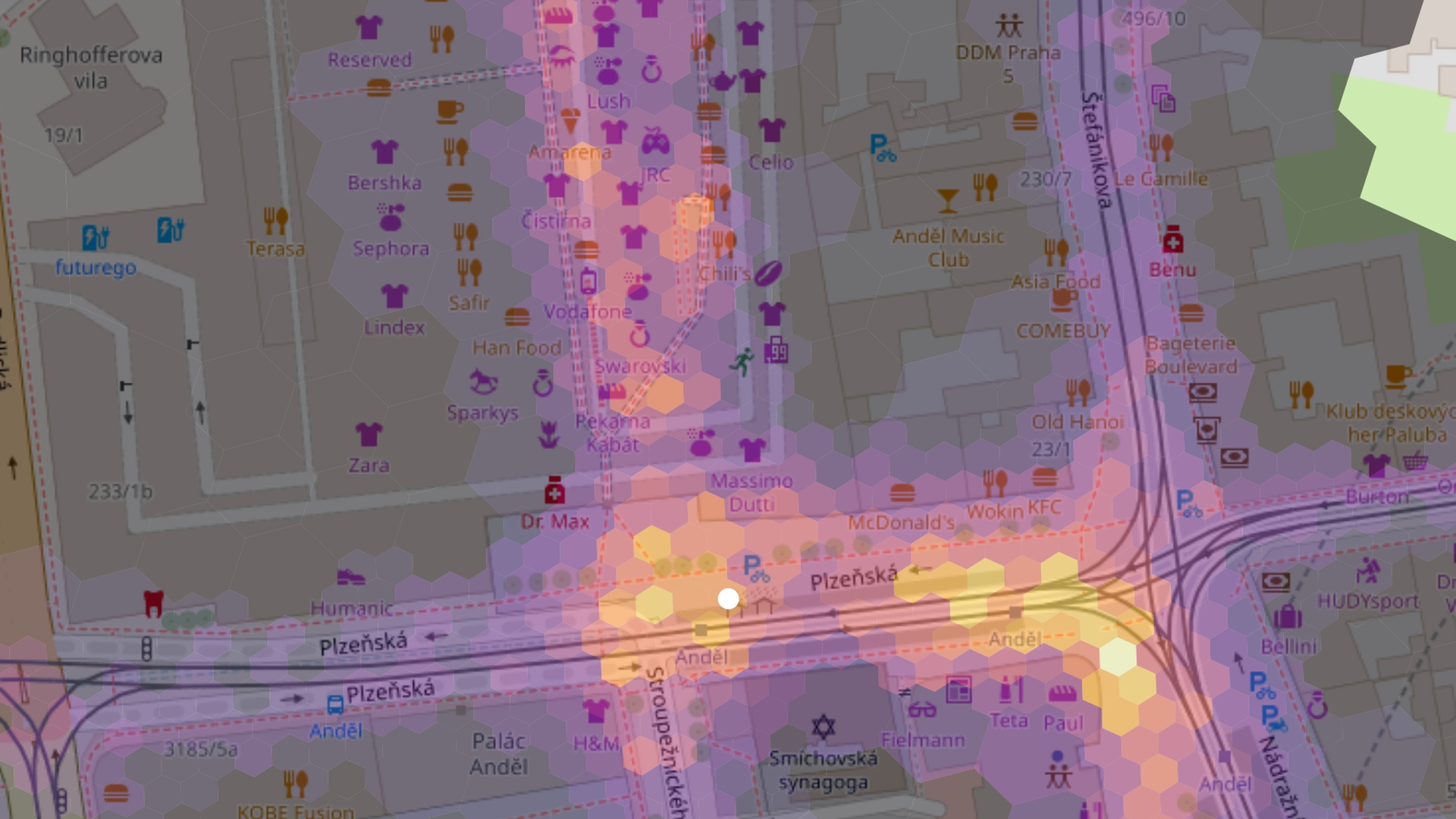
4. Anděl, Prague: 27,510 daily footfall
Anděl is Prague 5’s main commercial hub, where Plzeňská meets the Stroupežnického and Nádražní corridors at a busy multi-level intersection served by the Anděl metro station. Our data show more than 27,000 pedestrians concentrated around the Anděl metro exit and the surrounding retail cluster, with retailers like H&M, Zara, Sephora, and a dense run of fashion and food outlets stretching along the pedestrian passage toward Stroupežnického. The area draws a steady flow of people throughout the day as it functions simultaneously as a transit hub for commuters heading into and out of the city centre, and as a standalone shopping destination for residents of Smíchov and the broader left-bank neighbourhoods.
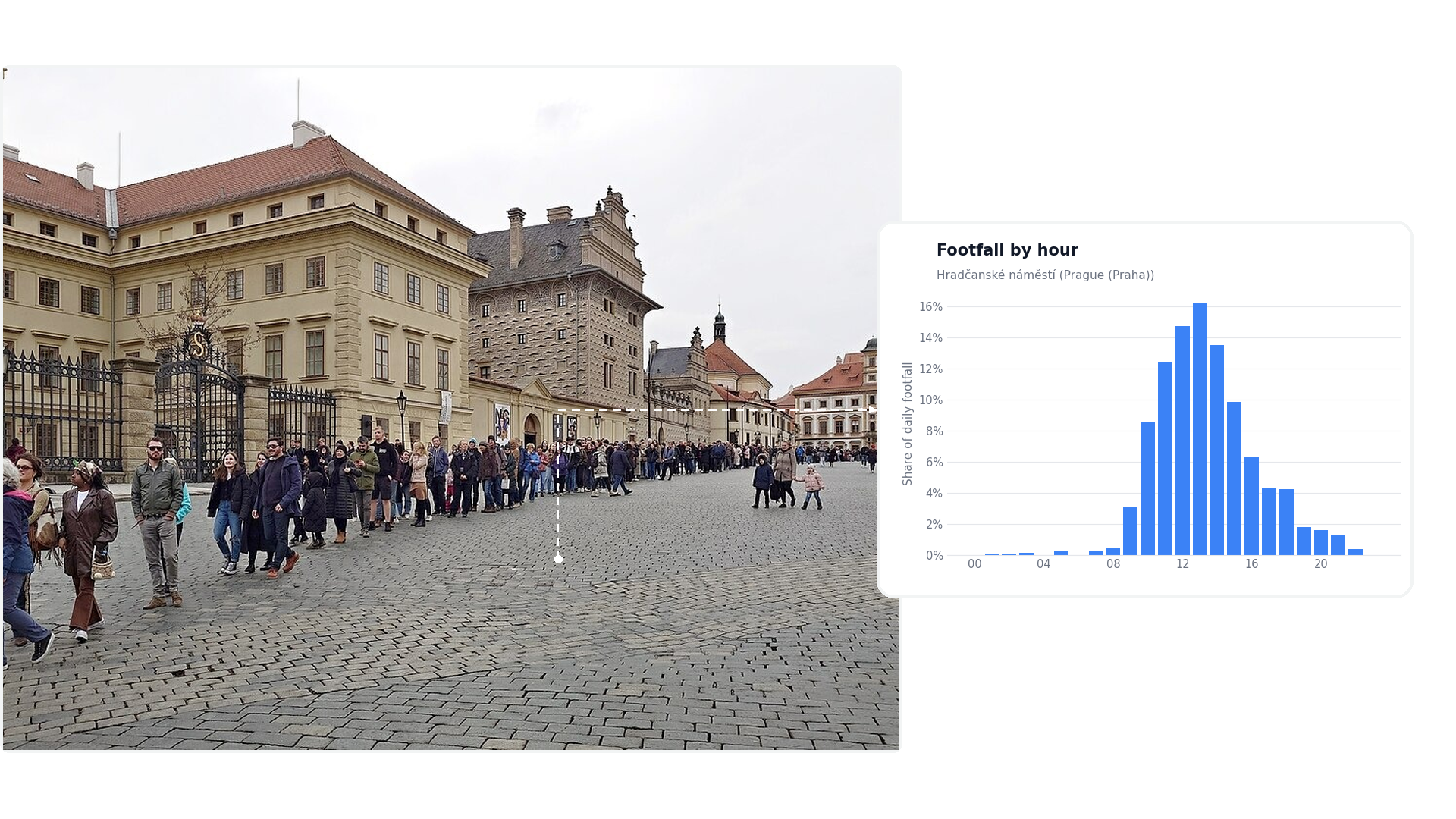
5. Hradčanské náměstí, Prague: 21,580 daily footfall
Hradčanské náměstí is the grand square that forms the ceremonial forecourt of Prague Castle (Pražský hrad), flanked by the Schwarzenberg Palace, the Archbishop’s Palace, and the Sternberg Palace, with the main castle gate and First Courtyard directly accessible via Ke Hradu. Our data records more than 21,000 pedestrians concentrated at the eastern end of the square where Ke Hradu leads up toward the castle entrance, reflecting the steady stream of people making their way to one of Europe’s most-visited historic complexes. The square’s position as the last open space before the castle gates — combined with its role as a gathering point along the route from Nerudova Street and the Lesser Town (Malá Strana) below — ensures a consistent flow of people throughout the day, making Hradčanské náměstí the fifth busiest location in the Czech Republic.
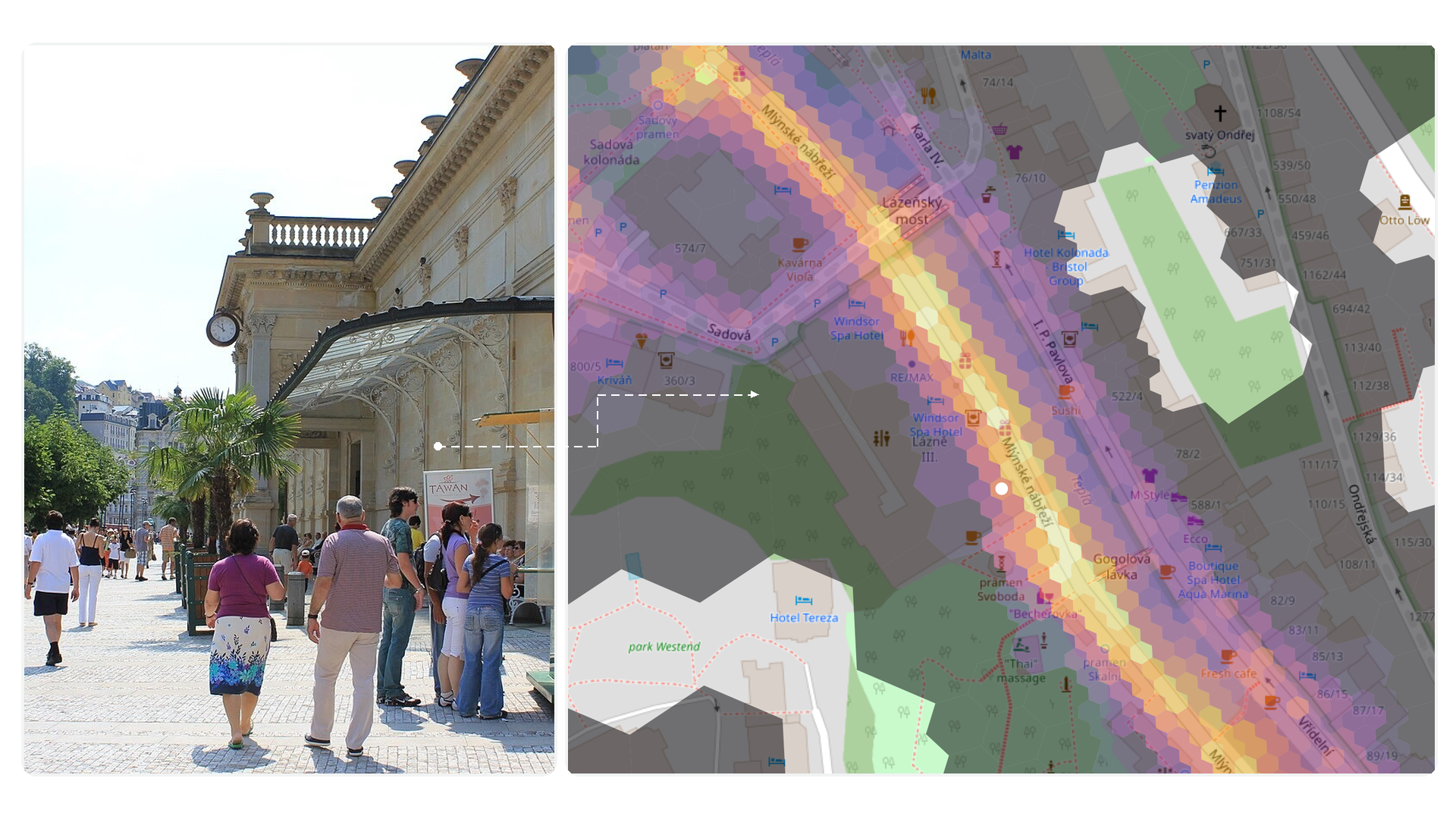
6. Mlýnské nábřeží, Karlovy Vary: 15,450 daily footfall
Mlýnské nábřeží is the promenade running along the Teplá River through the centre of Karlovy Vary’s spa district, one of Central Europe’s premier spa destinations. The footfall peak sits along the stretch between Lázeňský most and the Gogolova lávka footbridge, where pedestrians moving between the Mill Colonnade and the spa springs converge on the narrow riverside walkway. With more than 15,000 people recorded here, Mlýnské nábřeží reflects the steady flow of pedestrians who make this colonnade-lined promenade the central point of daily life in Karlovy Vary.
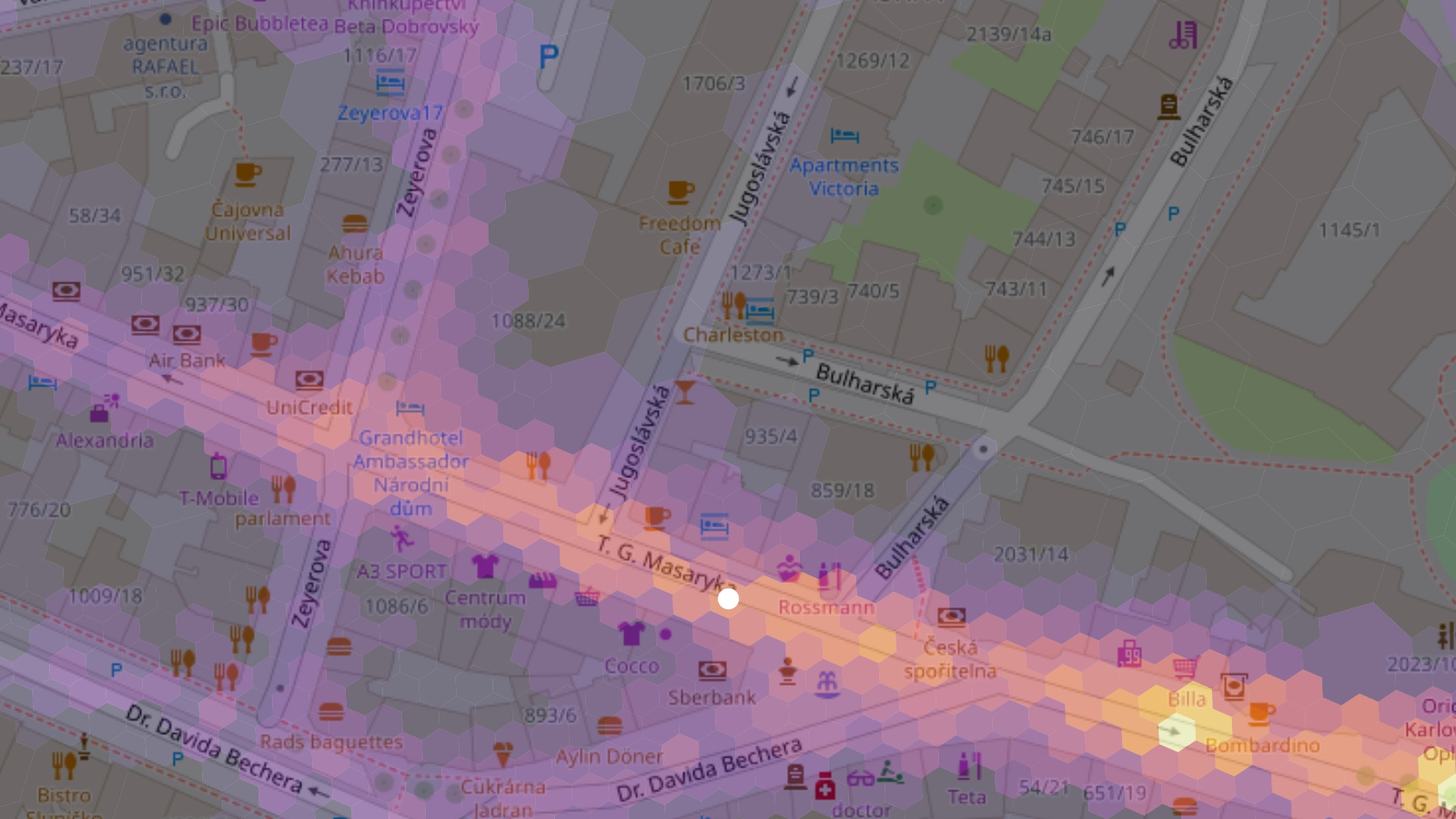
7. T. G. Masaryka, Karlovy Vary: 12,930 daily footfall
T. G. Masaryka is the main commercial street running through the upper part of Karlovy Vary’s town centre, connecting the spa district with the broader city and lined with fashion retailers, pharmacies, banks, and restaurants including a Rossmann and Česká spořitelna branch near the point of peak footfall. Our data records nearly 13,000 pedestrians concentrated around the mid-section of the street at its junction with Jugoslávská, where the flow from the spa promenade meets the everyday retail and service traffic of the residential neighbourhoods above. That position bridges the internationally known cure quarter around Mlýnské nábřeží and the more locally oriented streets stretching toward Dr. Davida Bechera and Krále Jiřího.
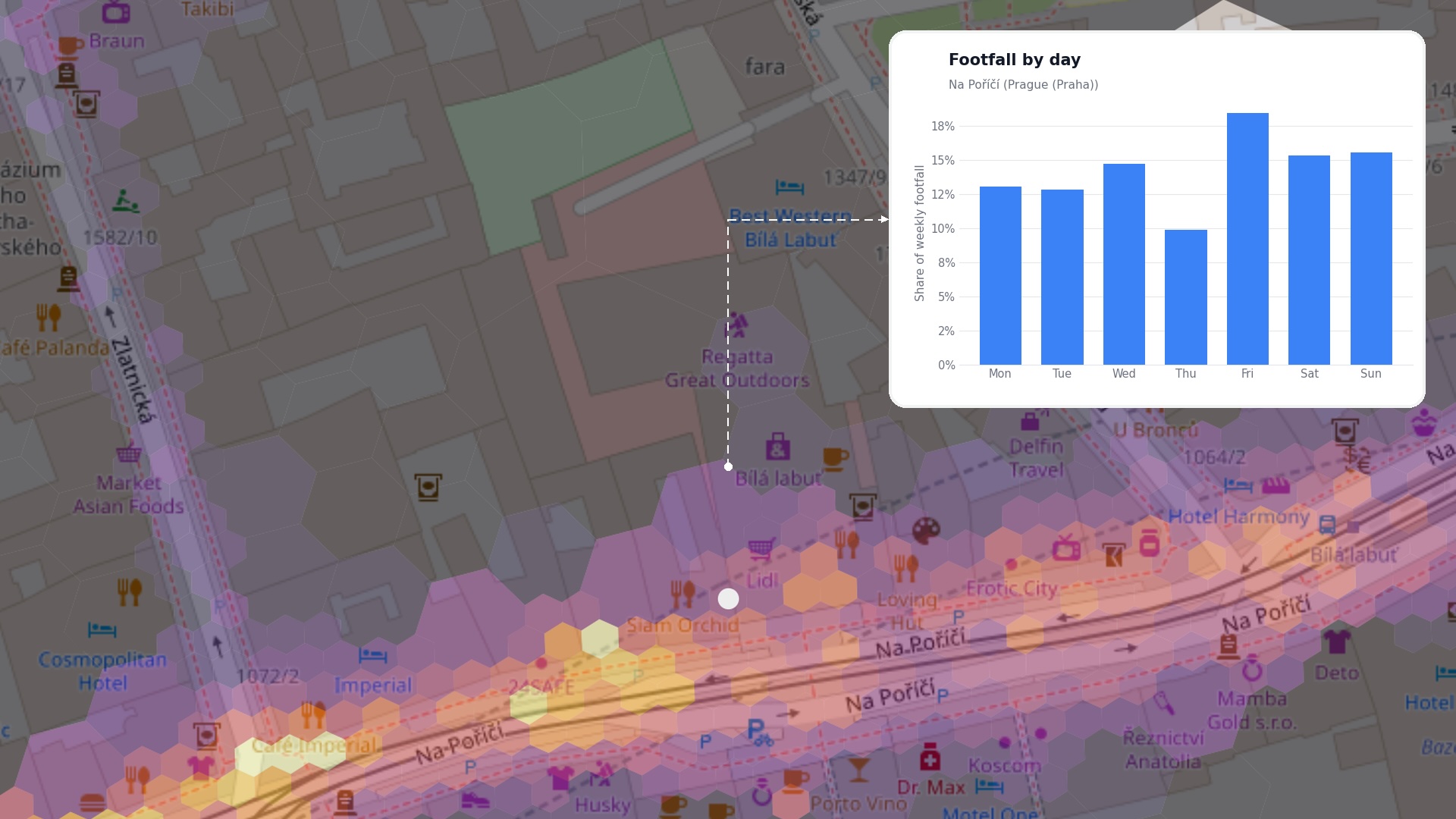
8. Na Poříčí, Prague: 12,510 daily footfall
Na Poříčí is one of Prague’s busiest inner-city thoroughfares, running east from the Havlíčkova junction through the Nové Město toward Florenc, and serving as a key corridor between the city centre and the main bus terminal. The footfall peak sits near the western end of the street around the Havlíčkova intersection, where pedestrians moving along Na Poříčí converge with those emerging from the surrounding hotels, offices, and retailers such as Lidl, with the landmark Café Imperial just steps away. With around 12,500 people recorded here, Na Poříčí is as a well-travelled artery connecting the commercial core of Prague’s New Town with the city’s wider transit network.
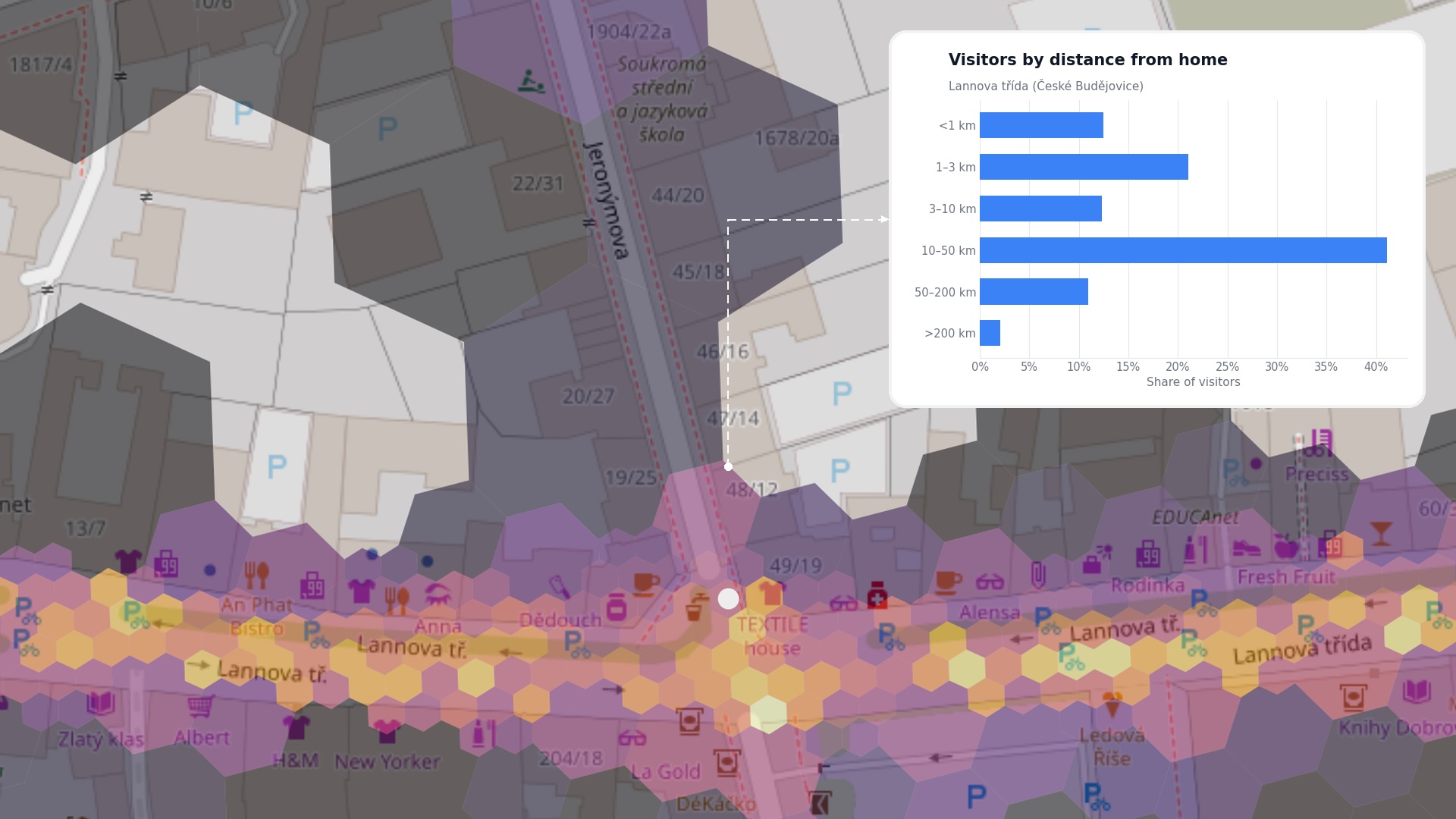
9. Lannova třída, České Budějovice: 11,990 daily footfall
Lannova třída is the main pedestrian shopping street running through the heart of České Budějovice, connecting the city’s historic centre with the broader retail network and lined with fashion chains including H&M and New Yorker, alongside pharmacies, opticians, and everyday service shops. Our data records nearly 12,000 pedestrians concentrated at the point where Jeronýmova crosses the street, marking the busiest stretch of the pedestrian zone as people move between the surrounding retail frontages and the nearby Náměstí Přemysla Otakara II. The street draws a steady flow throughout the day from shoppers, commuters, and people passing between the city’s historic core and the retail corridors extending toward Rudolfovská, making Lannova třída the busiest location in České Budějovice and the ninth busiest in the Czech Republic.
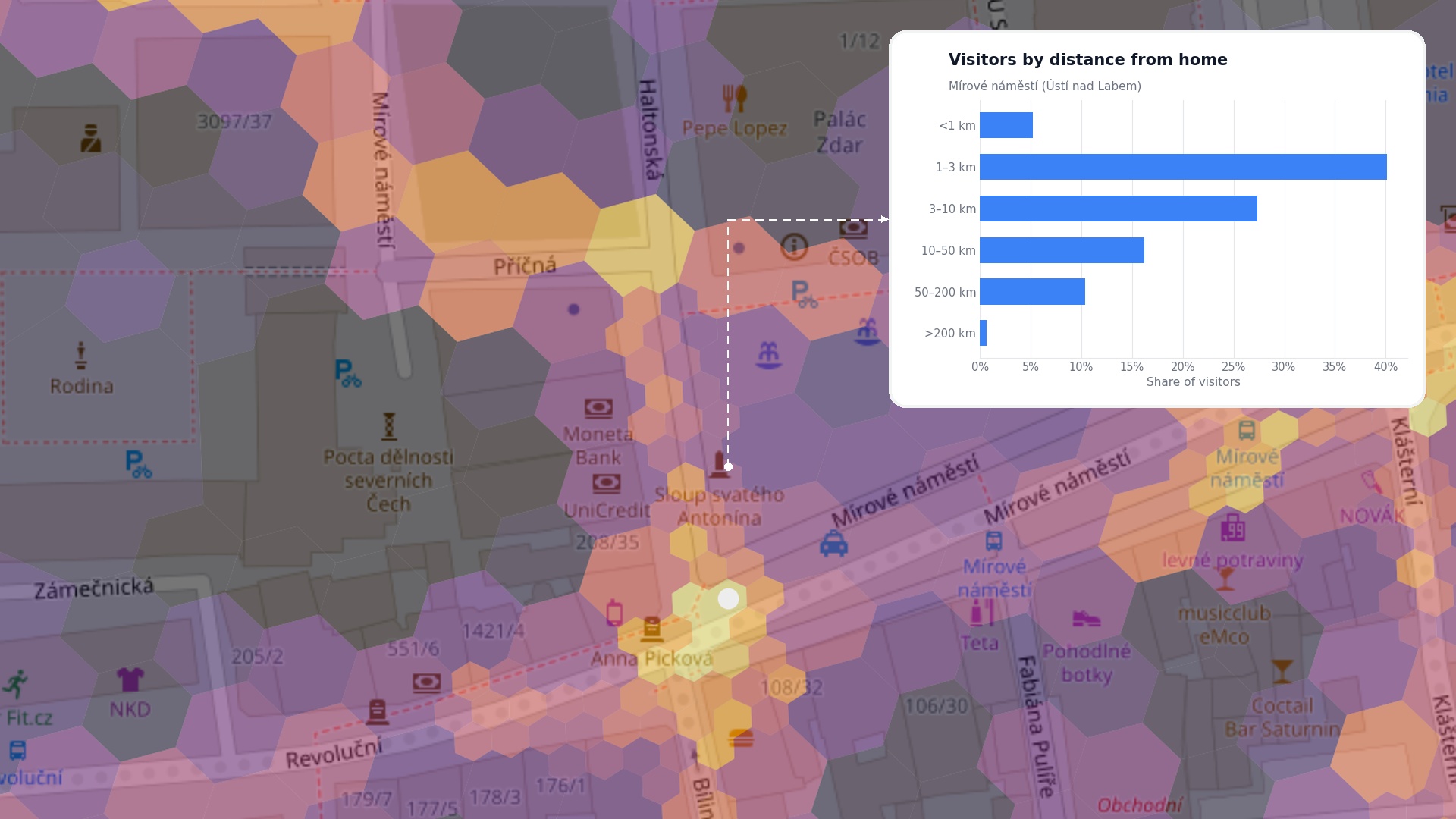
10. Mírové náměstí, Ústí nad Labem: 9,150 daily footfall
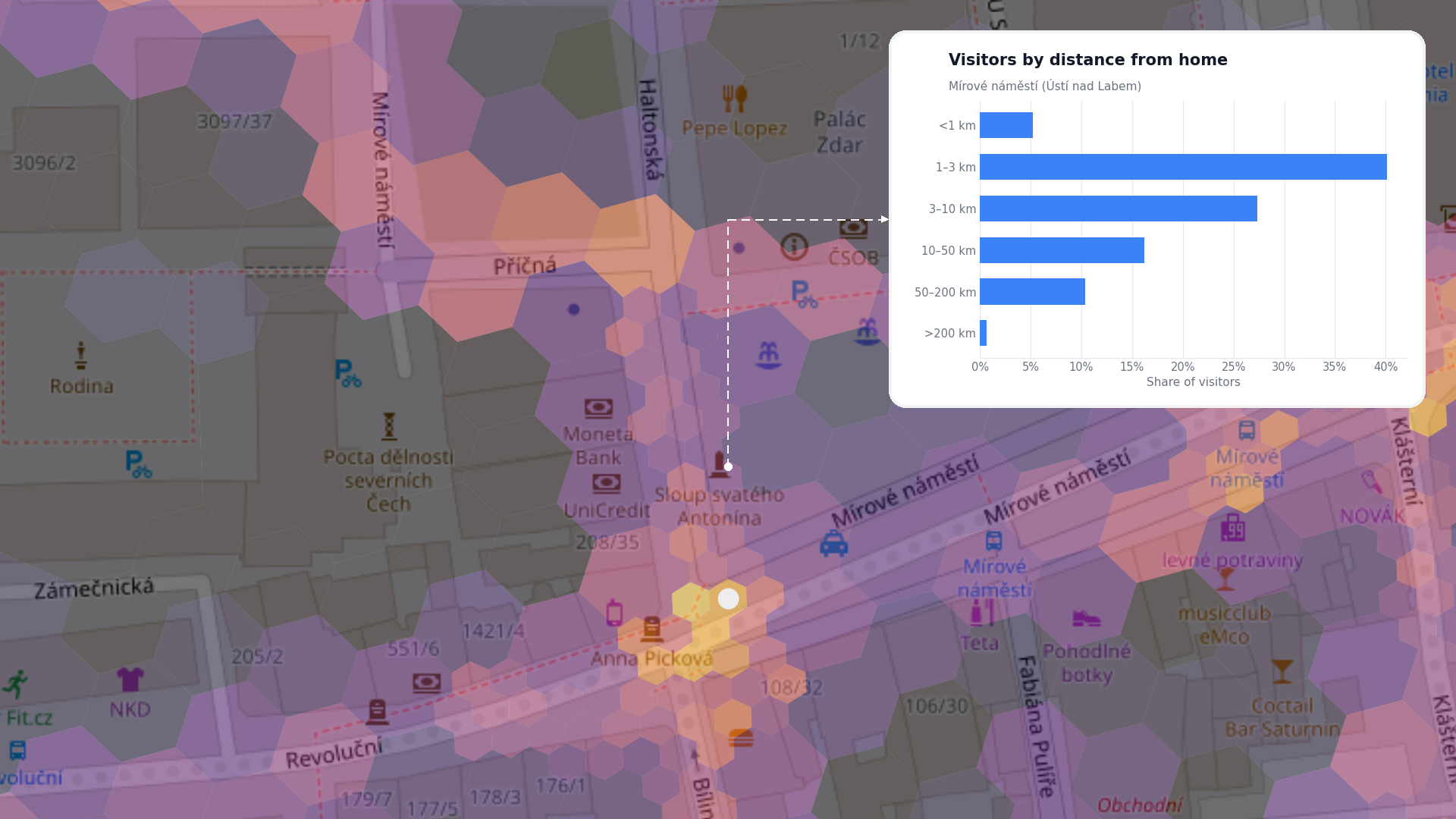
Mírové náměstí is the central square of Ústí nad Labem’s pedestrian retail zone. It is surrounded by banks, shops and service outlets, including UniCredit, Moneta Bank and ČSOB. The busiest point is on the western side of the square, near Příčná and Haltonská. Around 9,000 pedestrians pass through this area daily, where the square’s retail frontages connect with routes toward Revoluční and the wider city centre. That position at the crossroads of the main pedestrian routes through Ústí nad Labem’s commercial core makes Mírové náměstí the busiest location in the city and the tenth busiest in the Czech Republic.
Top 10 Tourist Hotspots by Foot Traffic in Czechia
Tourist footfall gives a different view of Czechia’s busiest places. In this ranking, the strongest locations rank by tourist footfall — pedestrians who live more than 50 kilometres away. To focus on genuinely tourist-driven places, the ranking only includes locations where tourists account for at least 70% of total footfall.
Prague’s historic routes dominate the top of the ranking, especially around Charles Bridge, Old Town and Prague Castle. But the list also shows the strength of spa towns, heritage destinations and nature tourism, with Karlovy Vary, Český Krumlov, Adršpach, Luhačovice and Mariánské Lázně all appearing in the top 10.
| City | Place | Daily Footfall | Daily Tourist Footfall |
|---|---|---|---|
| Prague | Křižovnické náměstí | 72,380 | 63,320 |
| Prague | Celetná Street | 34,060 | 27,490 |
| Prague | Hradčanské náměstí | 21,580 | 18,990 |
| Karlovy Vary | Mlýnské nábřeží | 15,450 | 11,680 |
| Český Krumlov | Radniční Street, Český Krumlov | 8,720 | 7,830 |
| Prague | Charles Square (Karlovo náměstí) | 6,980 | 5,430 |
| Adršpach | Adršpach Rock Town (Adršpašské skalní město) | 4,910 | 4,420 |
| Prague | Strahovské nádvoří, Prague | 3,730 | 3,100 |
| Luhačovice | Dr. Veselého, Luhačovice | 3,640 | 3,010 |
| Mariánské Lázně | Masarykova, Mariánské Lázně | 3,720 | 2,910 |
1. Křižovnické náměstí, Prague: 63,320 daily tourist footfall
Already the busiest location in our overall Czech ranking, Křižovnické náměstí is also the single most tourist-heavy spot in the country, with well over 60,000 of its daily pedestrians classified as tourists, a share that reflects its position at the foot of Charles Bridge, framed by the Old Town Bridge Tower and the Church of St. Francis of Assisi.
2. Celetná, Prague Old Town: 27,490 daily tourist footfall
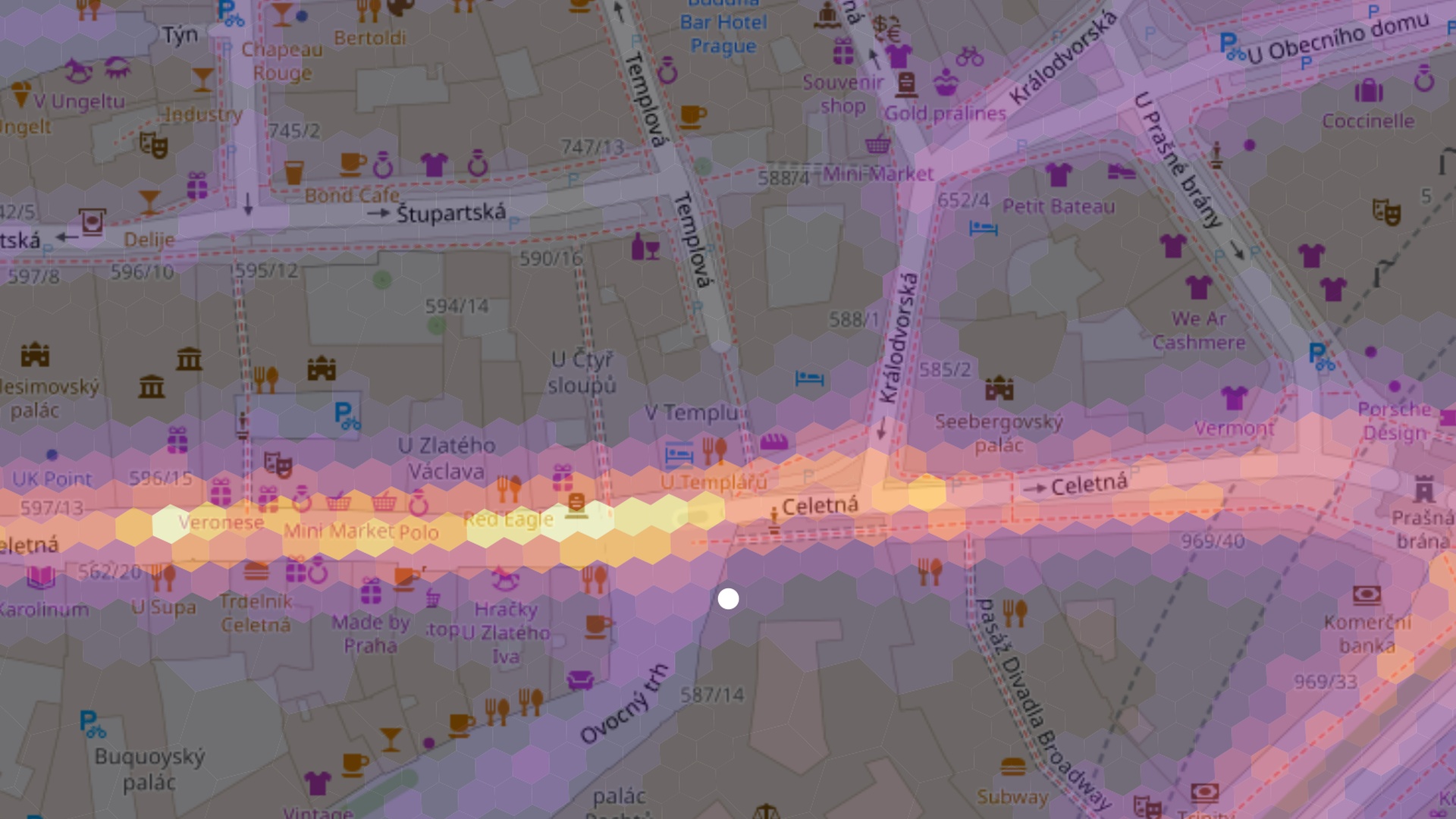
Celetná Street is one of Prague’s oldest thoroughfares, running from Old Town Square (Staroměstské náměstí) eastward to the Powder Gate (Prašná brána), passing the Karolinum and a succession of Baroque palaces now home to souvenir shops, restaurants, and boutiques. The map confirms that peak footfall falls along the central stretch of Celetná itself, where the dense flow of people moving between Old Town Square and náměstí Republiky is at its most concentrated. With more than 27,000 daily pedestrians — around 27,000 of whom are tourists — Celetná ranks as one of the most tourist-heavy streets in the entire country, functioning less as an everyday shopping corridor and more as a processional route through the heart of medieval Prague.
3. Hradčanské náměstí, Prague: 18,990 daily tourist footfall
Already the fifth busiest location in our overall Czech ranking, Hradčanské náměstí earns its place near the top of the tourist chart too. With nearly 19,000 of its daily pedestrians classified as tourists, the square’s draw is almost entirely explained by its role as the gateway to Prague Castle, one of the most-visited historic complexes in Europe.
4. Mlýnské nábřeží, Karlovy Vary: 11,680 daily tourist footfall
Mlýnské nábřeží is already the sixth busiest location in the overall Czech ranking. It draws most of its footfall from tourists, with more than 11,000 daily pedestrians classified as non-local visitors. This reflects the strong pull of Karlovy Vary’s spa district, where the Mlýnská kolonáda, nearby springs and historic promenade attract visitors throughout the day.
5. Radniční Street, Český Krumlov: 7,830 daily tourist footfall
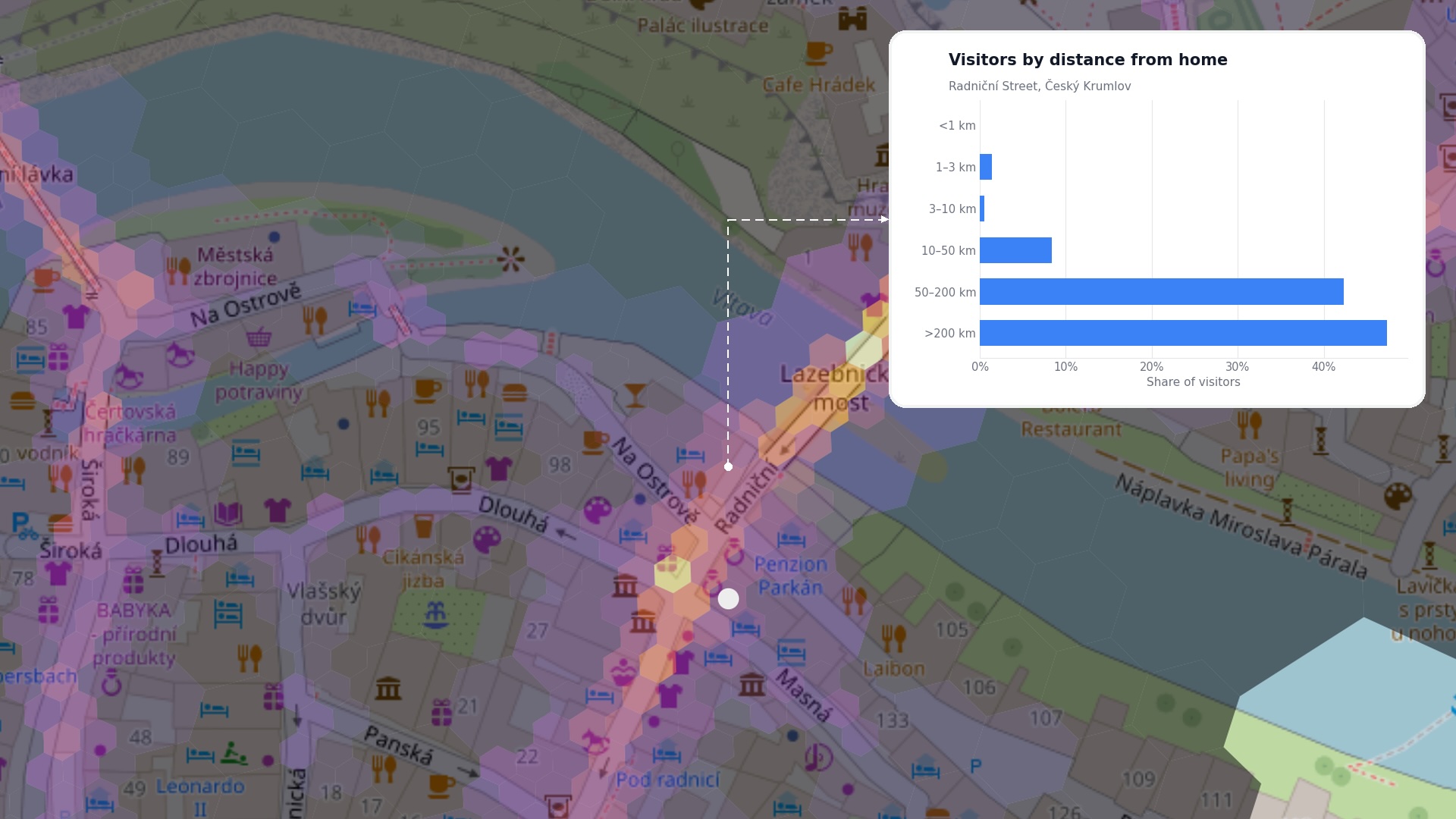
Radniční Street runs through the medieval core of Český Krumlov’s Old Town, connecting náměstí Svornosti (the town’s central square) northward toward Lazebnický most and the bend in the Vltava River that wraps around Český Krumlov Castle, one of the largest and best-preserved castle complexes in Central Europe. The white dot on the map places peak footfall on Radniční itself, just south of its junction with Na Ostrově, where the flow of people moving between the castle quarter and the town square is at its most concentrated. With nearly 9,000 daily pedestrians and close to 8,000 of those classified as tourists, this compact street captures almost the entire appeal of Český Krumlov in a single stretch — a UNESCO-listed old town where the castle, the river, and the historic street plan draw a steady flow of people throughout the day.
6. Charles Square, Prague: 5,430 daily tourist footfall
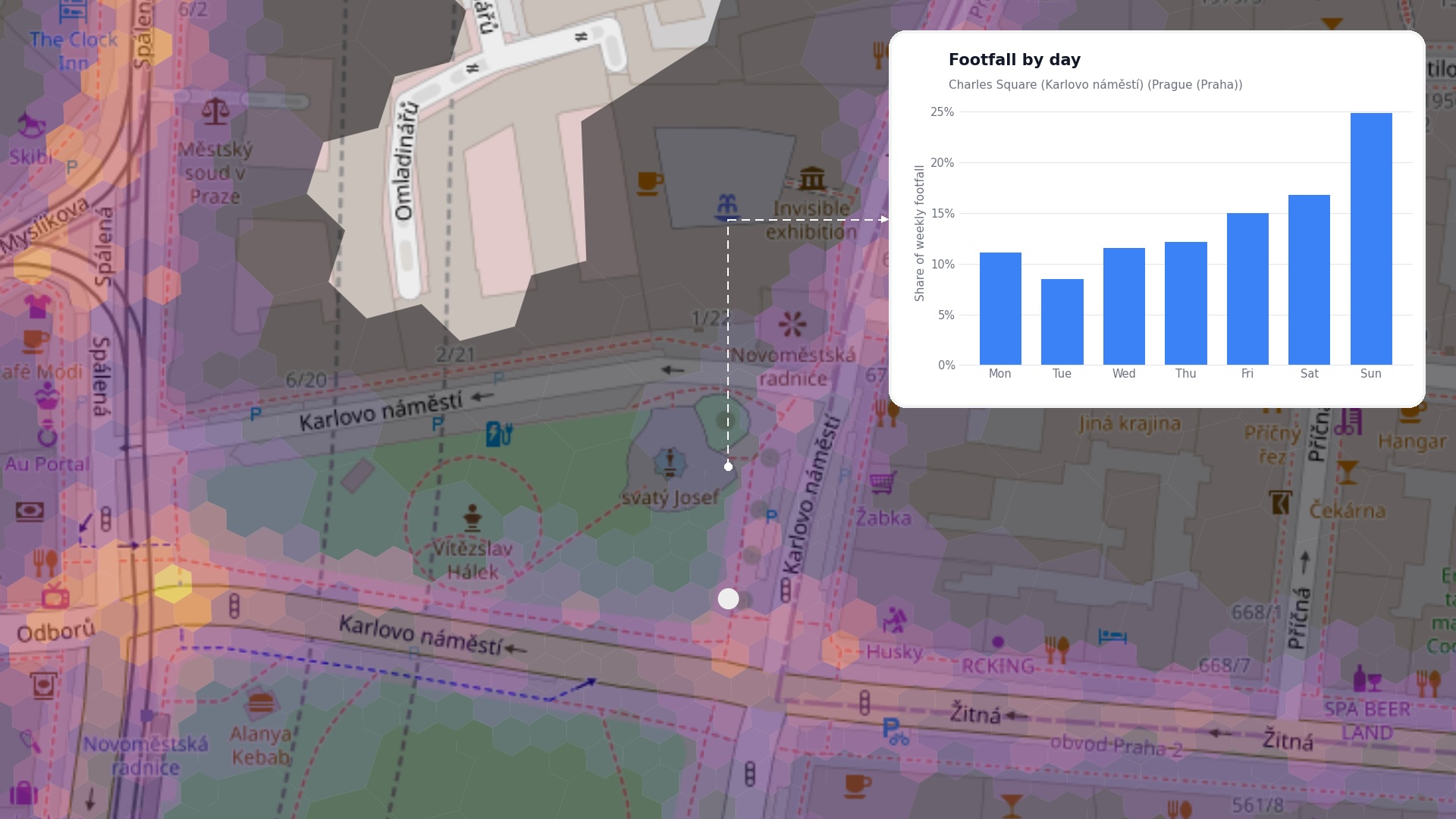
Charles Square is one of the largest squares in Central Europe and a major open space in Prague’s New Town. The busiest point is on the eastern side of the square, near Žitná. Around 7,000 pedestrians pass through this area daily, with tourists making up the majority of the flow. The square attracts visitors moving between the southern New Town, Wenceslas Square and the Old Town. Its scale, greenery and historic setting make it a quieter but still tourist-heavy waypoint in central Prague.
7. Adršpach Rock Town, Adršpach: 4,420 daily tourist footfall
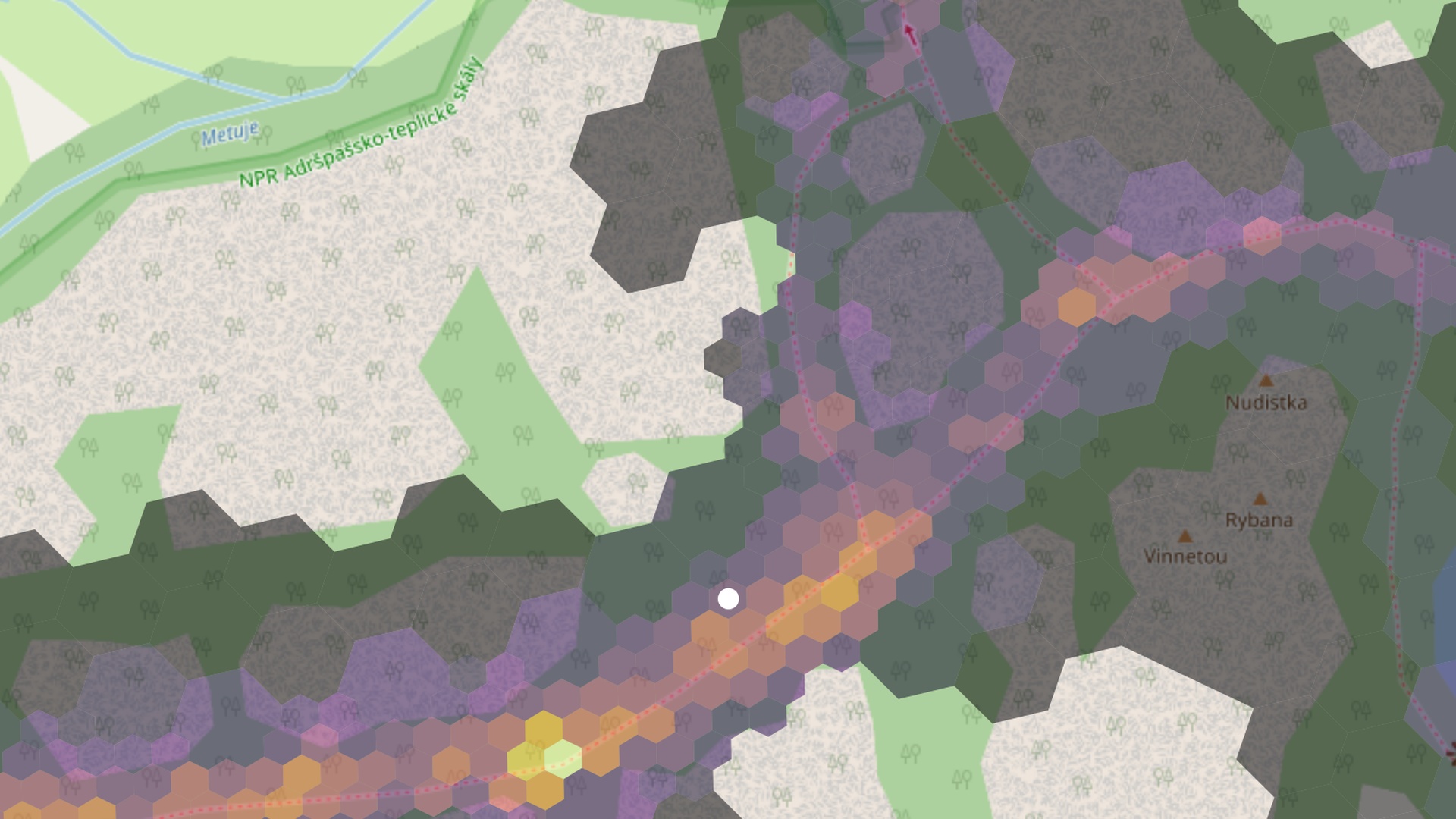
Adršpach Rock Town is the centrepiece of the Adršpach-Teplice Rocks nature reserve in the Broumov Highlands of northeastern Bohemia, where centuries of erosion have sculpted a dense labyrinth of sandstone pillars, narrow gorges, and natural arches. The heatmap traces a clear corridor of footfall along the main walking path threading through the rock formations, with the peak concentrated on the trail section near the lower part of the gorge route leading from the entrance toward the Adršpach lake. With around 5,000 daily pedestrians (nearly all of them tourists), this is one of the most nature-focused entries in our Czech data, a location where footfall is almost entirely explained by the pull of a single dramatic landscape rather than any urban retail or transit function.
8. Strahovské nádvoří, Prague: 3,100 daily tourist footfall
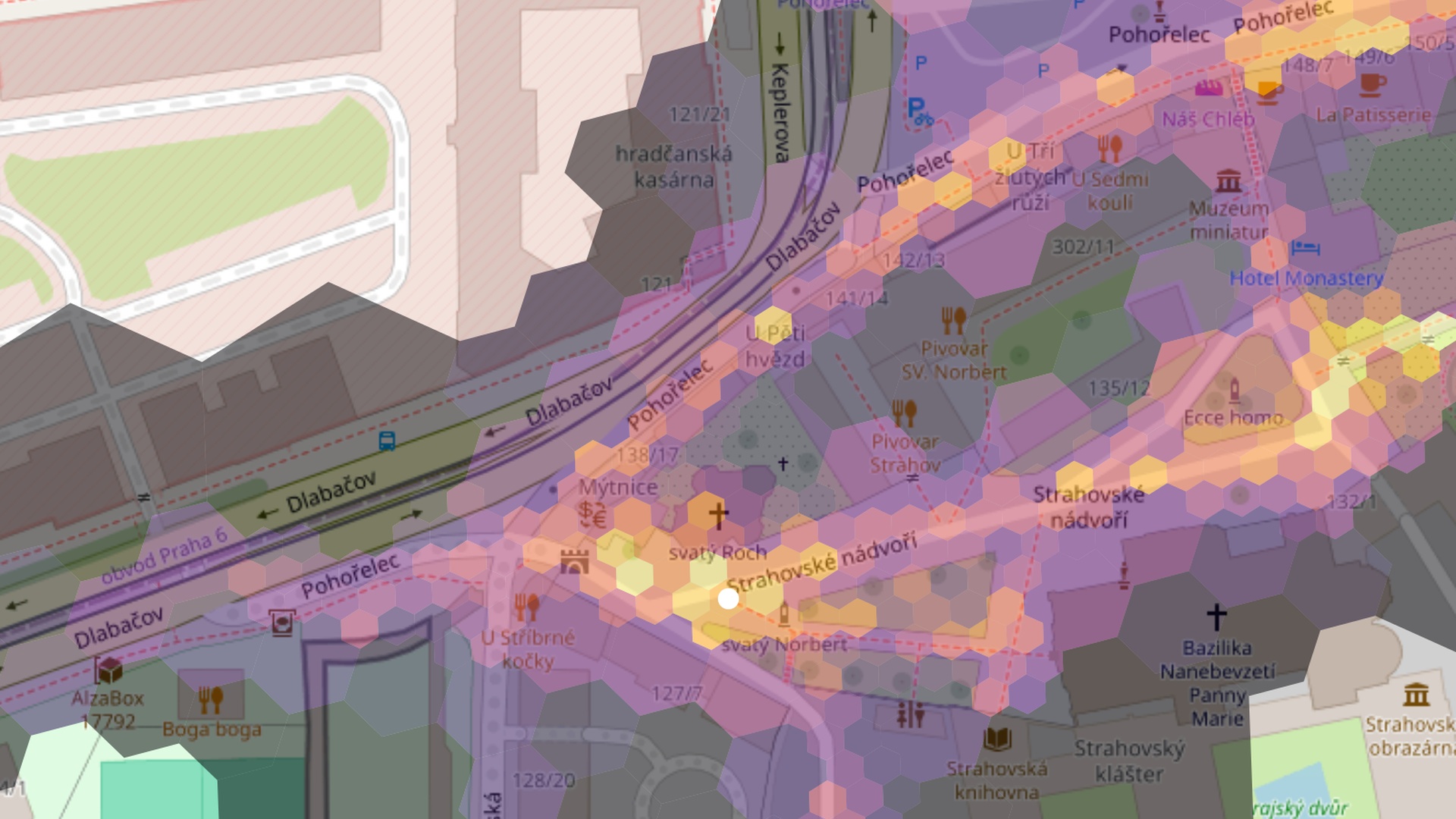
Strahovské nádvoří is the courtyard entrance to Strahov Monastery, perched on the ridge above Malá Strana with the Basilica of the Assumption of the Virgin Mary and the famous Strahov Library. The white dot places peak footfall at the western end of the courtyard near the Church of St. Roch, where the path from Pohořelec and the upper approaches from Hradčany feed into the monastery precinct. Strahovské nádvoří rounds out our national tourist footfall ranking as one of Prague’s quieter, but deeply rewarding cultural destinations, where the combination of Baroque architecture, panoramic city views, and one of the finest historic libraries in Central Europe draws a steady flow well away from the crowds of the Old Town.
9. Dr. Veselého, Luhačovice: 3,010 daily tourist footfall
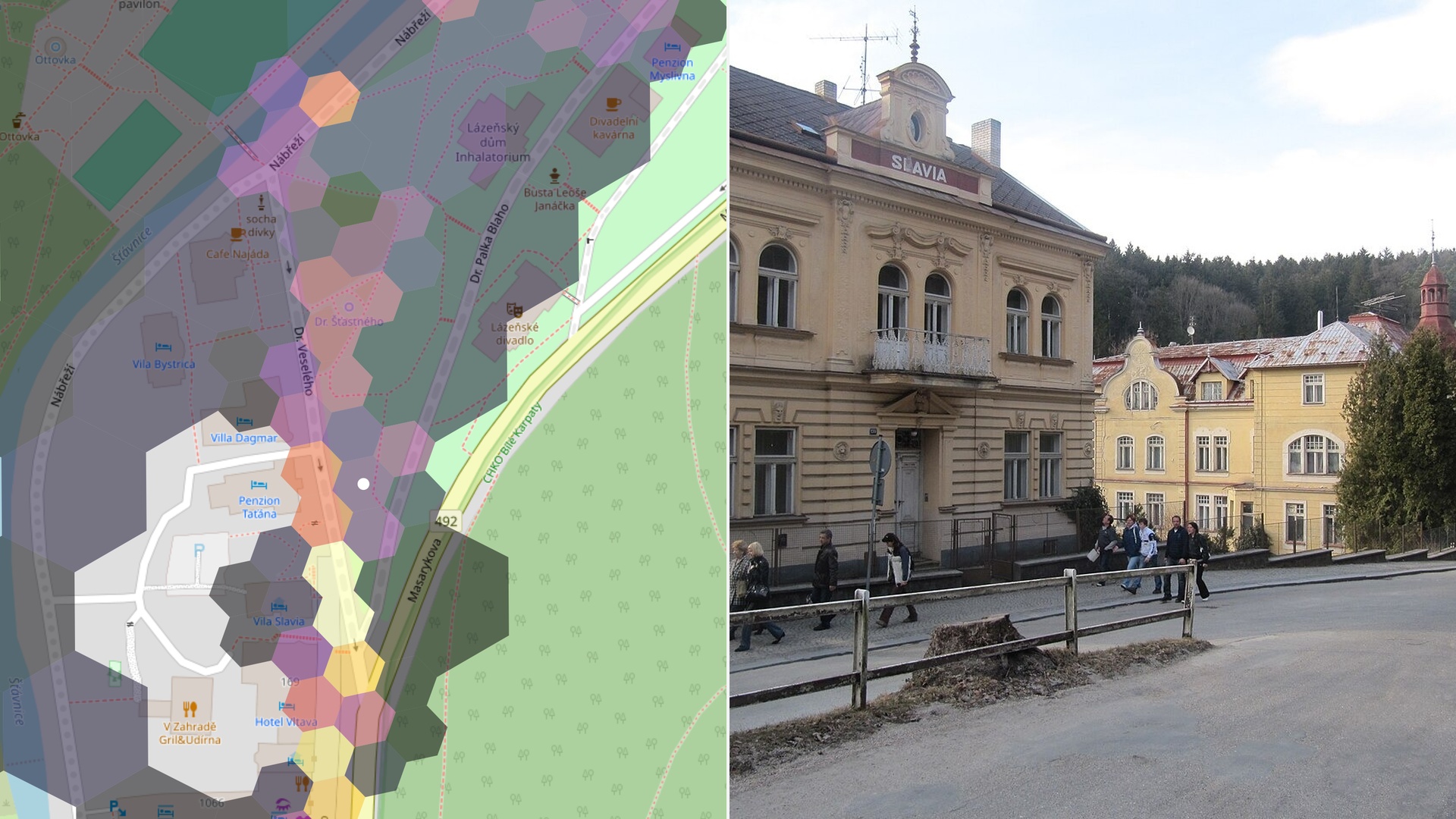
Dr. Veselého is the central promenade running through the spa core of Luhačovice, the most popular balneological resort in Moravia, where the colonnaded spring pavilions, the Jurkovičův dům, and a string of spa hotels and treatment houses line the valley of the Luhačovický potok stream. The white dot on the map places peak footfall along the middle section of the street near Villa Dagmar and Penzion Tatána, where the flow of people moving between the spa buildings, the Lázeňské divadlo theatre, and the wooded hillside paths of the CHKO Bílé Karpaty protected landscape area is at its most concentrated. With around 3,600 daily pedestrians — the overwhelming majority of them tourists — Luhačovice’s spa promenade is one of the most distinctly wellness-oriented entries in our Czech data, drawing people almost entirely on the strength of its historic cure architecture and the therapeutic springs that have made this small Moravian town a destination in its own right for well over a century.
10. Masarykova, Mariánské Lázně: 2,910 daily tourist footfall
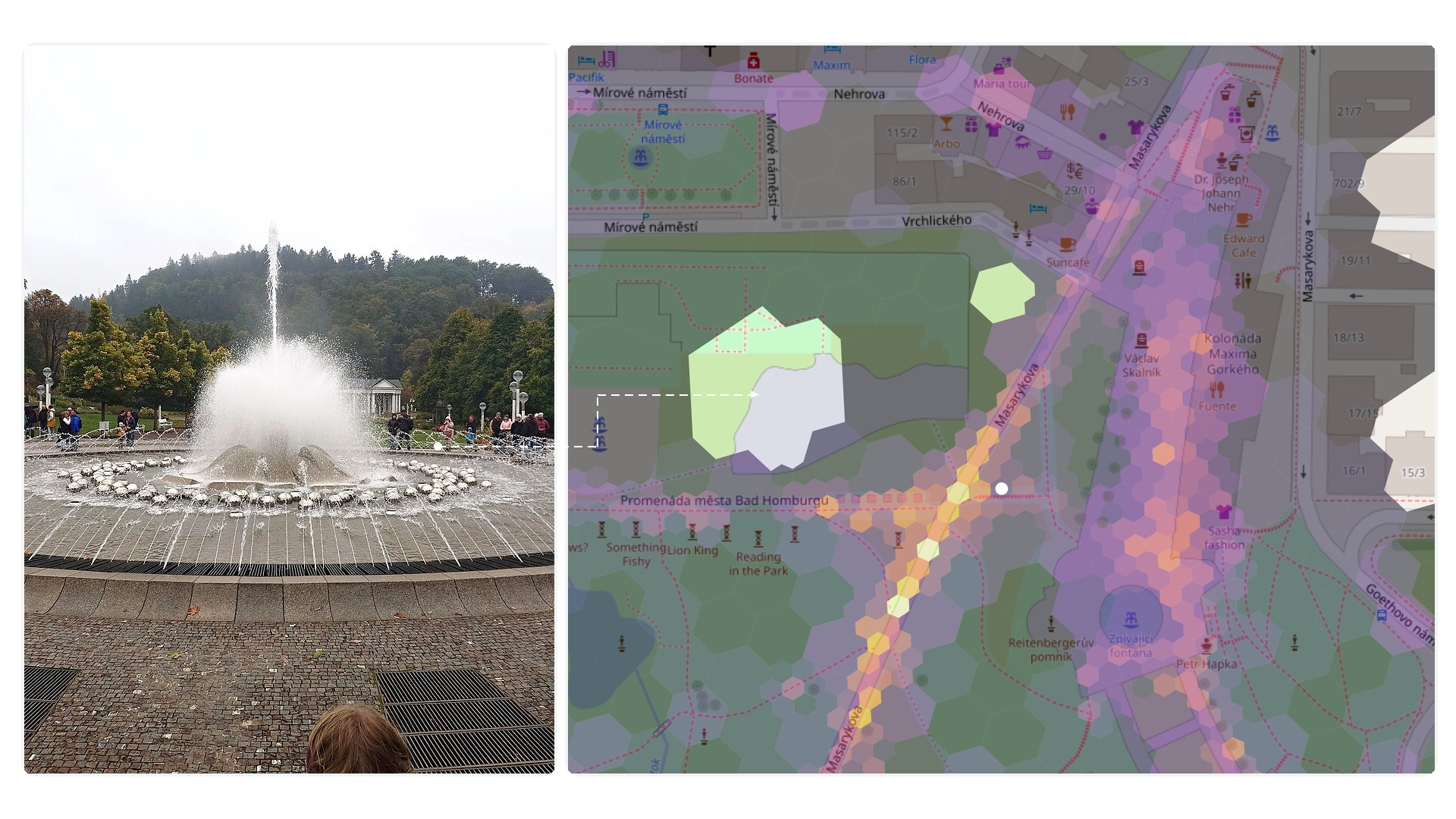
Masarykova is the main promenade threading through the spa core of Mariánské Lázně, one of the great cure towns of the former Bohemian spa triangle, where the colonnaded spring pavilion of the Kolonáda Maxima Gorkého and the singing fountain draw a near-constant flow of people along the tree-lined corridor between the park and the town’s hotel and restaurant strip. The white dot places peak footfall at the point where Masarykova meets the Promenáda města Bad Homburgu pathway, just west of the Kolonáda, capturing the confluence of people moving between the spring pavilion, Skalníkovy sady park, and the surrounding spa hotels. With around 3,700 daily pedestrians — the large majority of them tourists — this stretch of Masarykova reflects the same pattern seen at Karlovy Vary’s Mlýnské nábřeží: a spa town whose central promenade exists almost entirely to serve people who have come for the architecture, the springs, and the curative landscape rather than everyday retail or commuting.
Top 10 Shopping Malls in Czechia by Daily Visitors
The following ranking covers shopping centres across Czechia, ranked by average daily visitor counts from Targomo’s visitor dataset.
Prague has several of the country’s strongest retail destinations, but the list also shows high visitor volumes in regional cities such as Brno, Olomouc, České Budějovice and Liberec. For expansion teams, this helps compare shopping centres by measured demand, not just by size or brand reputation.
| City | Mall | Daily Visitors |
|---|---|---|
| Prague | Palladium | 37,910 |
| Prague | Nový Smíchov | 29,270 |
| Prague | Westfield Chodov | 28,010 |
| Prague | Quadrio | 23,630 |
| Prague | Westfield Černý Most | 21,510 |
| Brno | Vaňkovka | 18,990 |
| Prague | Metropole Zličín | 14,850 |
| Prague | palác Myslbek | 13,320 |
| Brno | OC Olympia Brno | 13,210 |
| Ostrava | Avion Shopping Park | 12,890 |
1. Palladium, Prague: 37,910 Daily Visitors
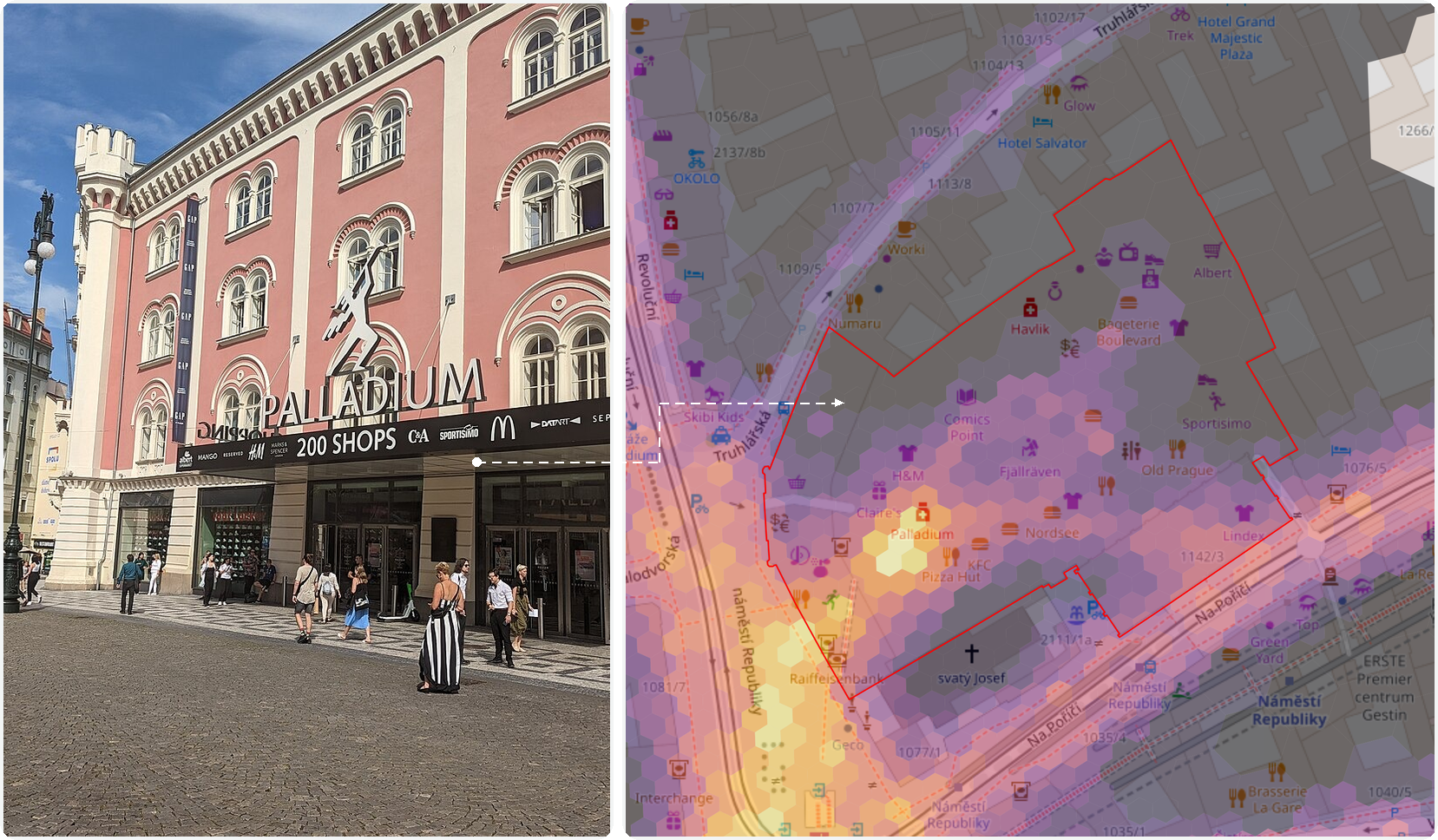
Palladium is the busiest shopping centre in the Czech Republic, drawing nearly 38,000 visitors per day. Located on Na Poříčí in the heart of Prague (Praha), the centre occupies a striking Neo-Baroque building in the New Town district. The highest concentration of visitors clusters around the main entrance facing Na Poříčí, reflecting its strong foothold as a central retail destination.
2. Nový Smíchov, Prague: 29,270 Daily Visitors
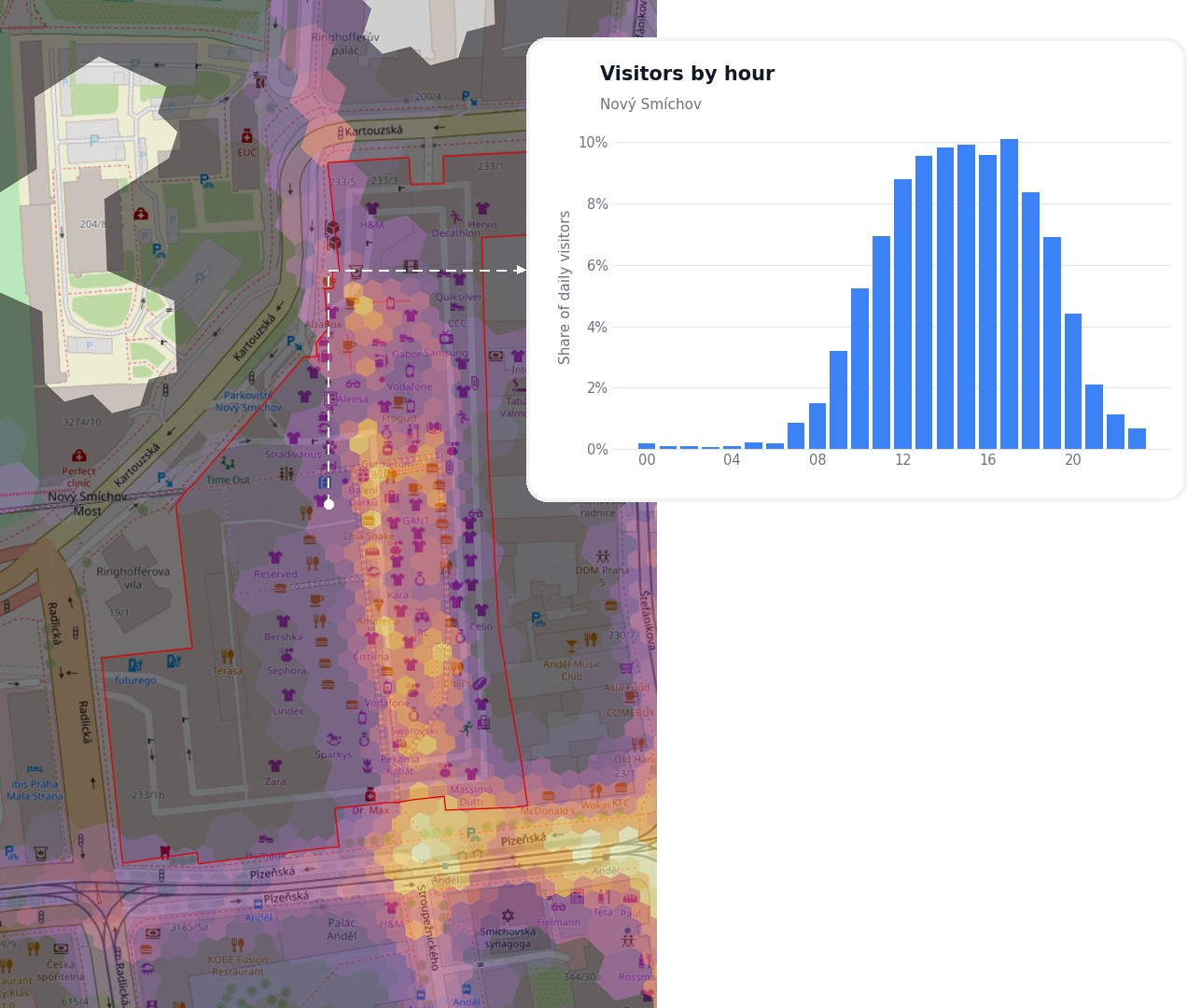
Nový Smíchov is one of Prague’s busiest shopping centres, ranking second in the country with around 29,000 daily visitors. Built above Smíchovské nádraží station in the Smíchov district, it offers convenient access for commuters and shoppers alike. Visitor activity is most concentrated around the main entrance and central atrium area along Plzeňská.
3. Westfield Chodov, Prague (Praha): 28,010 Daily Visitors
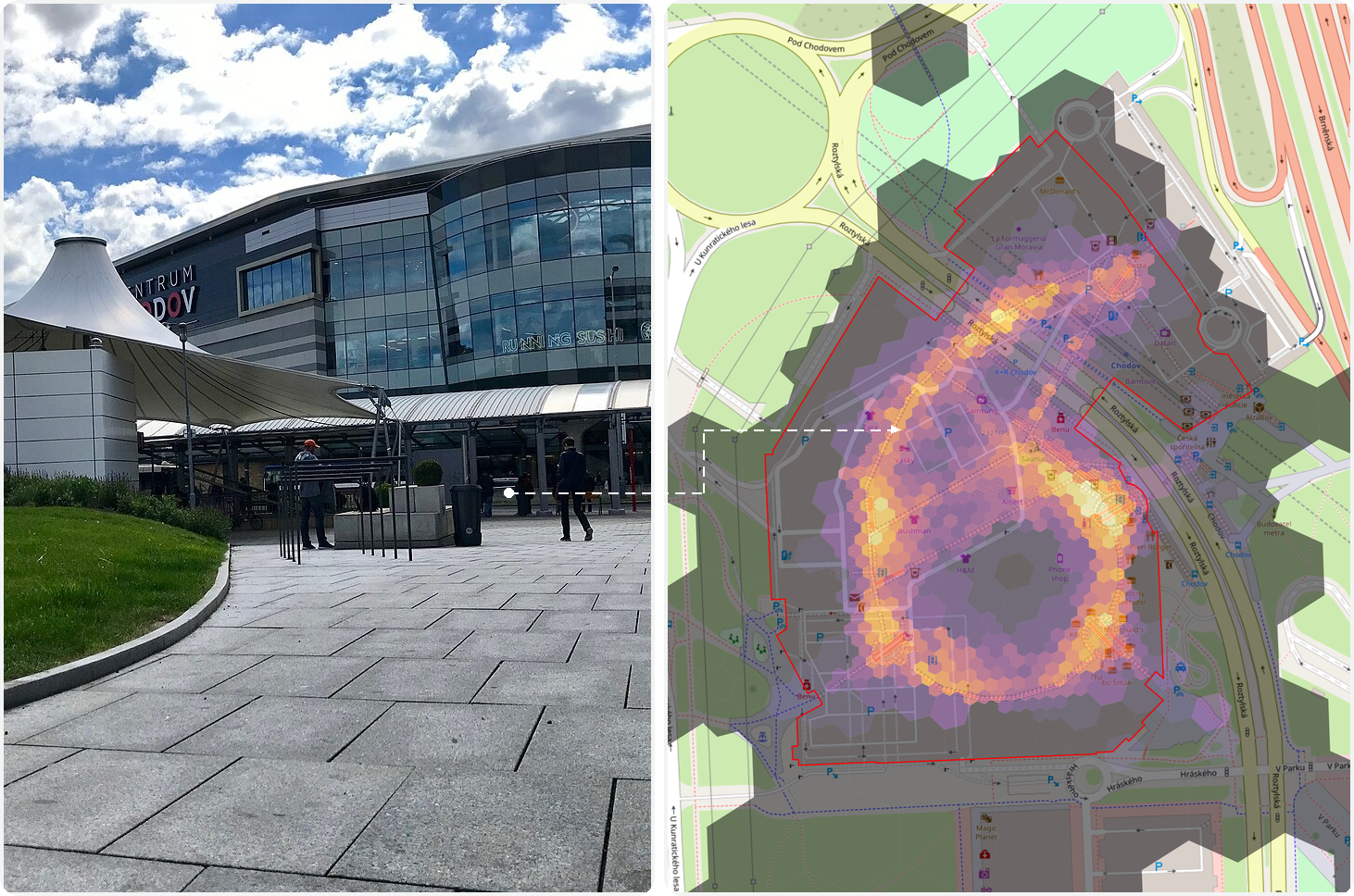
Westfield Chodov is one of the busiest shopping centres in the Czech Republic, drawing around 28,000 visitors daily. Located in the Chodov district of Prague (Praha) 11, it ranks third nationally for visitor numbers. The heaviest concentration of activity clusters around the main entrance and central retail corridors of the complex.
4. Quadrio, Prague: 23,630 Daily Visitors
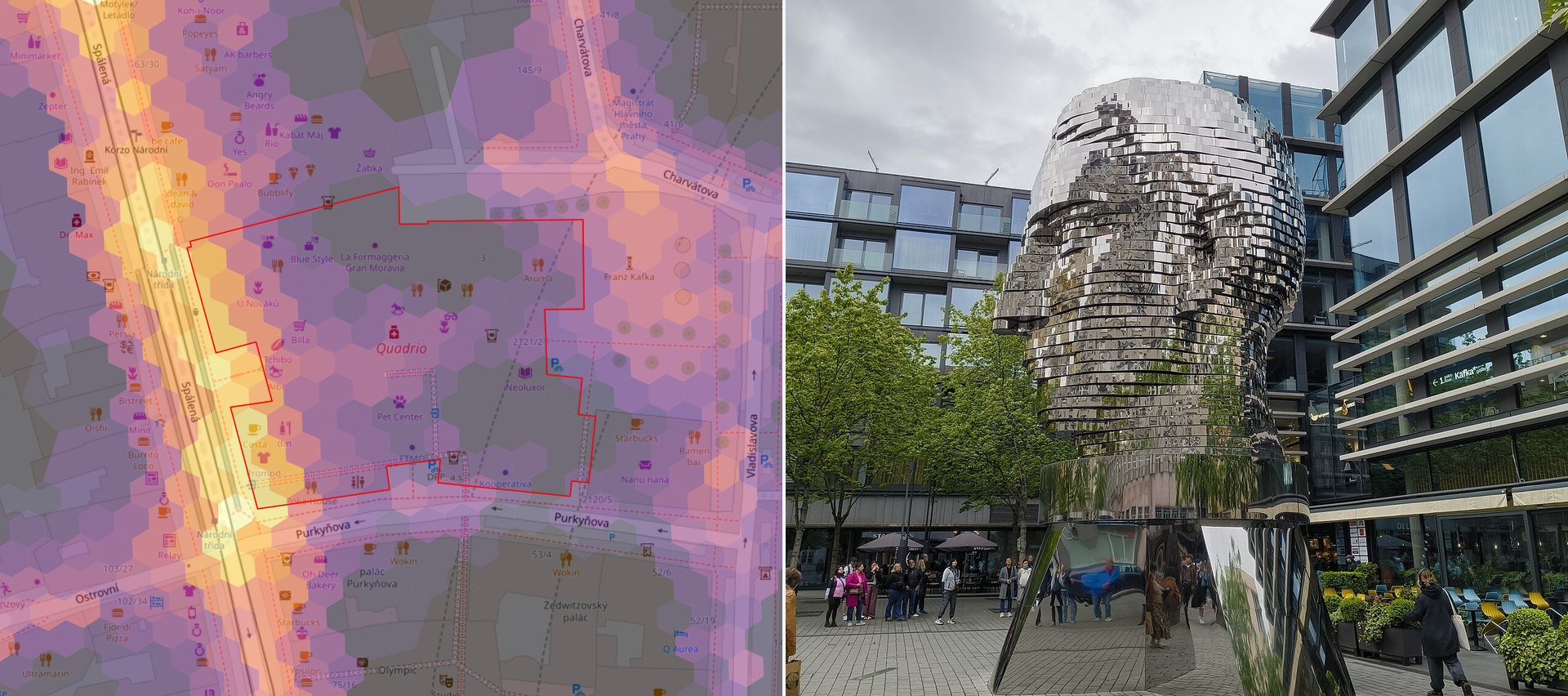
Quadrio is a modern mixed-use shopping centre situated on Národní třída in the heart of Prague, directly above Národní třída metro station. It draws around 23,000 visitors daily, making it the fourth busiest retail destination in the country. The busiest activity clusters tightly around the main entrance on Národní třída, reflecting its prime position in the city centre.
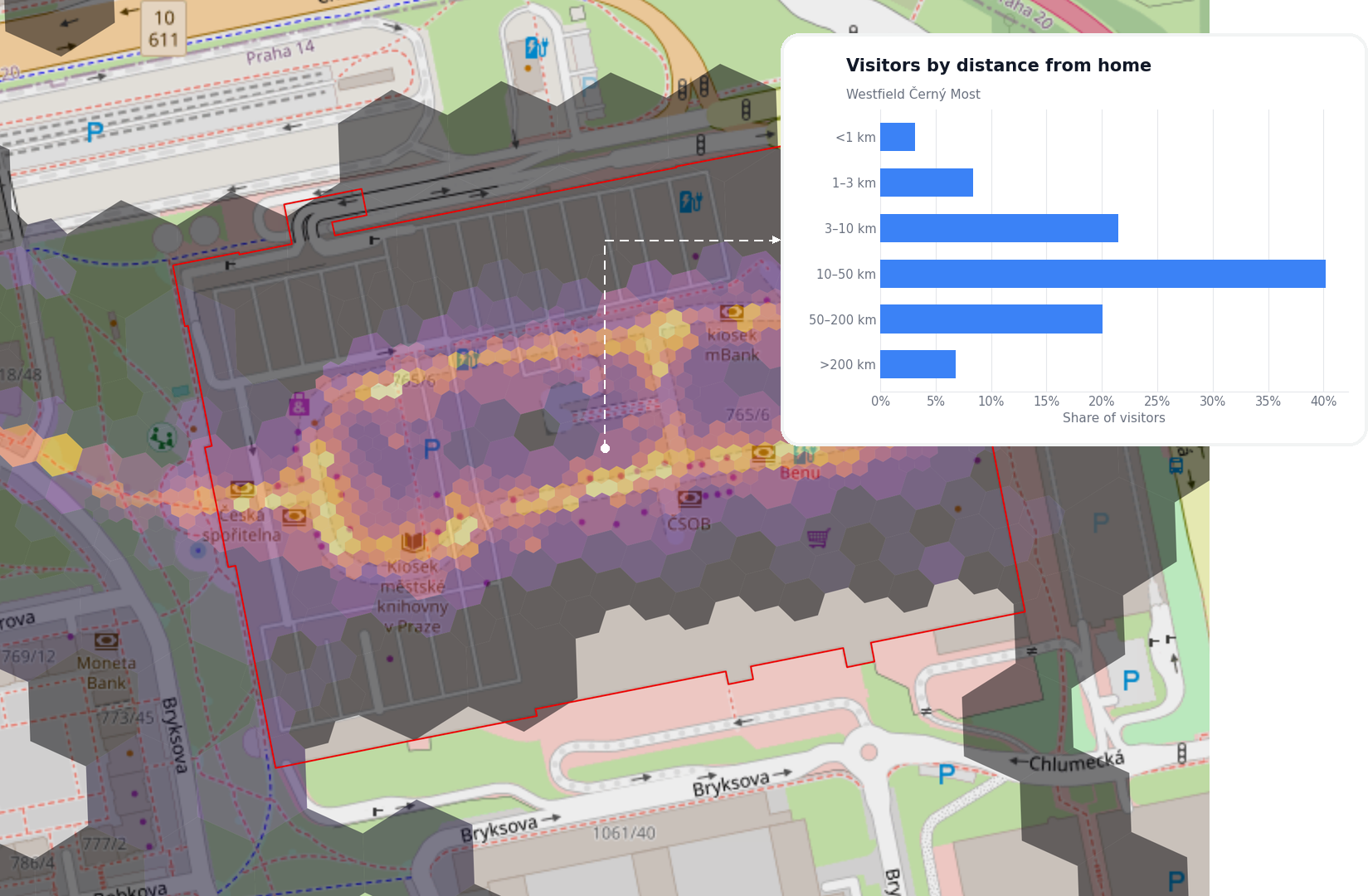
5. Westfield Černý Most, Prague: 21,510 Daily Visitors
Westfield Černý Most is one of Prague’s busiest retail destinations, ranking fifth in the country with more than 21,000 daily visitors. The centre is part of the Unibail-Rodamco-Westfield portfolio, which operates Westfield-branded centres across Europe and beyond. The heatmap shows the busiest activity concentrated around the main entrance area near Chlumecká in the Prague 14 (Praha 14) district of eastern Prague.
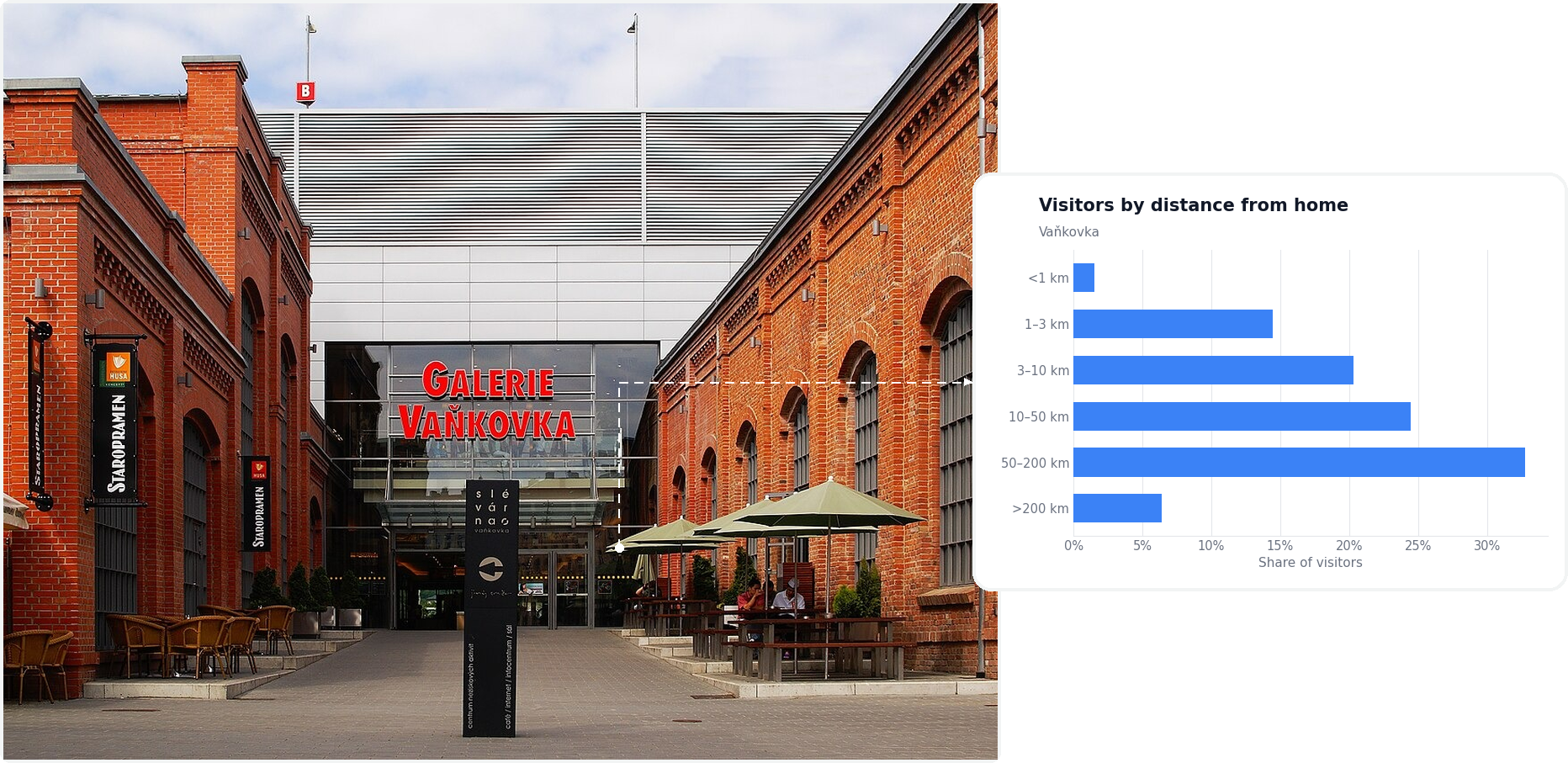
6. Vaňkovka, Brno: 18,990 Daily Visitors
Vaňkovka is a popular shopping centre in Brno, located in the south of the city centre near the main railway station. It draws around 19,000 daily visitors, making it the sixth busiest shopping destination in Czechia. The busiest area of the centre clusters around the main concourse and food court level, reflecting its role as a key retail and dining hub for the region.
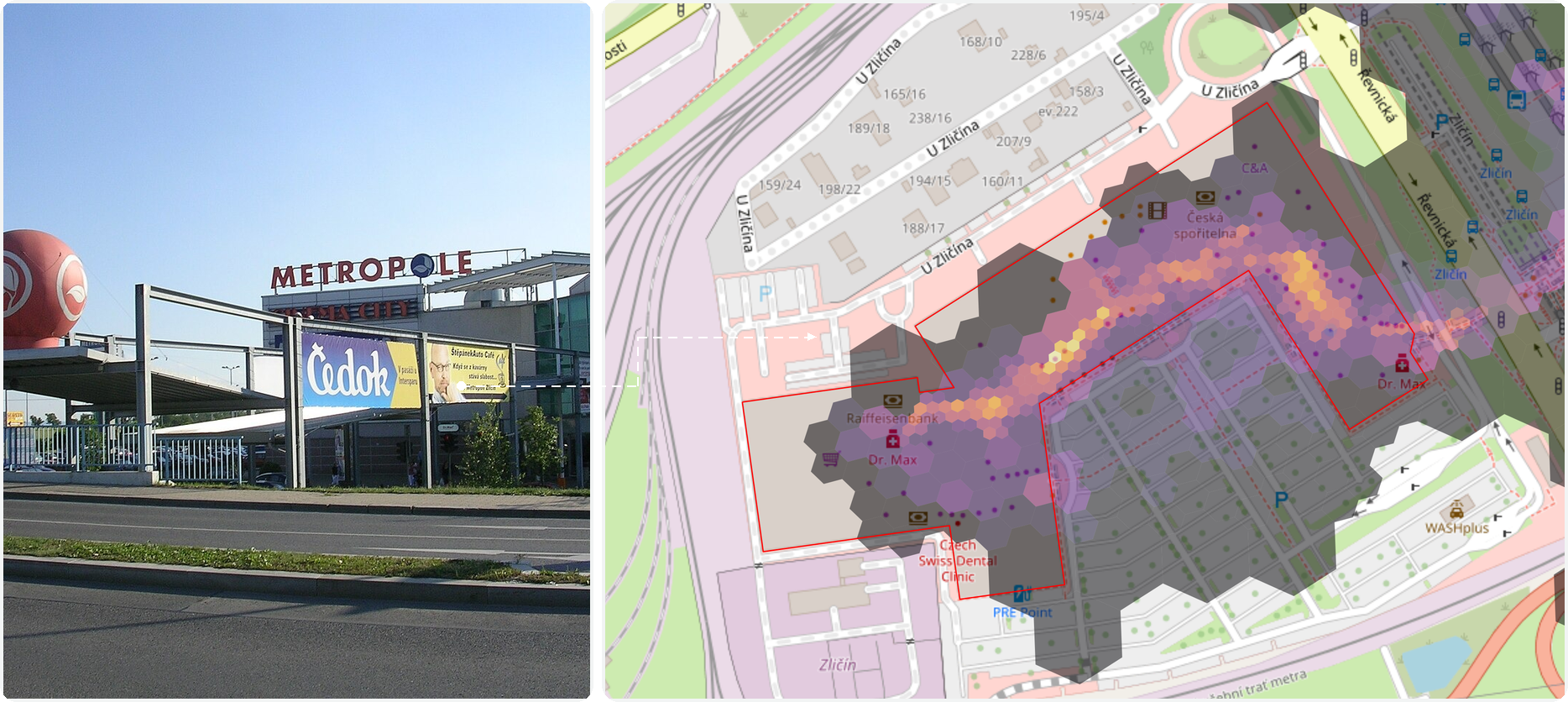
7. Metropole Zličín, Prague: 14,850 Daily Visitors
Metropole Zličín is one of Prague’s busiest retail destinations, drawing around 15,000 visitors daily and ranking seventh in the country. Located in the Zličín district on the western edge of the city, it benefits from excellent transport links, including a nearby metro terminus. The busiest activity clusters around the main entrance and central concourse, reflecting its role as a key shopping and leisure hub for the wider western suburbs.
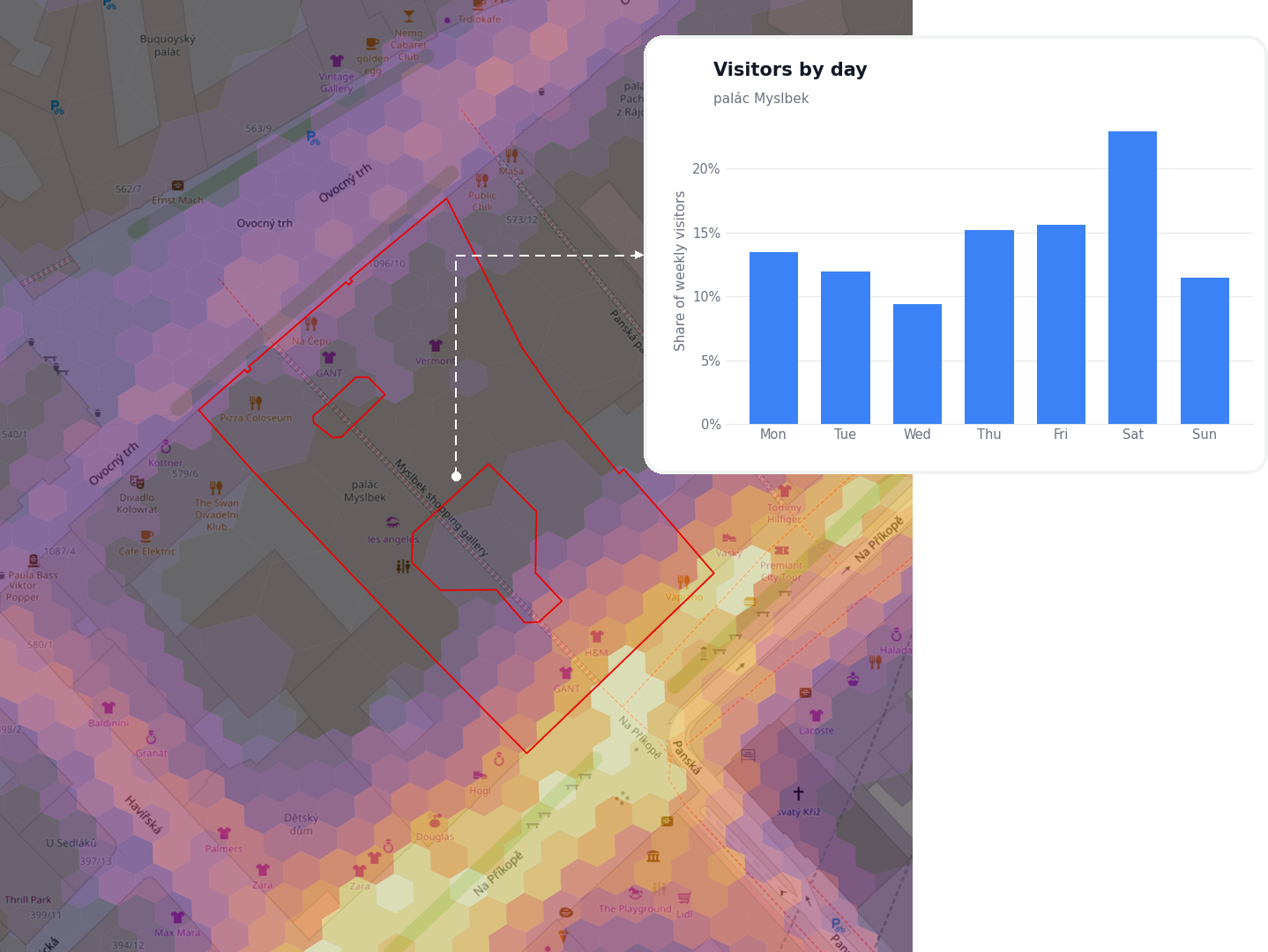
8. Palác Myslbek, Prague: 13,320 Daily Visitors
Palác Myslbek is a sleek, upscale shopping and office complex situated on Na Příkopě, one of Prague’s most prominent commercial streets. The centre draws a strong mix of locals and tourists thanks to its central position between Wenceslas Square (Václavské náměstí) and the Old Town (Staré Město). With around 13,000 daily visitors, it ranks among the eight busiest retail destinations in the Czech Republic.
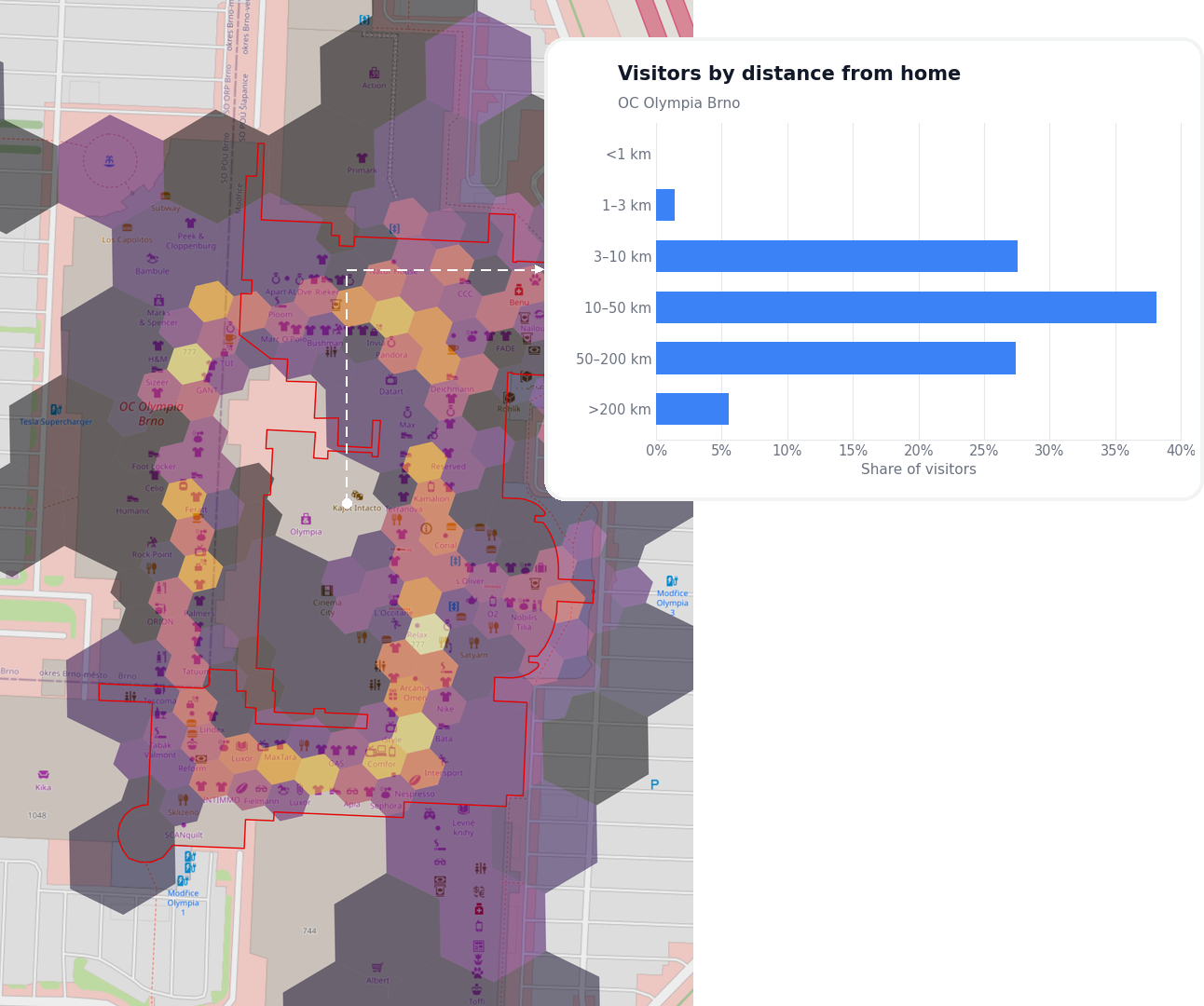
9. OC Olympia Brno, Brno: 13,210 Daily Visitors
Olympia Brno is a large out-of-town retail and leisure destination situated near the D1/D2 motorway junction in Modřice, just south of Brno. It attracts around 13,000 visitors daily, making it one of the busiest shopping centres in the Czech Republic. The busiest activity clusters around the main mall entrance and central concourse areas.
10. Avion Shopping Park, Ostrava: 12,890 Daily Visitors
Avion Shopping Park draws around 13,000 visitors daily and ranking tenth in the Czech Republic. The busiest activity clusters around the main entrances and the central retail corridors. Its large-format stores and out-of-town location make it a popular destination for shoppers from across the Ostrava region.
Use Footfall Data for Smarter Retail Site Selection
Footfall data is a powerful starting point for retail expansion. It shows where people move, which streets attract the highest pedestrian flows, and how shopping centres compare by daily visitors. But the busiest location is not always the best location for every concept. A strong site decision also depends on catchments, accessibility, local demographics, competitors and complementary POIs, and visitor behaviour.
With TargomoLOOP, expansion teams can view footfall data in context and compare locations more confidently. For teams that want to integrate location intelligence into their own systems, TargomoAPI provides access to our geospatial data and analysis capabilities.
Whether you are opening a first store in Czechia or optimising an existing network, combining retail expansion strategy with granular Czechia footfall data reduces guesswork. Our foot traffic and tourist datasets help teams compare streets, districts, and malls, so every site decision is grounded in measured demand.
Ready to explore better locations with Targomo’s Footfall Data?
Book a demo to see how TargomoLOOP can support retail site selection, market entry and network expansion.
You May Also Be Interested in