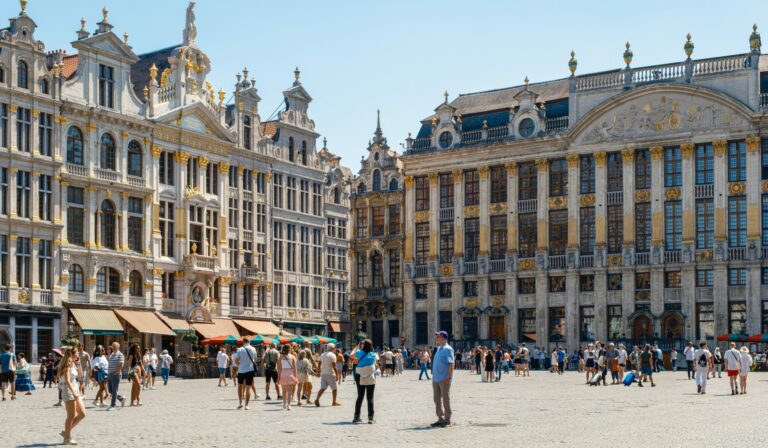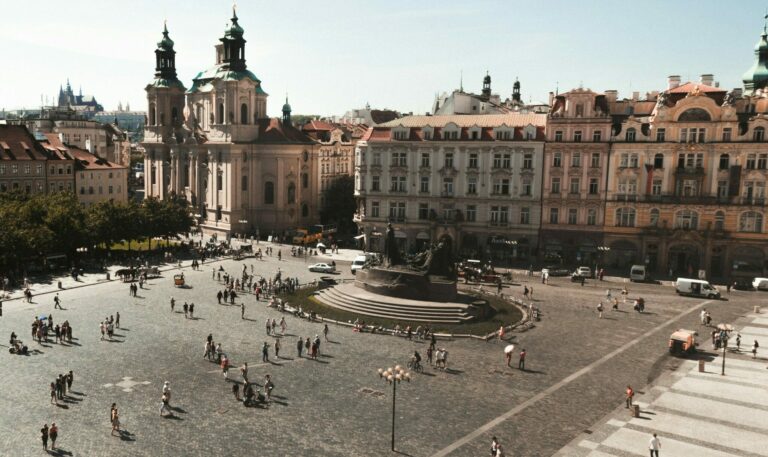










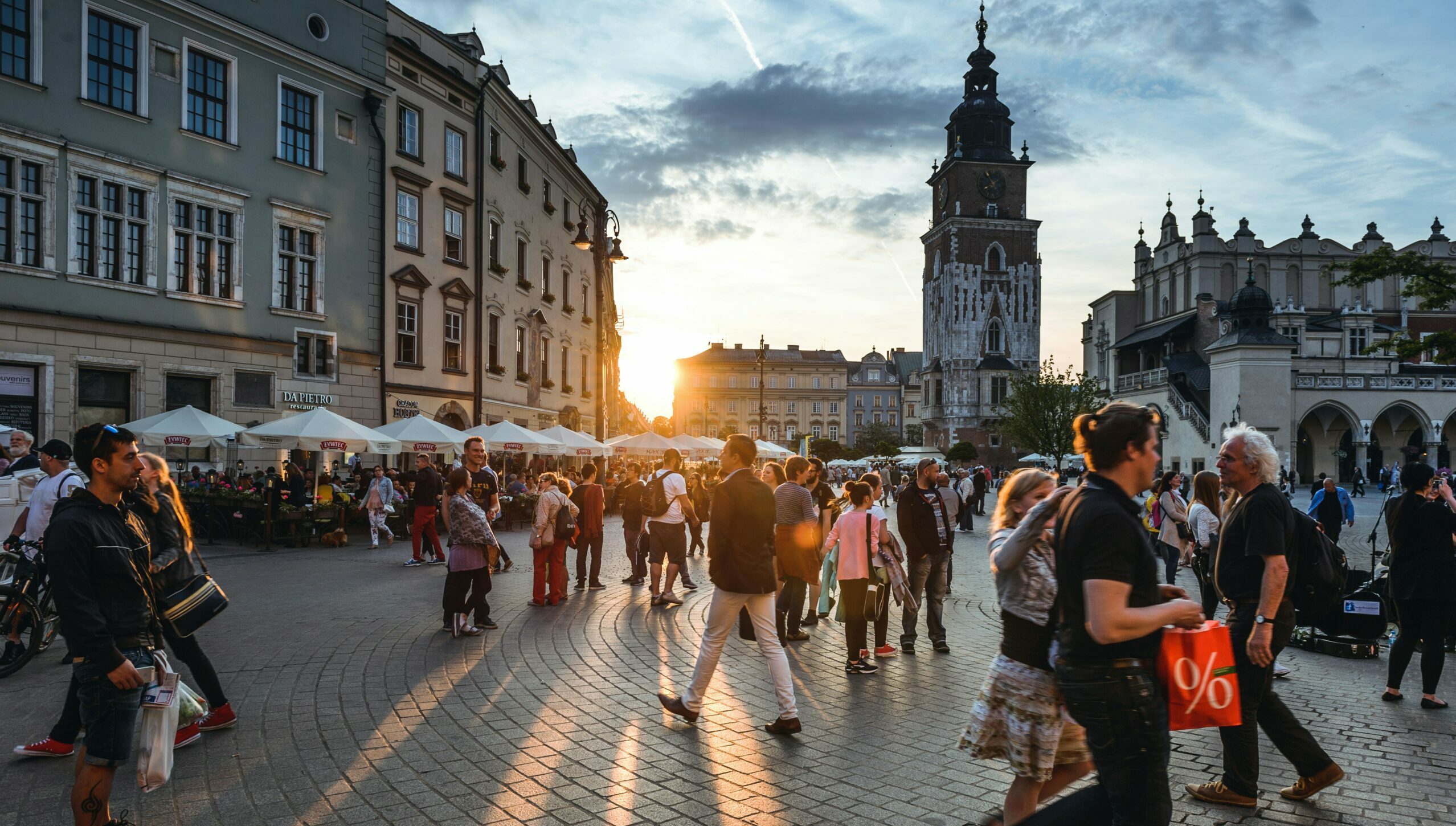
Poland’s retail landscape is shaped by several strong urban markets, not one dominant city alone. For expansion teams, this makes footfall data especially useful: it shows where daily movement is actually concentrated across streets, squares, tourist areas and shopping centres.
This article ranks Poland’s top footfall hotspots using Targomo’s 2025 footfall data, with a focus on what these patterns mean for retail site selection.
The analysis is split into three top 10 rankings: the busiest street-level locations, the strongest tourist-driven footfall hotspots, and the shopping centres with the highest average daily visitors. For the first two rankings, each figure refers to the busiest measured point within roughly a 20-metre radius. The shopping centre ranking uses total average daily visitors across each centre.
Terminology note: In this article, footfall means estimated pedestrian activity at a specific location. In Polish, related terms include ruch pieszy, natężenie ruchu pieszego and odwiedzalność.
Jump to:
Top 10 Footfall Spots in Poland by Daily Pedestrian Traffic
The highest footfall locations in Poland cluster around historic market squares and pedestrian promenades, with Kraków’s Rynek Główny and Wrocław’s Rynek leading the ranking by a clear margin over the rest of the country. Warsaw appears three times across the top ten, but its entries record lower figures than Kraków, Wrocław, and even Zakopane’s Krupówki, suggesting that Poland’s pedestrian intensity is not simply a function of city size. For expansion teams, this ranking identifies the specific streets, junctions, and square edges, where daily foot traffic is genuinely at its densest, giving site selection a precise starting point rather than a city-level approximation.
| City | Place | Daily Footfall |
|---|---|---|
| Kraków | Main Market Square (Rynek Główny) | 55,000 |
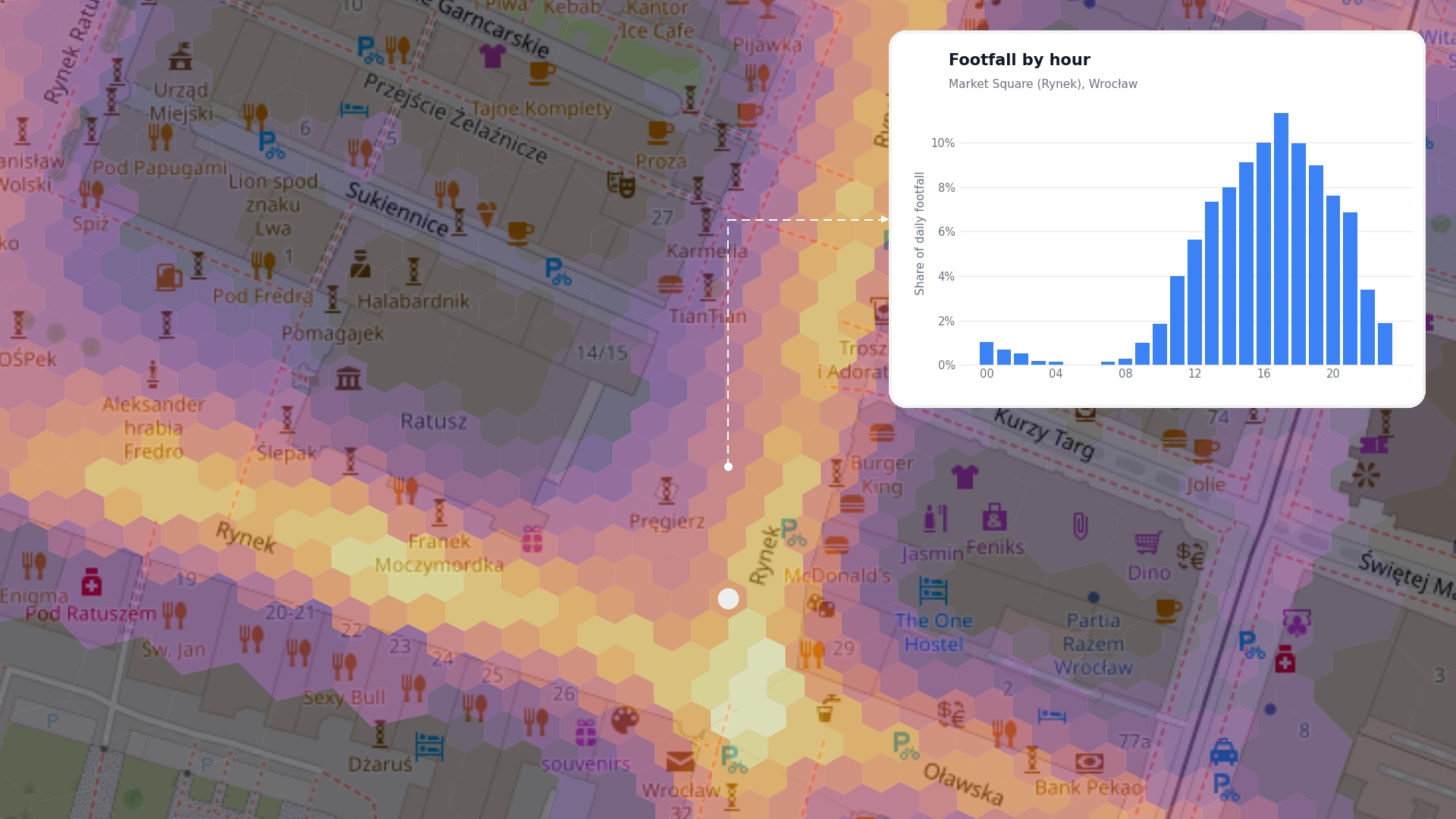
| Wrocław | Market Square | 52,450 |
| Zakopane | Krupówki | 51,800 |
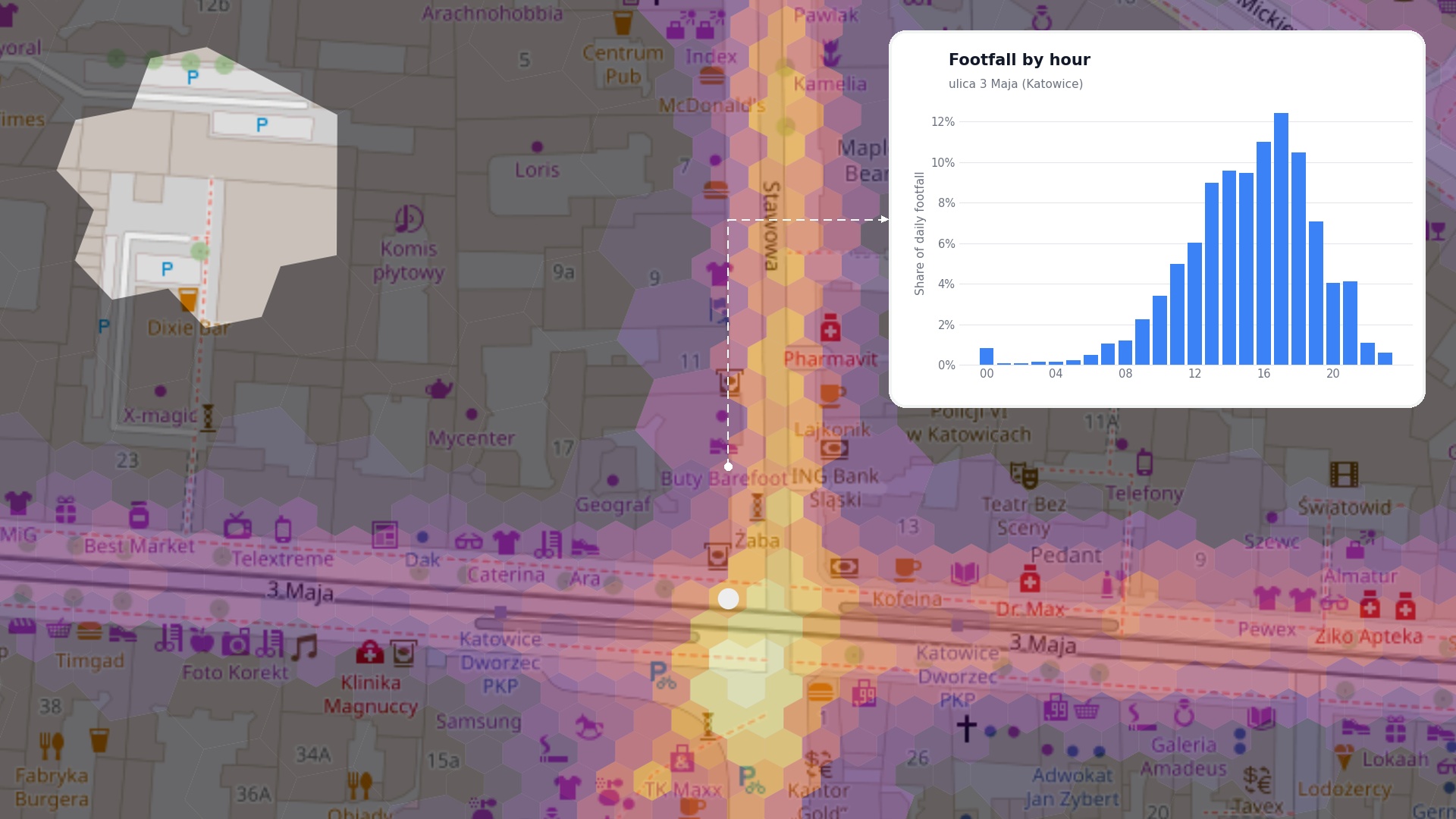
| Katowice | Ulica 3 Maja | 51,510 |
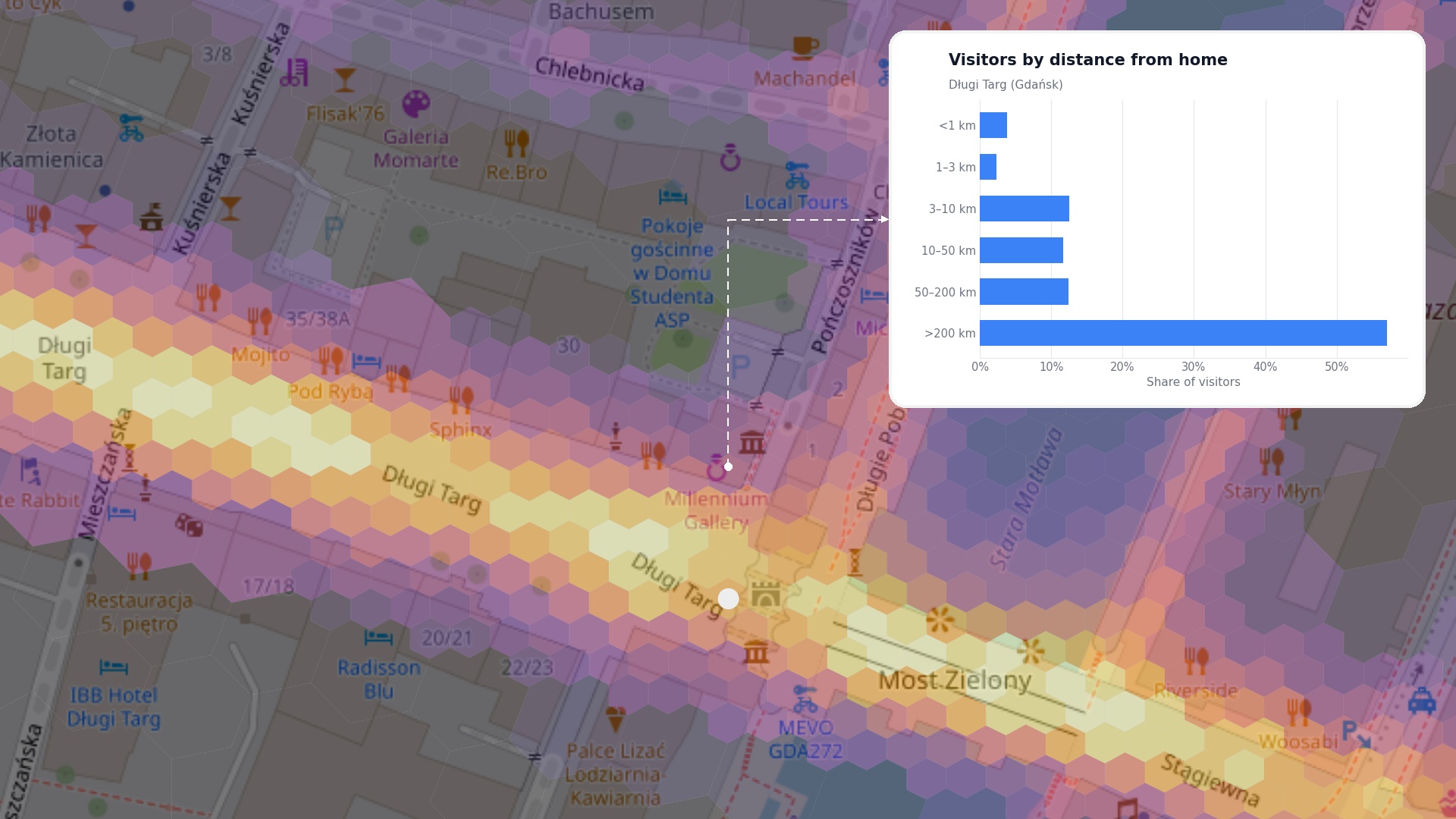
| Gdańsk | Długi Targ | 43,850 |
| Warsaw | Ulica Emilii Plater | 39,700 |
| Warsaw | Krakowskie Przedmieście | 35,560 |
| Toruń | Szeroka Street | 28,660 |
| Lublin | Krakowskie Przedmieście | 24,880 |
| Warsaw | Nowy Świat | 24,840 |
1. Main Market Square, Kraków: 55,000 Daily Footfall
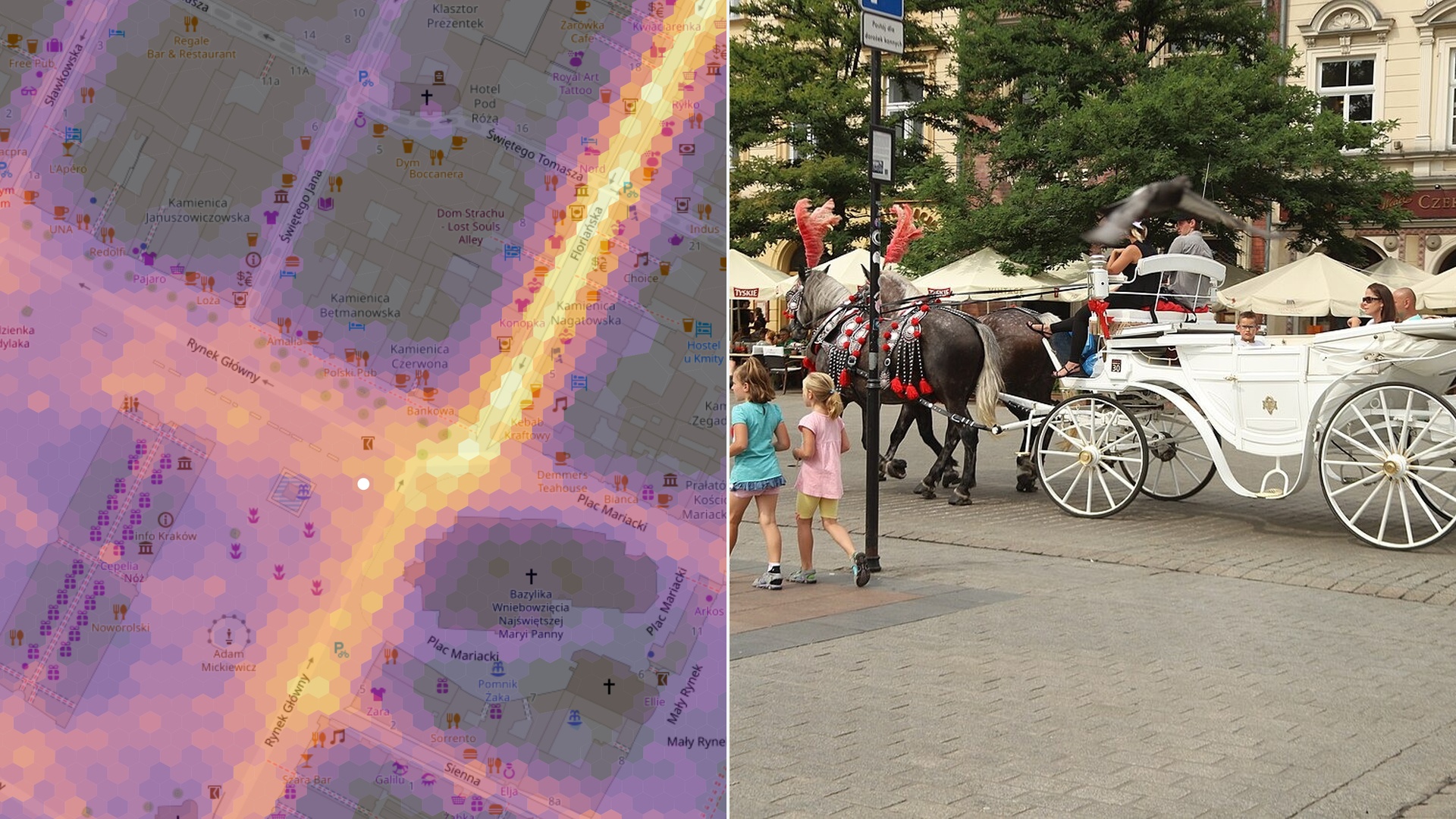
Kraków’s Main Market Square (Rynek Główny) is one of the largest medieval market squares in Europe, forming the beating heart of the Old Town (Stare Miasto). The footfall heatmap places the peak concentration at the eastern edge of the square, near the junction with Floriańska Street and Plac Mariacki, right in front of St. Mary’s Basilica (Bazylika Mariacka). This is where streams of pedestrians converge from Floriańska Street to the north, the Cloth Hall (Sukiennice) to the west, and the side streets leading toward Mały Rynek to the east. With more than 55,000 people recorded, this corner of the square clearly draws the densest foot traffic in all of Poland.
2. Market Square, Wrocław: 52,450 Daily Footfall
Wrocław’s Market Square (Rynek) is one of the largest medieval squares in Central Europe, and the footfall heatmap pinpoints the peak concentration at the southern-central section of the square, near the junction where Świdnicka Street meets the square’s edge. Pedestrian flows converge here from Świdnicka Street to the south, Kurzy Targ to the east, and the Town Hall (Ratusz) area to the west, creating a natural crossroads that draws more than 52,000 people through this stretch. The surrounding mix of restaurants, souvenir shops, and food chains keeps foot traffic elevated throughout the day and into the evening.
3. Krupówki, Zakopane: 51,800 Daily Footfall
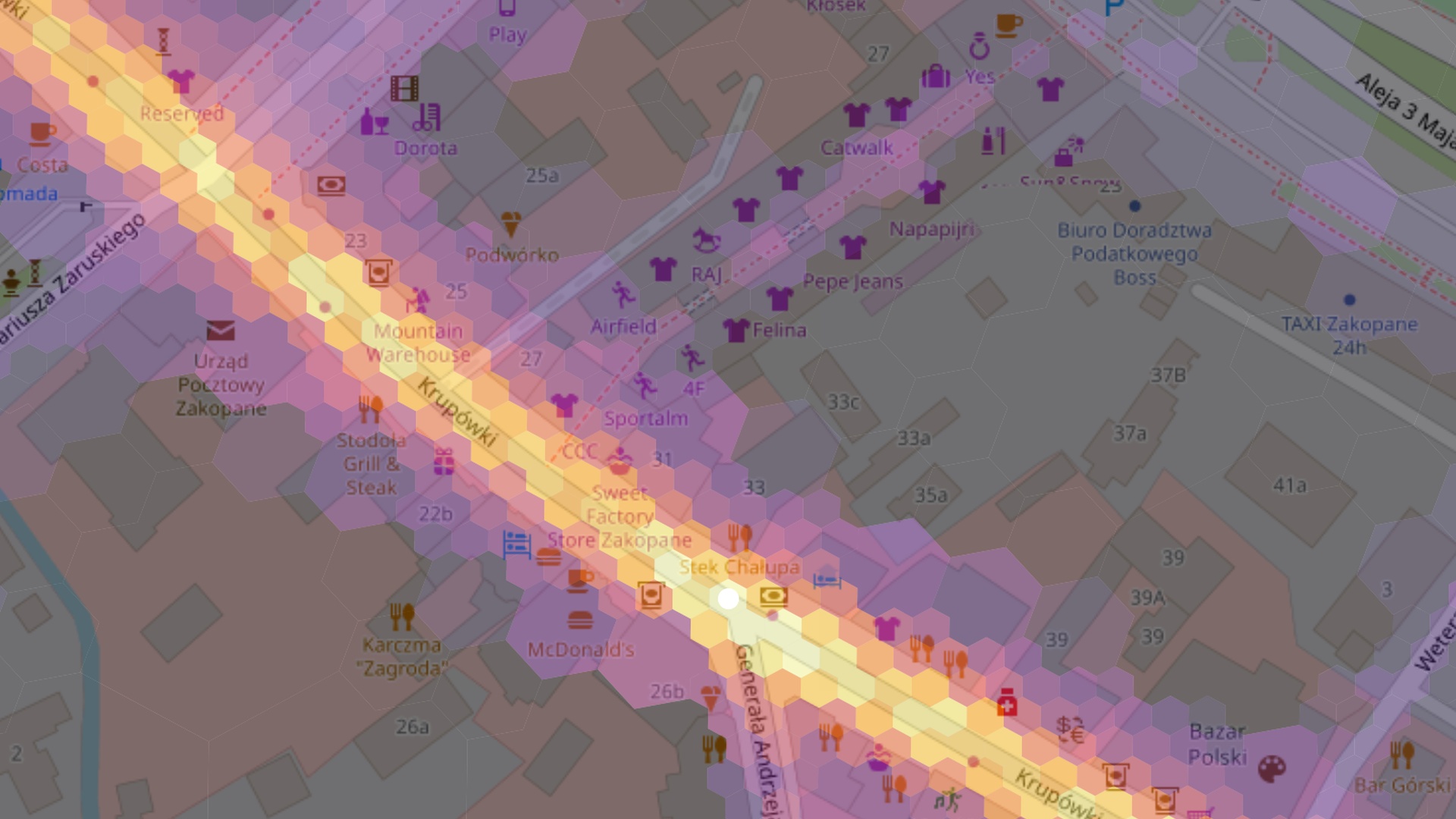
Krupówki is Zakopane’s main pedestrian promenade, running through the heart of this mountain resort town at the foot of the Tatra Mountains. The heatmap places the peak concentration at the central section of the street, near the junction with Generała Andrzeja Galicy. Pedestrian flows converge from both ends of the promenade as well as from the side streets cutting across it, keeping foot traffic dense along the entire stretch. With more than 50,000 people recorded, Krupówki stands out as a rare example of a resort street matching the footfall levels of major urban centres.
4. Ulica 3 Maja, Katowice: 51,510 Daily Footfall
Ulica 3 Maja is the main pedestrian artery cutting through the heart of Katowice’s city centre, running from the area of Katowice railway station (Katowice Dworzec PKP) northward through the Śródmieście district. The heatmap places the peak concentration at the crossing point where 3 Maja intersects with Stawowa Street, the Silesia City Center direction, and the retail strip lined with brands like TK Maxx, KFC, and Rossmann. Side streets feeding into this junction from Plac Marii i Lecha Kaczyńskich to the south and Młyńska to the southeast add further flow, keeping footfall dense throughout the day.
5. Długi Targ, Gdańsk: 43,850 Daily Footfall
Długi Targ (Long Market) is the wide, open square that forms the centrepiece of Gdańsk’s Royal Way, anchored at its eastern end by the Green Gate (Zielona Brama) and the Motława River. The heatmap places the peak concentration in the middle section of Długi Targ, near the junction with Długie Pobrzeże and the approach to Green Bridge (Most Zielony), where foot traffic from the Royal Way corridor meets pedestrians arriving along the riverfront promenade. Flows converge here from Ulica Długa to the west, the Motława embankment to the east, and side streets such as Chlebnicka and Powroźnicza, sustaining dense pedestrian movement throughout the day.
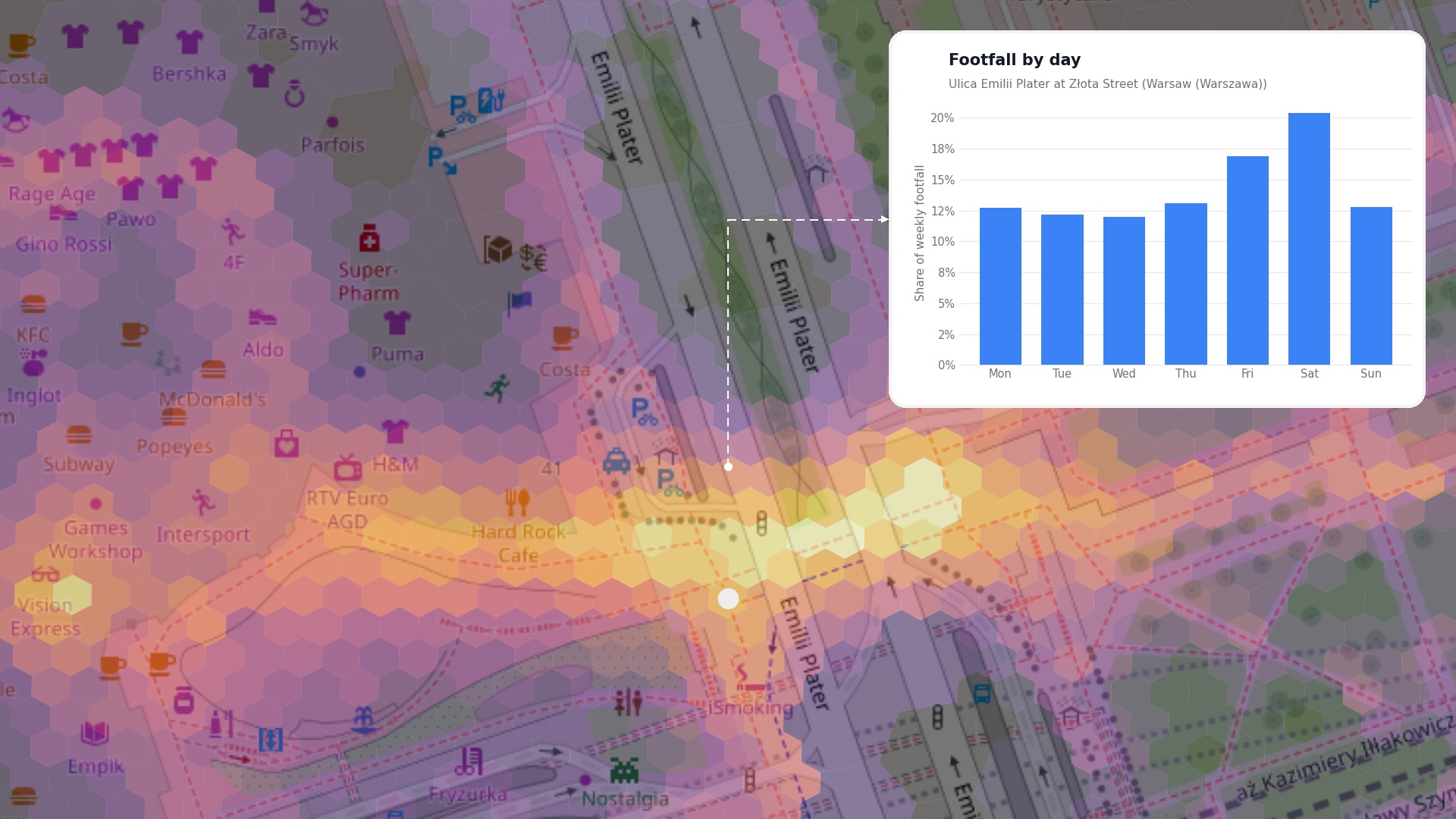
6. Ulica Emilii Plater at Złota Street, Warszawa: 39,700 Daily Footfall
Ulica Emilii Plater is a key north–south corridor running through Warsaw’s Śródmieście district, and the heat map pinpoints the peak concentration at its crossing with Złota Street, just outside the Złote Tarasy shopping centre. Pedestrian flows converge here from multiple directions: shoppers spilling out of Złote Tarasy and the adjoining Golden Terraces plaza, commuters emerging from Warszawa Centralna railway station to the south, and foot traffic moving along the retail strip toward Aleje Jerozolimskie. The presence of Hard Rock Cafe, H&M, and RTV Euro AGD nearby keeps the area active throughout the day and into the evening.
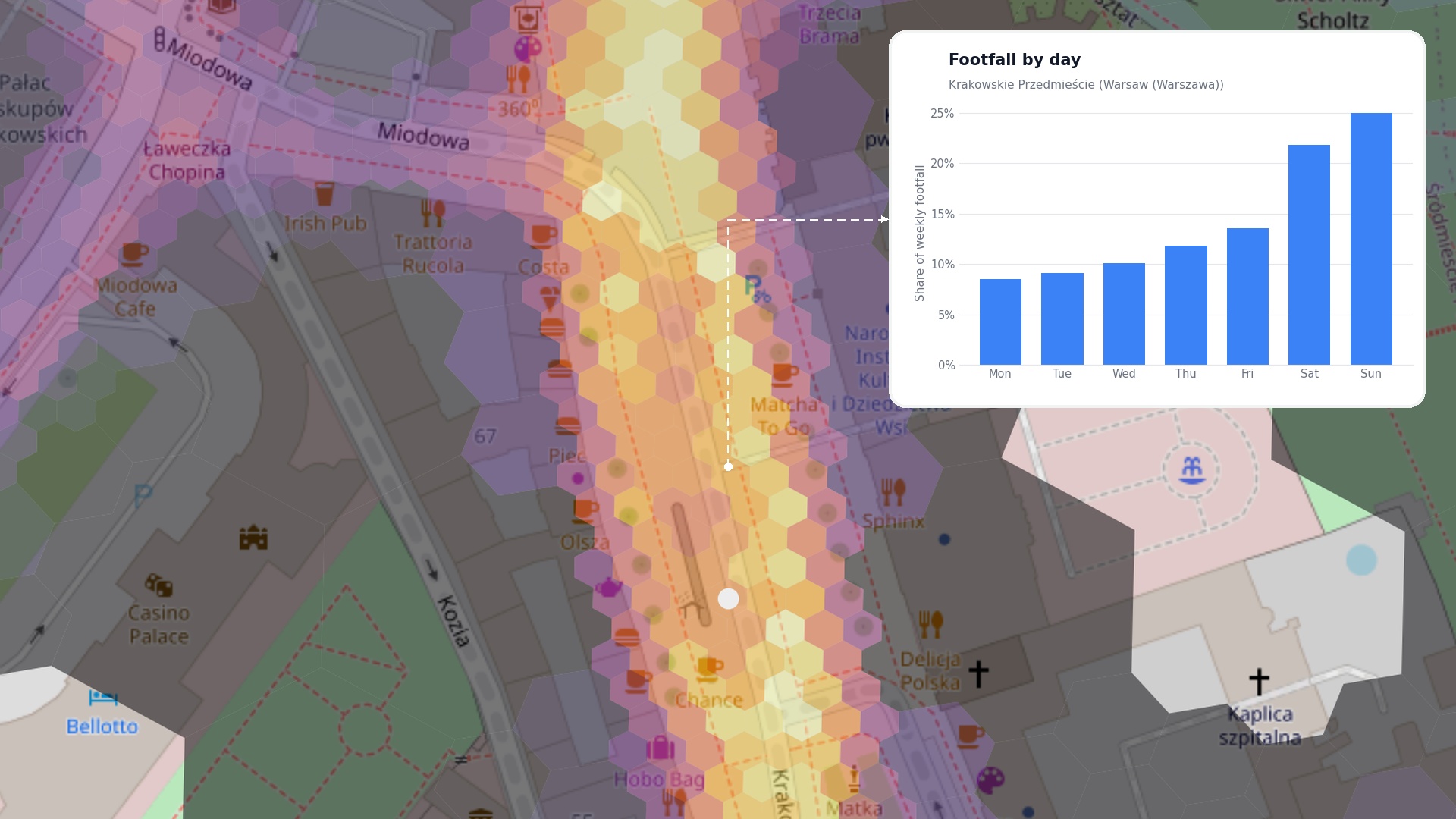
7. Krakowskie Przedmieście, Warszawa: 35,560 Daily Footfall
Krakowskie Przedmieście is Warsaw’s most ceremonial boulevard, running through the heart of the Śródmieście district and connecting the Royal Castle area to the north with Nowy Świat to the south. The heat map places the peak concentration in the mid-section of the street, around the stretch between Olsia and Bednarska, where pedestrian flows from the side streets of Kozia and Miodowa merge with the steady stream moving along the main corridor past cafés, restaurants, and cultural institutions. The nearby Church of St. Anne (Kościół pw. Świętej Anny) and the Museum of Caricature (Muzeum Karykatury) add to the draw, keeping foot traffic elevated throughout the day. With around 35,000 people recorded along this stretch, Krakowskie Przedmieście confirms its role as one of Warsaw’s most walked thoroughfares.
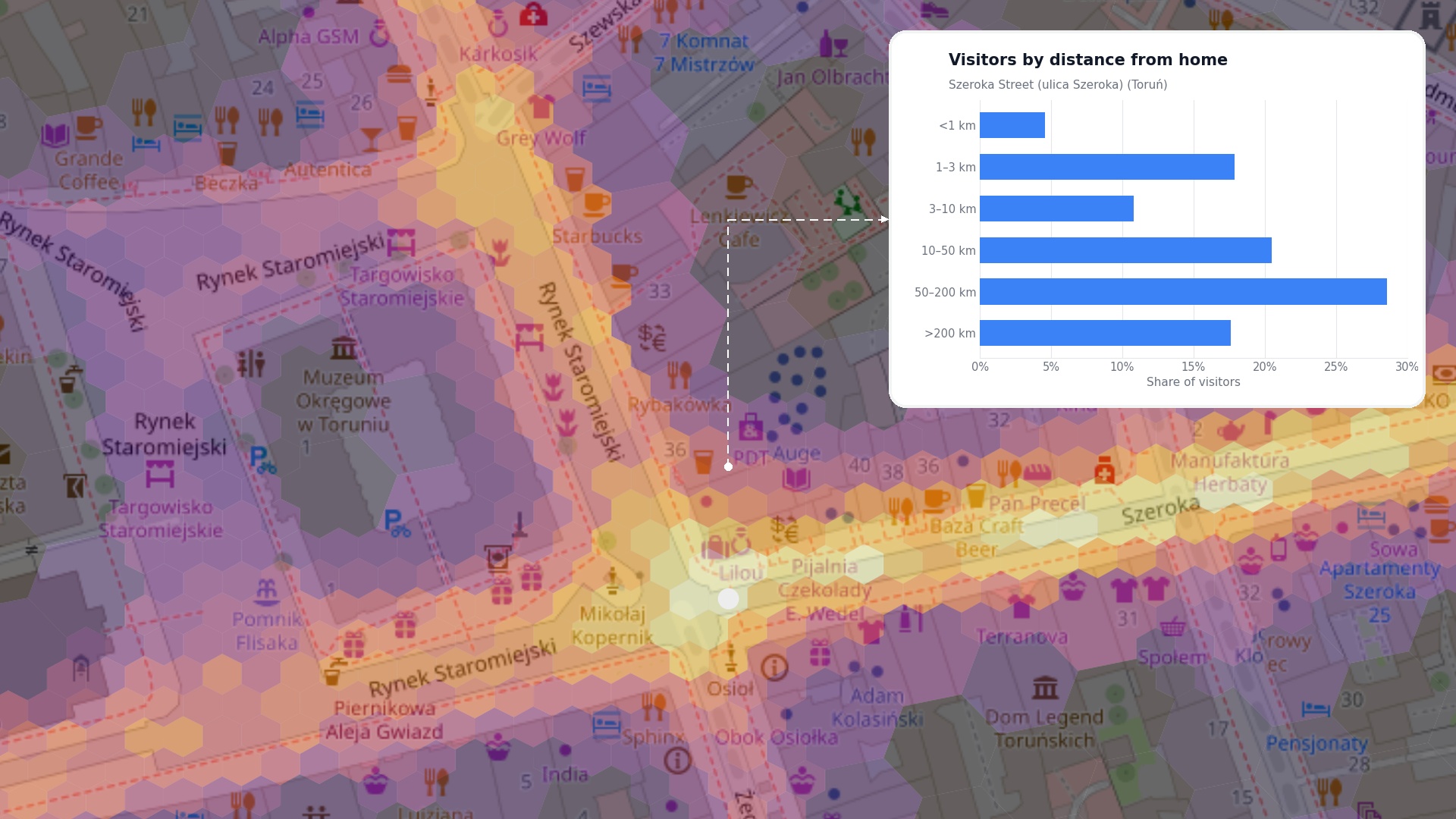
8. Szeroka Street, Toruń: 28,660 Daily Footfall
Szeroka Street is a wide pedestrian thoroughfare running through the heart of Toruń’s Old Town (Stare Miasto). The peak on the heatmap is concentrated at its junction with Rynek Staromiejski, near the statue of Nicolaus Copernicus and the Artus Court. Foot traffic converges here from the market square to the west, Żeglarska Street to the south, and the upper section of Szeroka leading east toward Manufaktura Herbaty and Pan Precel, creating a dense crossroads at the centre of the Old Town. The mix of cafés, chocolate shops such as Pijalnia Czekolady E. Wedel, and souvenir outlets keeps pedestrian flow steady throughout the day. With close to 29,000 people recorded along this stretch, Szeroka Street anchors the main commercial and tourist corridor of one of Poland’s best-preserved medieval cities.
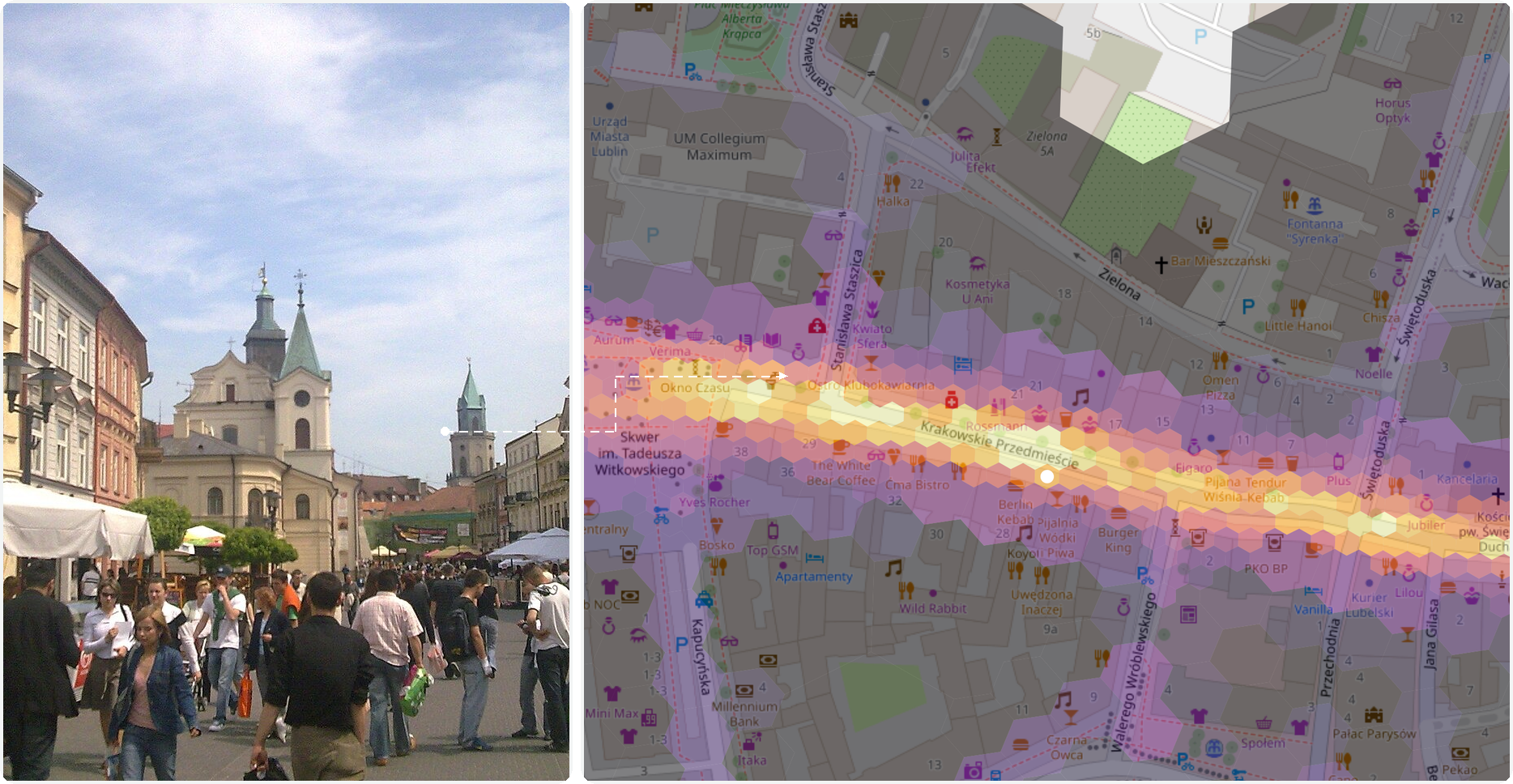
9. Krakowskie Przedmieście, Lublin, Lublin: 24,880 Daily Footfall
Krakowskie Przedmieście is Lublin’s main pedestrian spot, running through the Śródmieście district and connecting the historic Old Town area to Plac Wolności to the south. The heatmap shows the peak concentration near Stanisława Staszica, along the central stretch of the street. This is where pedestrian flows from both ends of the promenade meet a dense mix of cafés, restaurants, and retail outlets, including Rossmann and Burger King. Side streets feeding in from Zielona to the north and Walentego Wróblewskiego to the east add further movement, keeping foot traffic steady throughout the day.
10. Nowy Świat, Warszawa: 24,840 Daily Footfall
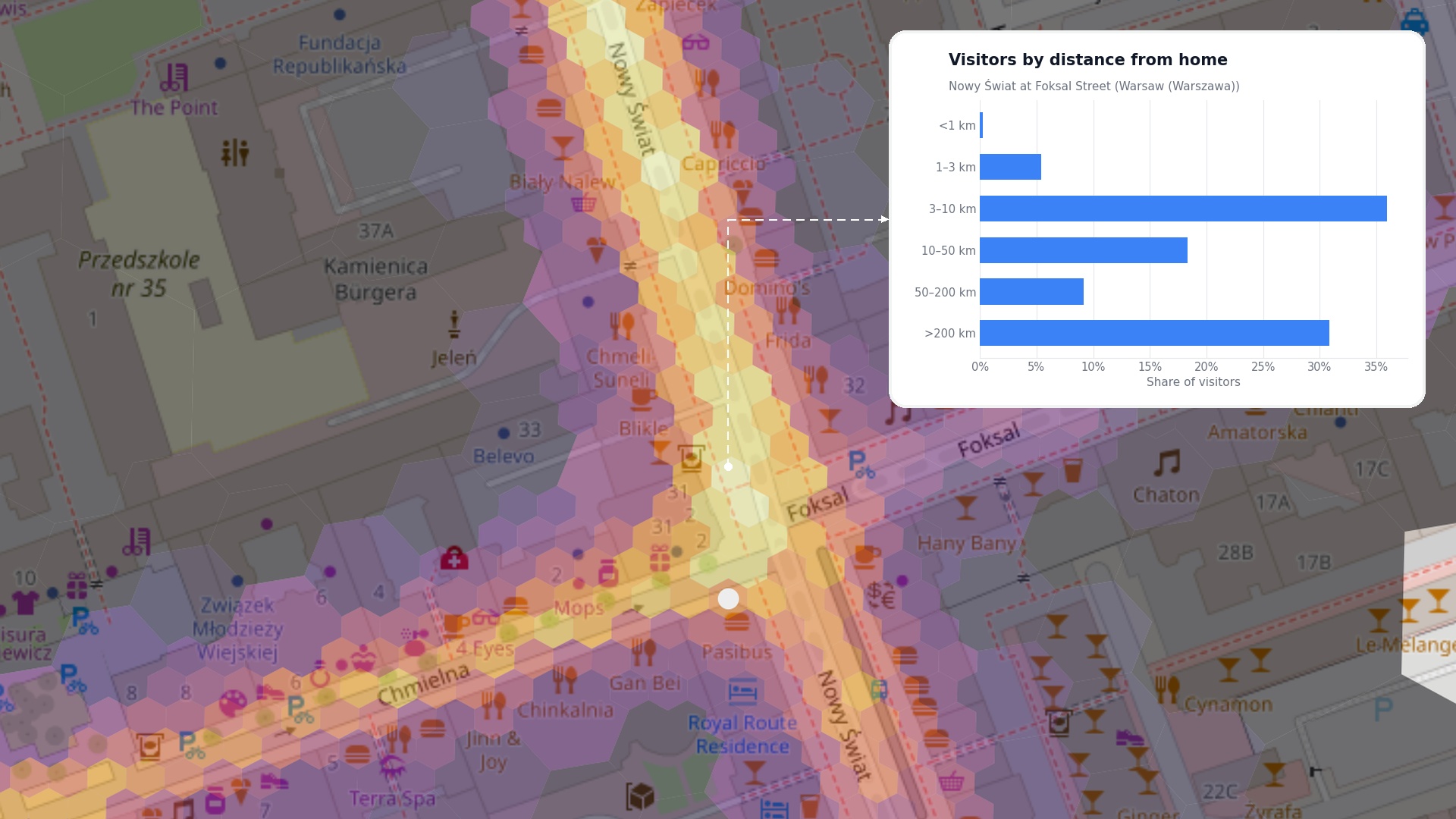
Nowy Świat is one of Warsaw’s best-known pedestrian-friendly boulevards, running through the Śródmieście district and connecting Krakowskie Przedmieście to the north with Aleje Jerozolimskie to the south. The heatmap places the peak concentration at the junction with Foksal Street and Chmielna Street, where foot traffic from three converging corridors meets alongside a dense strip of cafés, restaurants, and shops. Pedestrians moving along Nowy Świat’s main axis are joined by those cutting across from Chmielna to the west and Foksal to the east, creating a sustained crossroads of movement throughout the day.
Top 10 Tourist Hotspots by Foot Traffic in Poland
This ranking focuses on tourist footfall, meaning pedestrians whose usual location is more than 50 kilometres away. Only locations where tourists account for at least 70% of total footfall are included, so the list highlights places shaped primarily by visitor demand.
Tourist footfall in Poland clusters most heavily at mountain and coastal resort destinations, with Zakopane’s Krupówki promenade and the Baltic seafronts of Sopot, Międzyzdroje, Świnoujście, and Kołobrzeg together accounting for the majority of the top ten entries. Heritage urban destinations also hold their ground, with Kraków’s Rynek Główny and Wawel Hill drawing large concentrations of out-of-town visitors even within a city that sees high overall pedestrian numbers. For expansion teams, the ranking identifies the specific streets and junctions — from Monte Cassino Street in Sopot to Konstytucji 3 Maja Street in Karpacz — where retail and hospitality units can expect footfall driven almost entirely by tourist demand rather than local residential traffic.
| City | Place | Daily Footfall | Daily Tourist Footfall |
|---|---|---|---|
| Zakopane | Krupówki | 51,800 | 48,120 |
| Kraków | Main Market Square (Rynek Główny) | 55,000 | 39,360 |
| Gdańsk | Długi Targ | 43,130 | 30,570 |
| Sopot | Monte Cassino Street | 22,950 | 16,520 |
| Międzyzdroje | Bohaterów Warszawy Street | 16,210 | 14,960 |
| Świnoujście | Aleja Baltic Park Molo | 15,500 | 14,720 |
| Kołobrzeg | Adama Mickiewicza Street | 15,210 | 13,220 |
| Zakopane | Droga Stanisława Zubka | 12,730 | 12,260 |
| Kraków | Wawel Hill | 15,080 | 11,020 |
| Karpacz | Konstytucji 3 Maja Street | 12,040 | 10,530 |
1. Krupówki, Zakopane: 48,120 Daily Tourists
Already featured in our overall footfall ranking, Krupówki stands out even more sharply when tourist footfall is isolated — with nearly all pedestrians on this mountain promenade coming specifically for the Zakopane experience. The stretch near the Generała Andrzeja Galicy junction, flanked by highland restaurants, souvenir stalls, and outdoor gear shops, is where the tourist draw is at its most concentrated.
2. Main Market Square, Kraków: 39,360 Daily Tourists
Already the top spot in our overall footfall ranking, Rynek Główny earns its place here too, with tourist pedestrians making up a substantial share of the more than 55,000 people passing through the eastern edge of the square daily, where Floriańska Street meets Plac Mariacki in front of St. Mary’s Basilica.
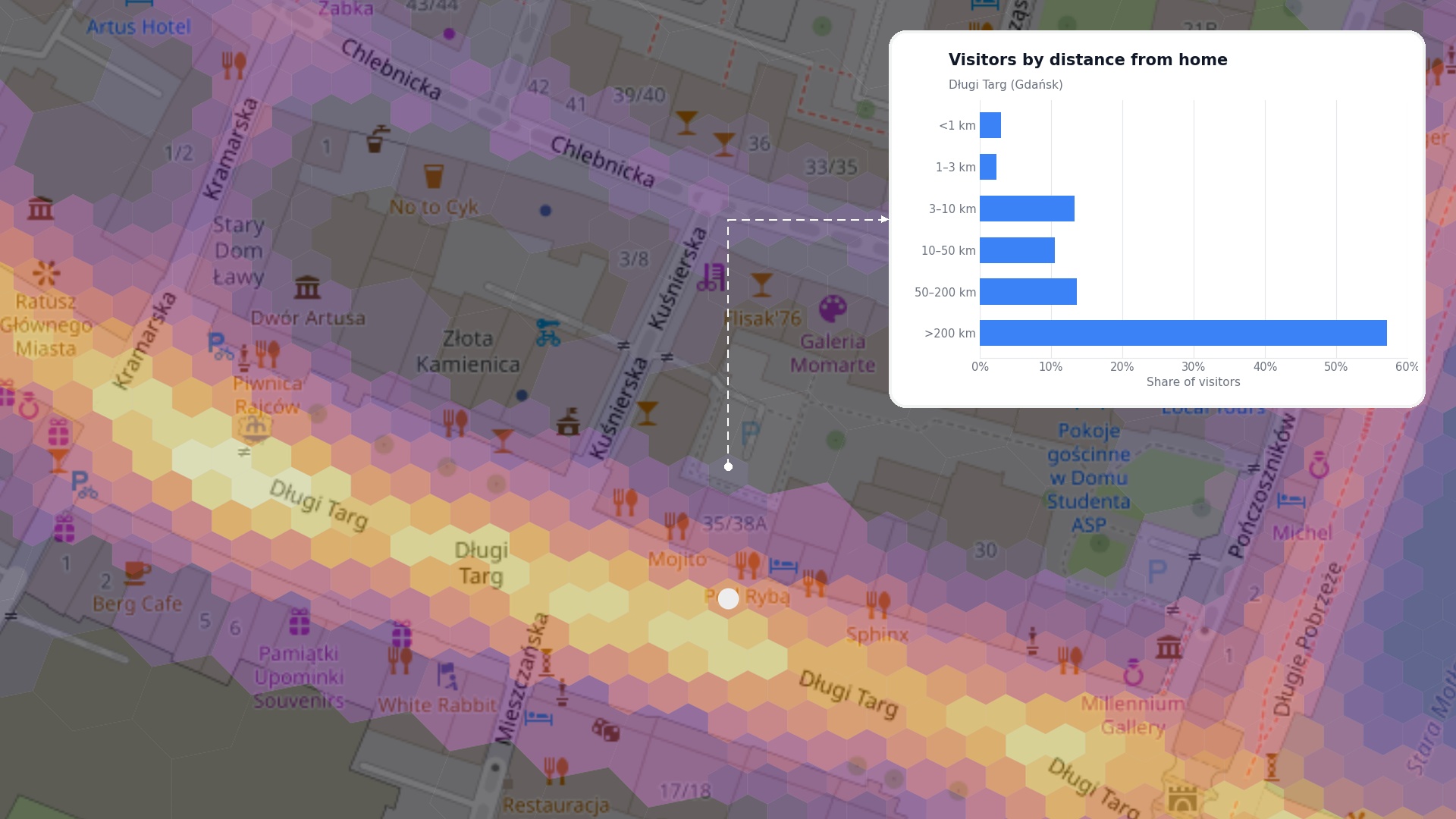
3. Długi Targ, Gdańsk: 30,570 Daily Tourists
Already ranked fifth in our overall footfall list, Długi Targ earns its place here on the strength of its tourist draw — with the peak centred on the mid-section of the square near the Kuśnierska junction, where pedestrians moving along the Royal Way corridor pass between the Town Hall, ornate merchant facades, and the Green Gate (Zielona Brama) at the Motława riverfront.
4. Monte Cassino Street, Sopot: 16,520 Daily Tourists
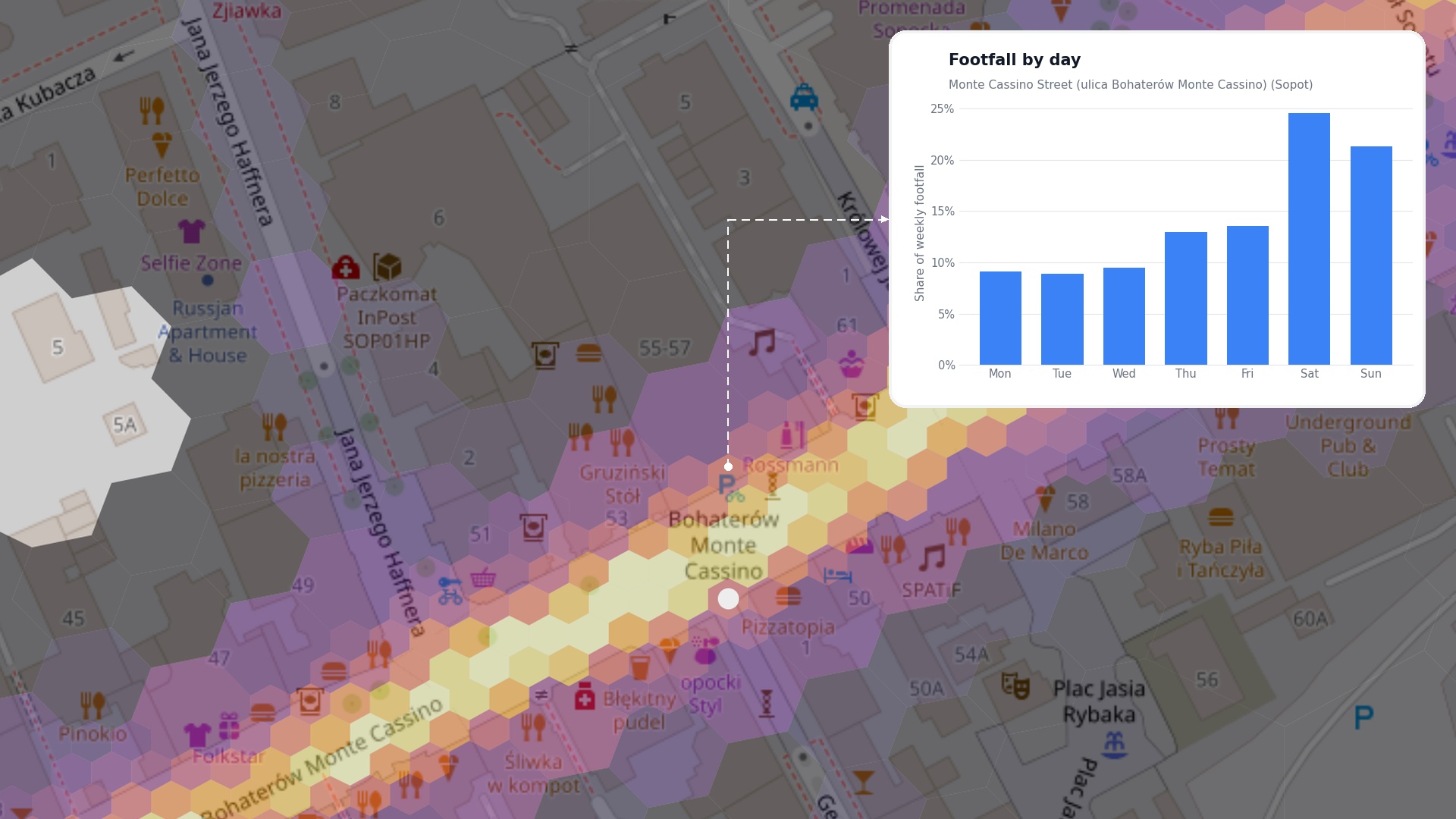
Monte Cassino Street is Sopot’s celebrated pedestrian promenade, stretching from the railway station down toward the Baltic Sea pier — the longest wooden pier in Europe. The peak is in the central section of the street, near the crossing with Generała Józefa Bema, where foot traffic from both ends of the promenade converges alongside a dense strip of restaurants, cafés, and shops. The street draws a strong seasonal crowd heading toward the beach and pier, with Plac Przyjaciół Sopotu adding a secondary node of activity to the northeast. With more than 16,000 tourist pedestrians recorded here daily, Monte Cassino Street channels the bulk of Sopot’s considerable leisure footfall into a single, walkable corridor.
5. Bohaterów Warszawy Street, Międzyzdroje: 14,960 Daily Tourists
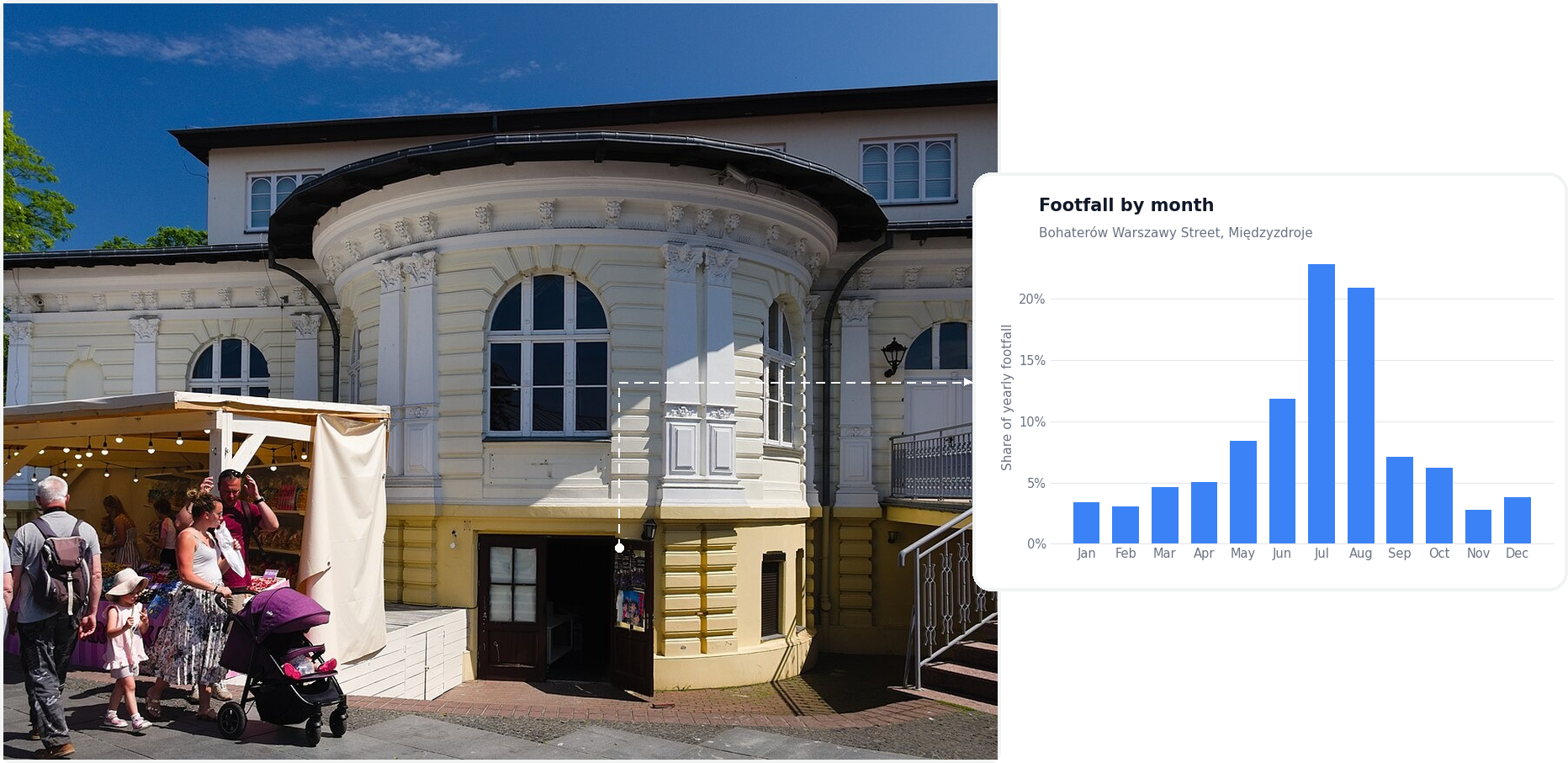
Bohaterów Warszawy Street is the main pedestrian spine of Międzyzdroje, a seaside resort town on Wolin Island along the Baltic coast. The most tourist footfall activity is spotted along the central stretch of the street, near the Gabinet Figur Woskowych and Kino Eva, where foot traffic from the beach direction and the surrounding park areas funnels into a dense corridor of restaurants, amusement attractions, and souvenir shops. The nearby Amphitheatre (Amfiteatr) and the English Garden (Ogród Angielski) add to the draw, pulling pedestrians along the full length of the promenade. With close to 15,000 tourist pedestrians recorded daily, the street captures the concentrated leisure footfall that defines Międzyzdroje’s role as one of the Baltic coast’s most popular summer destinations.
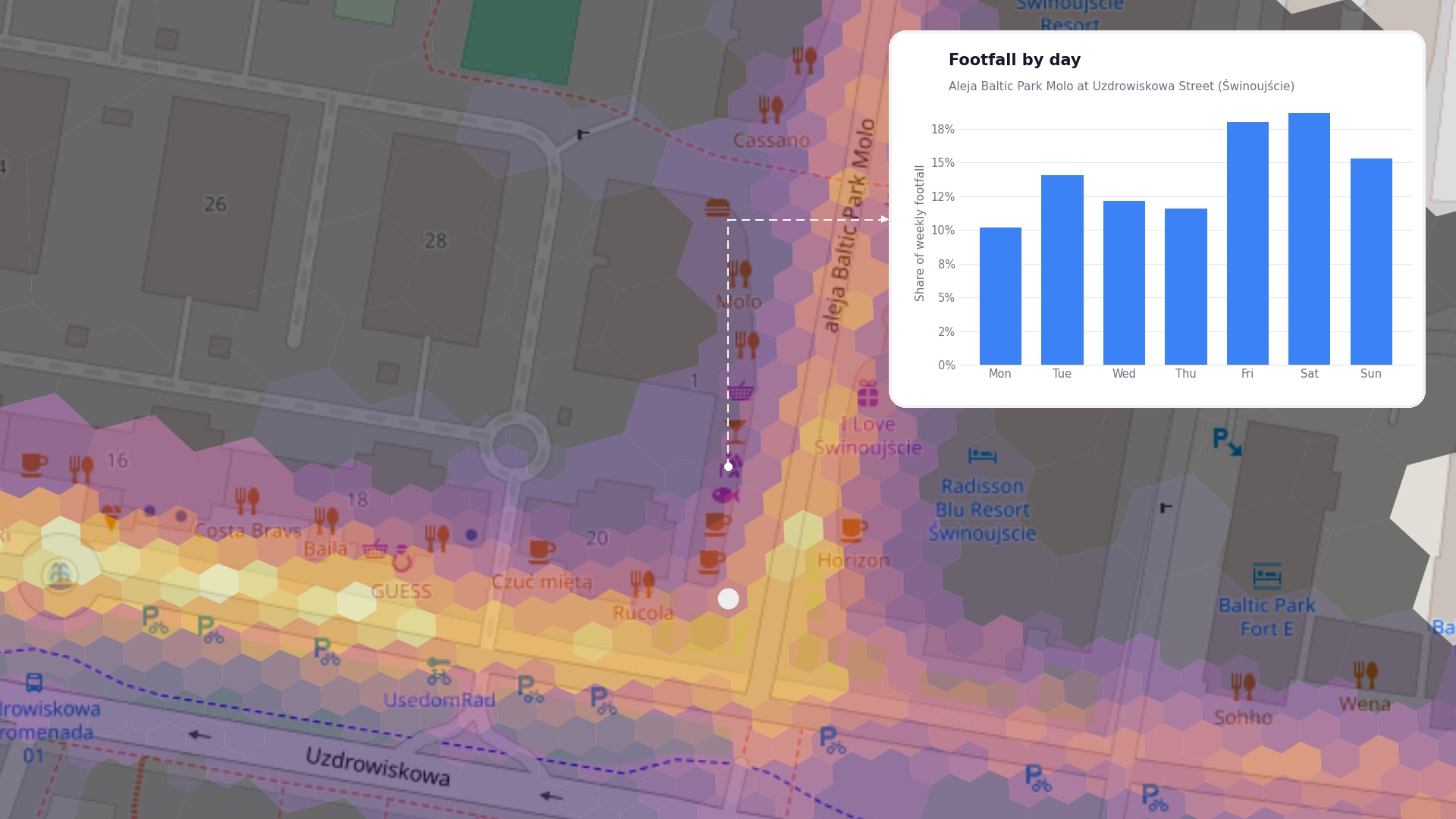
6. Aleja Baltic Park Molo, Świnoujście: 14,720 Daily Tourists
Aleja Baltic Park Molo is the main pedestrian promenade in Świnoujście, a spa resort town on the Baltic coast. The heatmap shows the highest footfall at its crossing with Uzdrowiskowa Street, where movement toward the pier and beach meets pedestrian flow along the seafront. The surrounding strip of restaurants, cafés, and souvenir shops, alongside landmarks like the Hilton Świnoujście Resort & Spa and the Molo Aquapark to the northeast, keeps foot traffic dense throughout the day. With nearly all of the more than 15,000 daily pedestrians here coming specifically for the beach and resort experience, the junction captures the essence of Świnoujście’s appeal as one of the Baltic coast’s most popular seaside destinations.
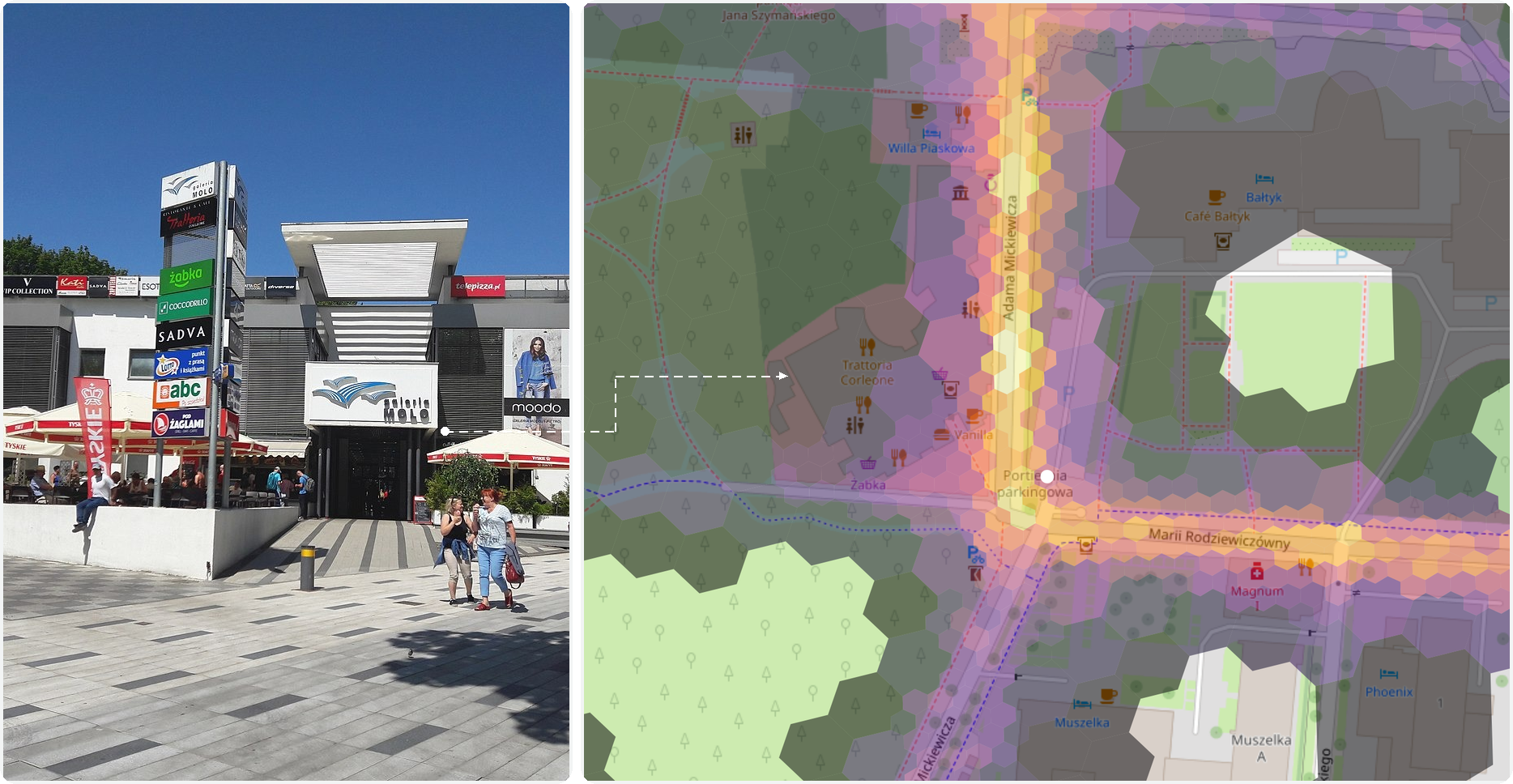
7. Adama Mickiewicza Street, Kołobrzeg: 13,220 Daily Tourists
Kołobrzeg is one of Poland’s most popular Baltic spa resorts. The busiest point is the crossing of Adama Mickiewicza Street and Marii Rodziewiczówny Street, where pedestrians moving toward the beach meet the resort’s main north–south flow. The surrounding area is lined with restaurants, cafés, and accommodation, with the Muszelka complex to the south and the park zone to the east channelling leisure pedestrians through this junction throughout the day. Nearly all of the more than 15,000 daily pedestrians recorded here are drawn by the town’s seaside and spa appeal, making this crossing the clearest expression of Kołobrzeg’s role as a year-round coastal retreat.
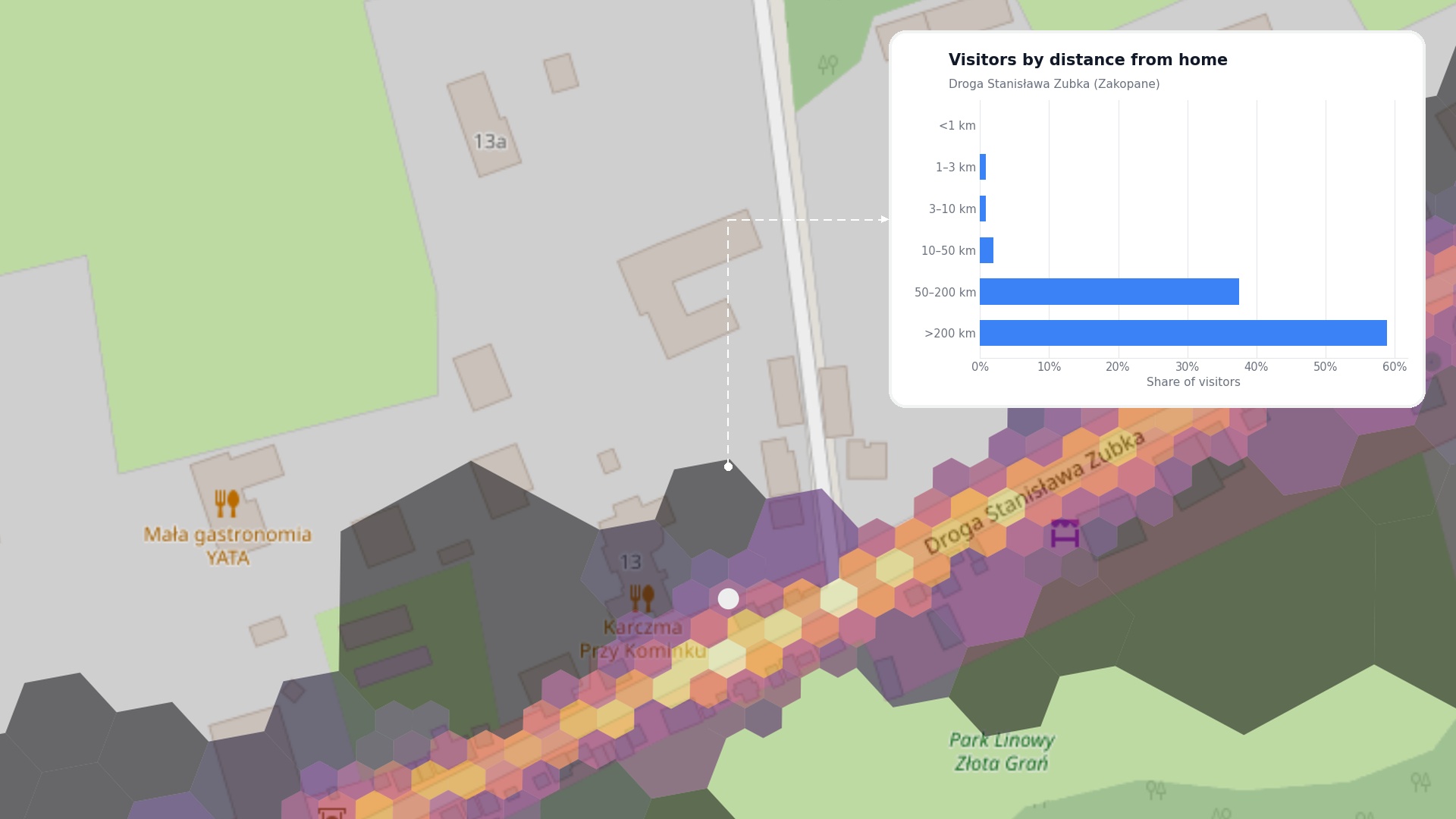
8. Droga Stanisława Zubka, Zakopane: 12,260 Daily Tourists
Droga Stanisława Zubka is a secondary pedestrian route running parallel to Krupówki, already featured at the top of this ranking, and the heat map places the peak concentration along the stretch near Karczma Przy Kominku and the Park Linowy Złota Grań rope park. The street serves as an overflow corridor for pedestrians moving between the town centre and the surrounding highland trails, with nearly all of its daily footfall drawn by the same mountain resort appeal that defines Zakopane as a whole.
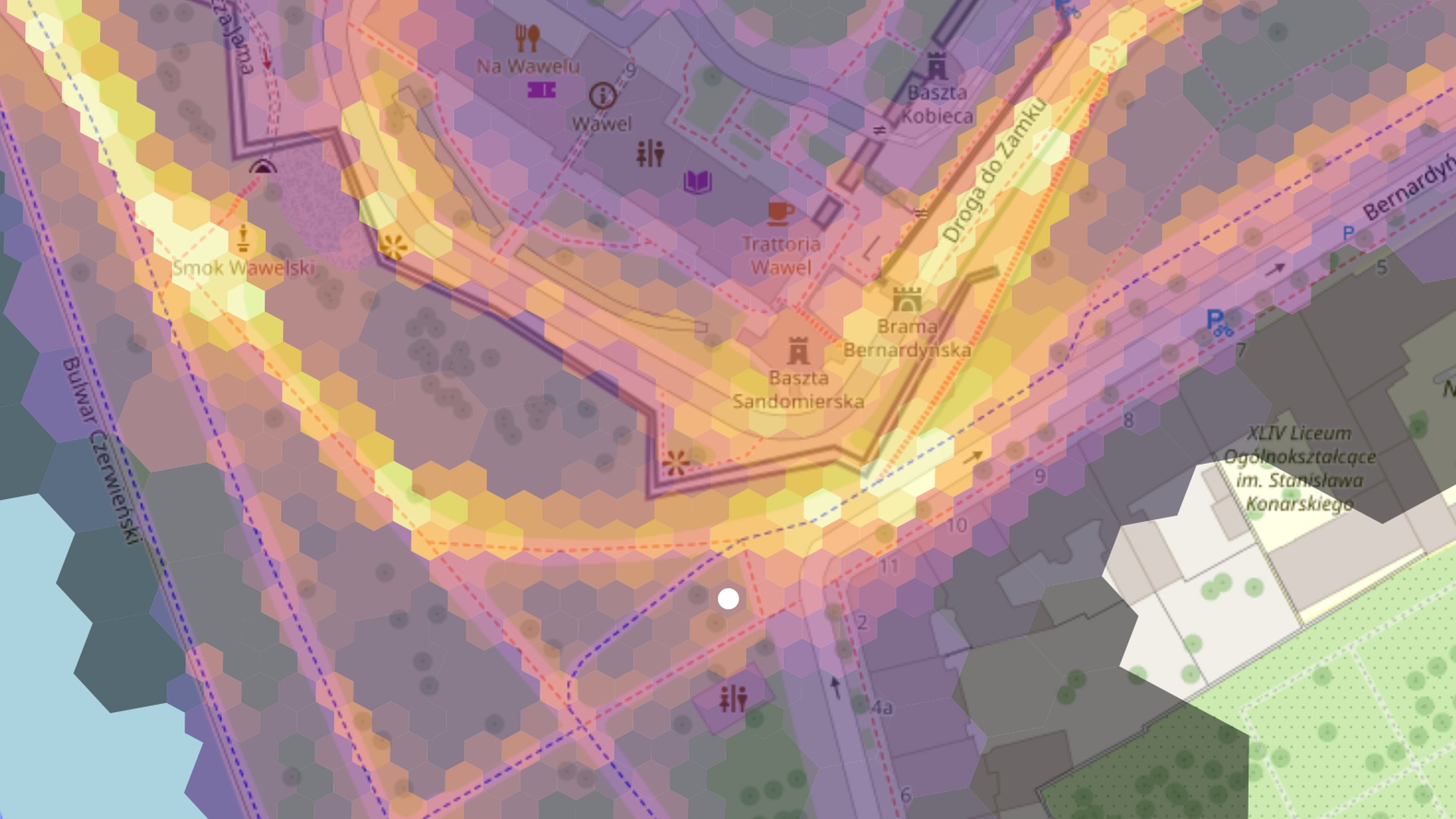
9. Wawel Hill, Kraków: 11,020 Daily Tourists
The busiest point sits at the foot of Wawel Hill (Wzgórze Wawelskie), where Smocza Street meets the path toward Brama Bernardyńska and the castle walls. It acts as a natural funnel for visitors walking from the Old Town to Wawel Royal Castle and Wawel Cathedral. This approach route, flanked by the Sandomierska Tower (Baszta Sandomierska) and the Dragon’s Den (Smocza Jama) entrance below, concentrates the flow of people drawn to one of Poland’s most historically significant sites. The Vistula riverbank boulevard (Bulwar Czerwieński) to the west adds a leisure dimension, pulling pedestrians along the water’s edge before they turn uphill toward the castle complex.
10. Konstytucji 3 Maja Street, Karpacz: 10,530 Daily Tourists
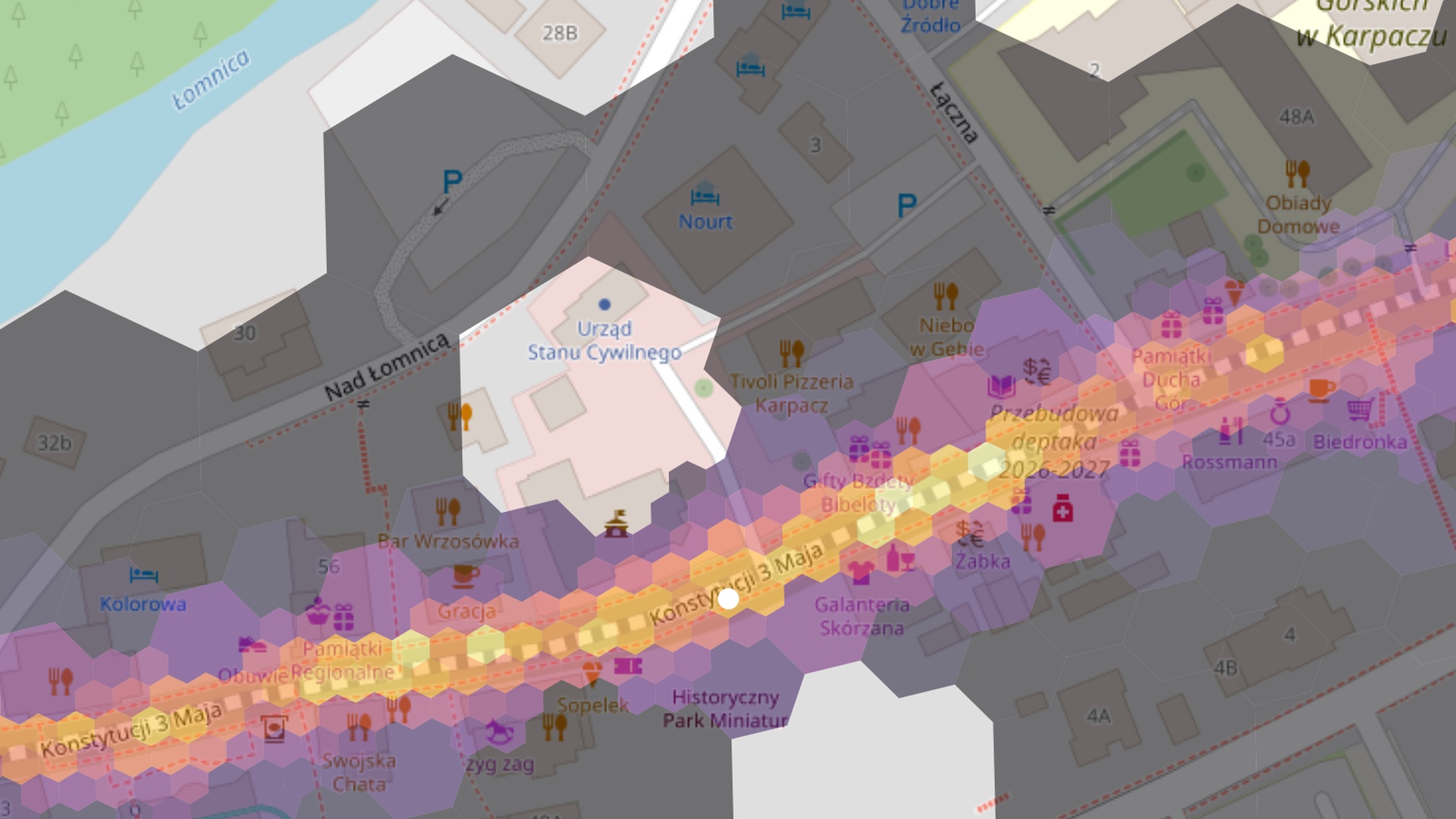
Konstytucji 3 Maja Street is the main pedestrian promenade running through the heart of Karpacz, a mountain resort town in the Karkonosze range of the Sudetes. The heat map places the peak concentration along the central stretch of the street, near the Historyczny Park Miniatur and the cluster of souvenir shops and restaurants including Tivoli Pizzeria and Bar Wrzosówka, where foot traffic from both ends of the promenade converges. The street serves as the primary corridor linking accommodation, dining, and shops for people heading toward the Łomnica River valley and the trails leading up into Karkonosze National Park. With more than 10,000 daily pedestrians, the overwhelming majority drawn by the town’s mountain resort appeal, Konstytucji 3 Maja Street functions as Karpacz’s central artery for leisure footfall across all seasons.
Top 10 Shopping Malls in Poland by Daily Visitors
Warsaw dominates the upper rankings with two entries, Golden Terraces and Westfield Arkadia, reflecting the capital’s scale and density of retail demand. Yet strong daily visitor numbers at centres in smaller cities like Jarosław, Radom, and Rzeszów show that regional malls can match or outperform those in larger urban centres. For expansion teams, ranking malls by measured visitor demand rather than city size or centre floor area reveals where real footfall opportunity exists across the country.
Note: Galeria Krakowska, Galeria Katowicka and Avenida Poznań were excluded from the list because they are integrated within the main train station. As a result, our data cannot reliably distinguish mall visitors from regular train station visitors.
| City | Mall | Daily Visitors |
|---|---|---|
| Warsaw | Złote Tarasy | 71,170 |
| Wrocław | Wroclavia | 63,780 |
| Warsaw | Westfield Arkadia | 49,340 |
| Kraków | Bonarka City Center | 43,970 |
| Poznań | Posnania | 43,110 |
| Łódź | Centrum Handlowo-Rozrywkowe Manufaktura | 40,530 |
| Katowice | Silesia City Center | 38,220 |
| Wrocław | Magnolia Park | 36,770 |
| Szczecin | Galaxy | 34,240 |
| Warsaw | Blue City | 31,350 |
1. Złote Tarasy, Warsaw: 71,170 Daily Visitors
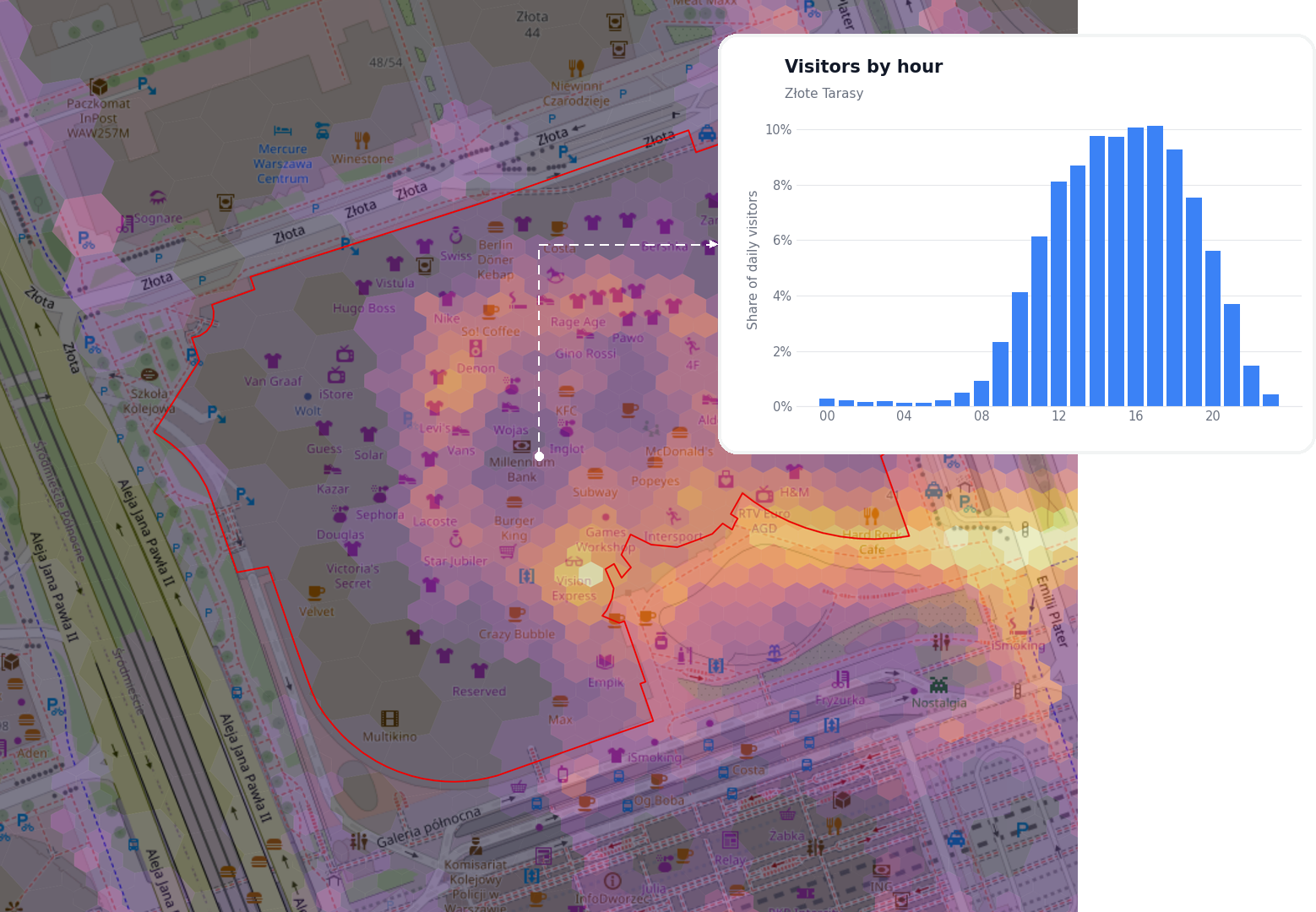
Złote Tarasy is Warsaw’s busiest shopping destination, drawing more than 71,000 visitors daily. Located on Złota Street in the Śródmieście district, the complex opened in February 2007 and combines a shopping centre, two office buildings, and an entertainment offer spanning more than 200 stores and 30 restaurants and bars. The striking glass diagrid roof — designed and built by Waagner-Biro, which won the 2007 European Steel Design Award for it — is one of the most recognisable architectural features in the Polish capital.
2. Wroclavia, Wrocław: 63,780 Daily Visitors
Wroclavia is a major shopping, entertainment, and office centre situated beside Wrocław Główny railway station in the Huby district. It opened in October 2017 and houses more than 180 stores, a Cinema City multiplex with 20 screens including IMAX and 4DX, and a 24-hour fitness club. The busiest activity on the heatmap clusters tightly around its main entrance, reflecting its status as Wrocław’s most visited shopping destination — and its International Property Award for Best Retail Architecture in the World in 2018–2019 speaks to the draw of its design.

3. Westfield Arkadia, Warsaw: 49,340 Daily Visitors
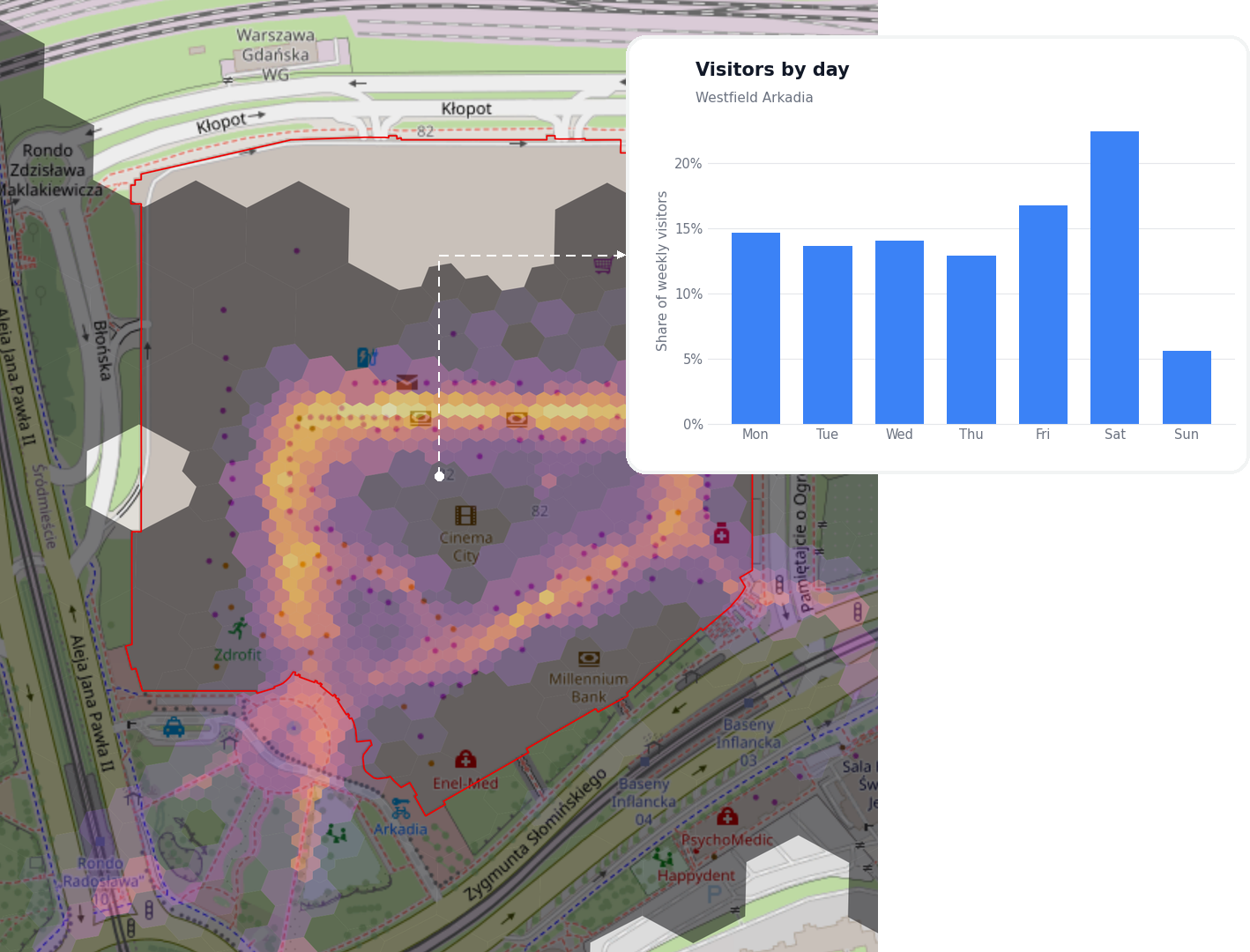
Westfield Arkadia sits on Aleja Jana Pawła II in the Muranów district and ranks among the busiest shopping destinations in Poland. The busiest spot clusters around the main retail and dining areas of this vast complex, which spans more than 280,000 square metres and houses over 230 shops, 25 restaurants, and a Cinema City multiplex. Opened in 2004, it won the European Shopping Center Award for best mall in Europe in 2006 and attracts around 49,000 visitors daily.
4. Bonarka City Center, Kraków: 43,970 Daily Visitors
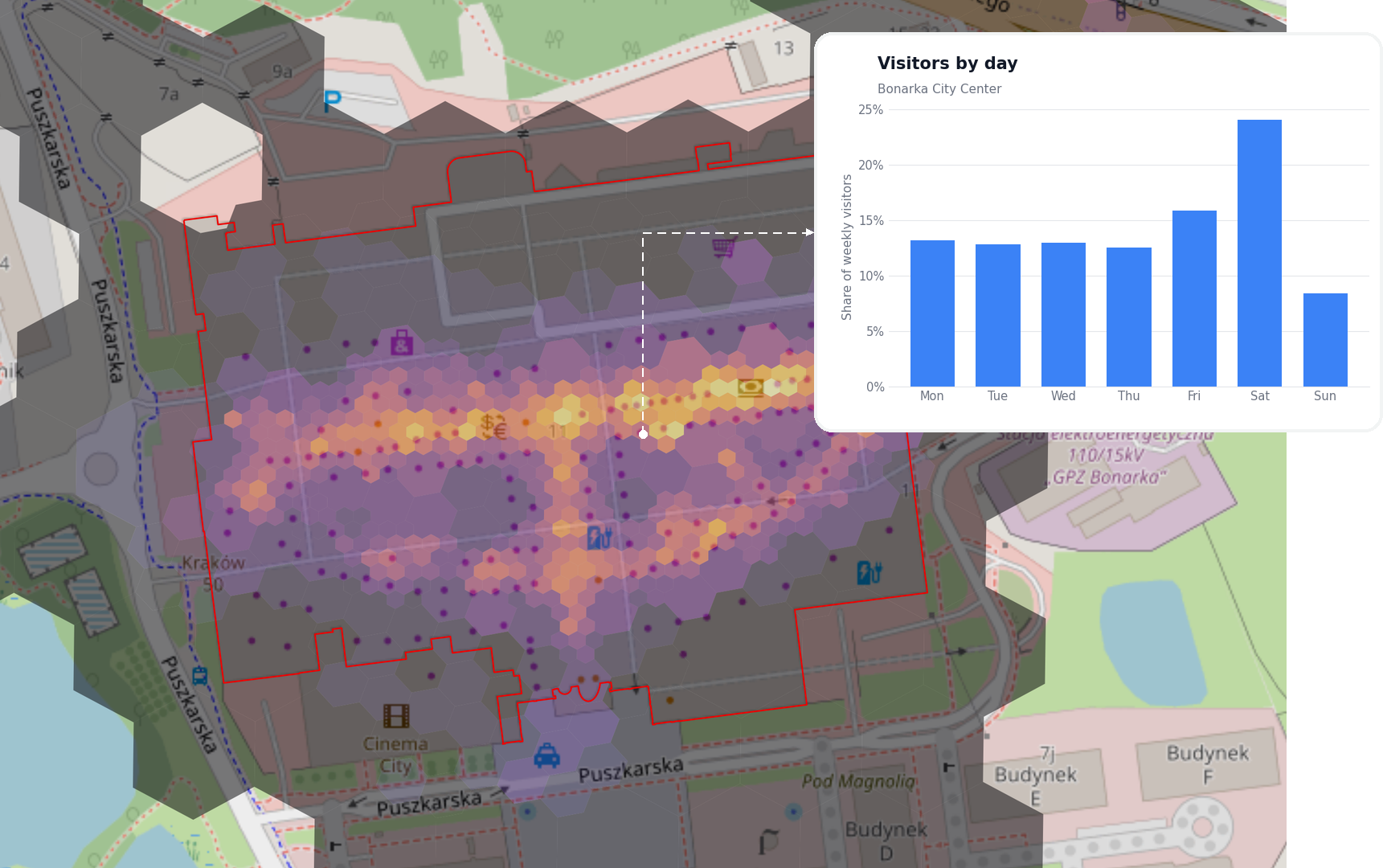
Bonarka City Center is one of Kraków’s largest retail destinations, located in the Podgórze Duchackie district in the south of the city. It attracts nearly 44,000 visitors daily, making it the fourth busiest shopping centre in Poland. The busiest activity clusters around the main entrances and the central retail corridors.
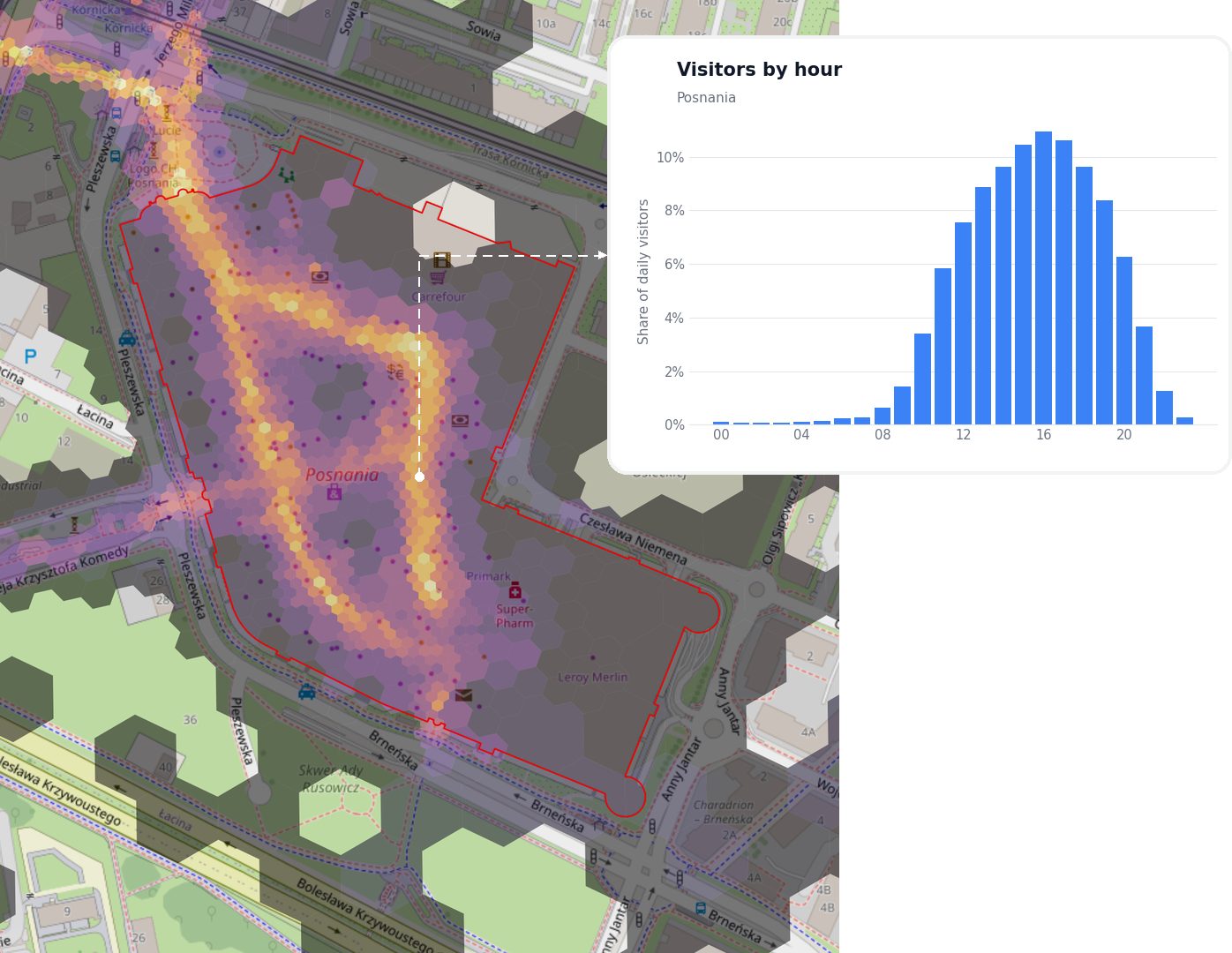
5. Posnania, Poznań: 43,110 Daily Visitors
Posnania is one of Poland’s largest shopping centres, located in the Rataje district on the eastern bank of the Warta River. It draws more than 43,000 visitors daily, making it the fifth busiest mall in the country. The busiest activity clusters near the central retail and dining areas, reflecting its role as a major destination for the Poznań region.
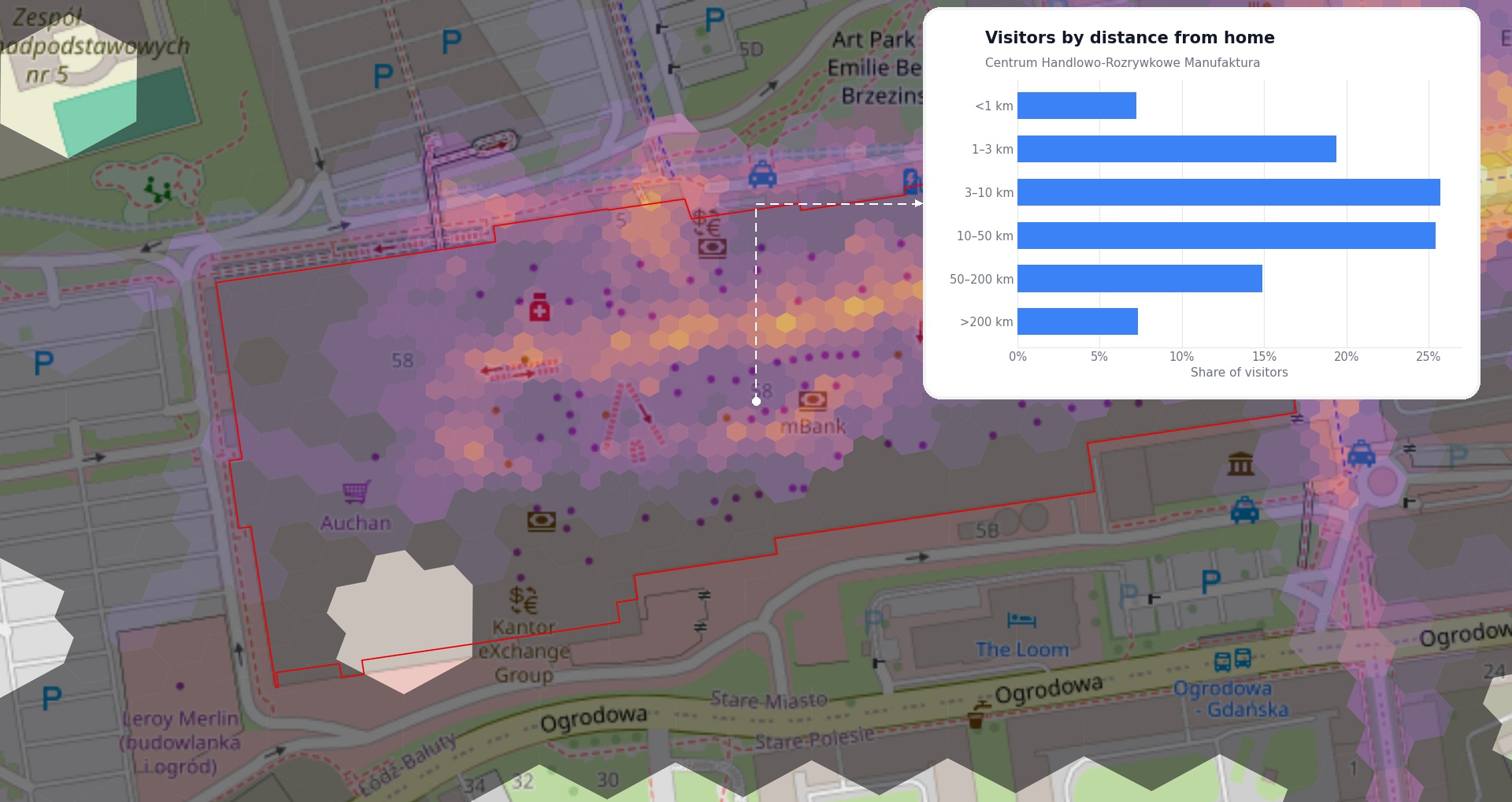
6. Centrum Handlowo-Rozrywkowe Manufaktura, Łódź: 40,530 Daily Visitors
Manufaktura is a large retail and entertainment complex built within a restored 19th-century textile factory complex on ulica Jana Karskiego. It ranks sixth in Poland by daily visitors, drawing around 40,000 people per day. The busiest activity clusters around the central areas of the sprawling site, reflecting its appeal as both a shopping destination and a cultural landmark.
7. Silesia City Center, Katowice: 38,220 Daily Visitors
Silesia City Center is one of the largest and most visited shopping centres in Poland, located in the Dąb district along ulica Chorzowska. It draws around 38,000 visitors daily, ranking seventh in the country. The busiest concentration of activity clusters near the main retail and cosmetics outlets at the heart of the complex.

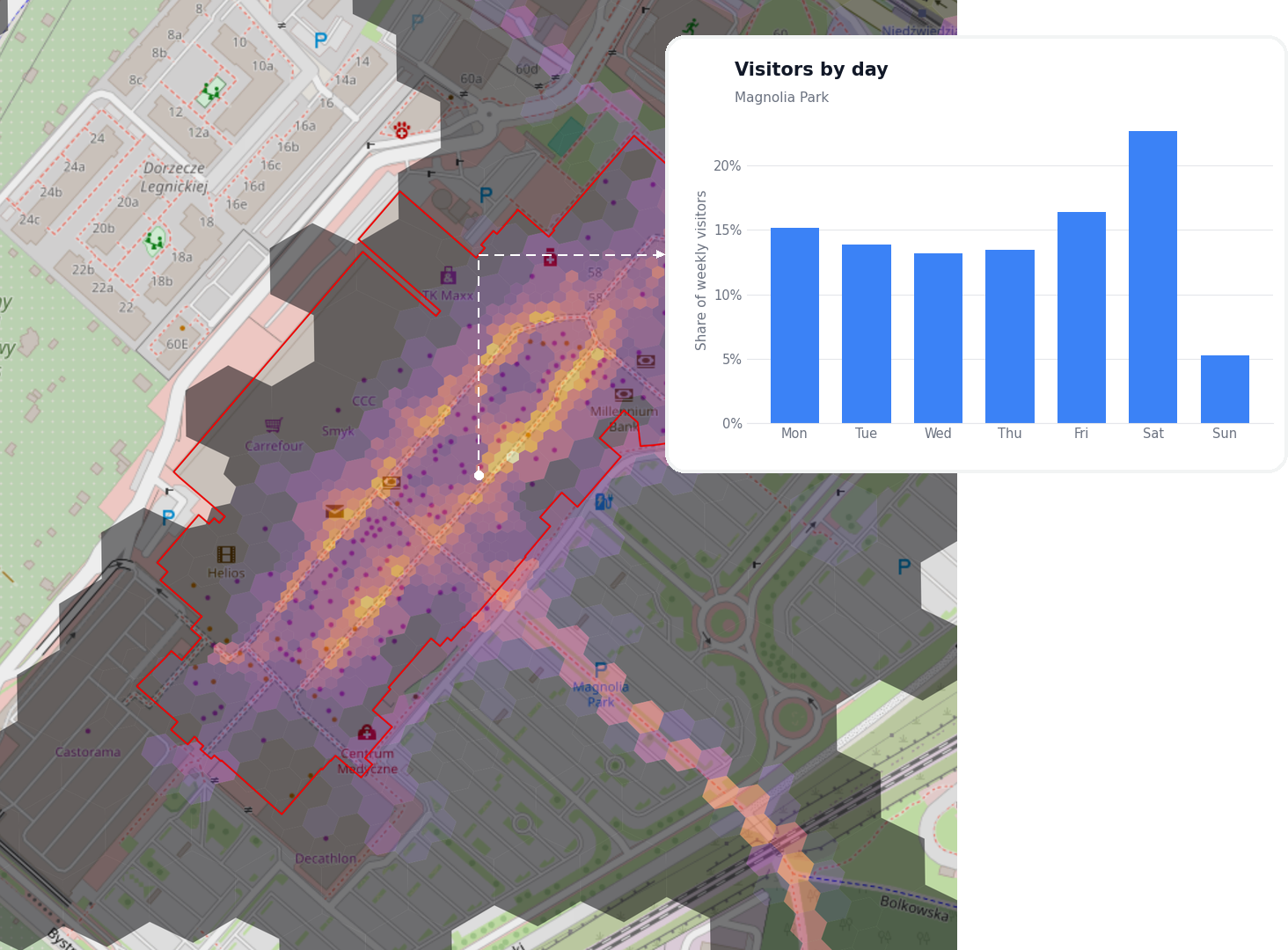
8. Magnolia Park, Wrocław: 36,770 Daily Visitors
Magnolia Park on ulica Legnicka is one of the busiest shopping centres in Poland, drawing around 37,000 visitors daily. It ranks eighth in the country, and the heatmap shows the heaviest concentration of activity clustered around the main entrance along Legnicka. Its strong visitor numbers reflect its position as a retail anchor in western Wrocław.
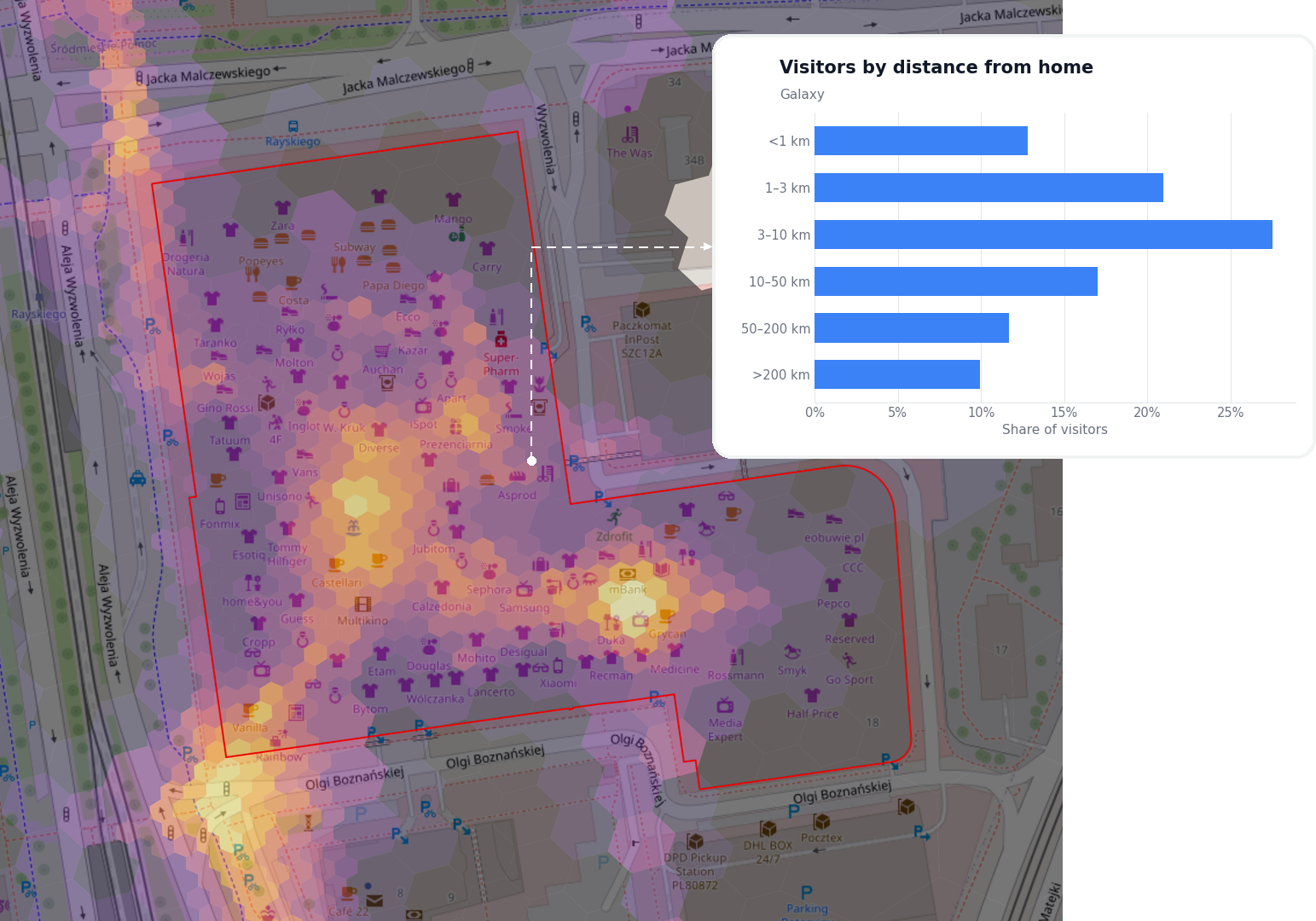
9. Galaxy, Szczecin: 34,240 Daily Visitors
Galaxy Shopping Centre sits along Aleja Wyzwolenia in Szczecin, drawing more than 34,000 visitors daily to make it one of Poland’s busiest retail destinations. The heatmap shows the strongest concentration of visitors clustered around the main entrance facing the boulevard. Its consistent visitor numbers place it firmly in the top ten shopping centres across the country.
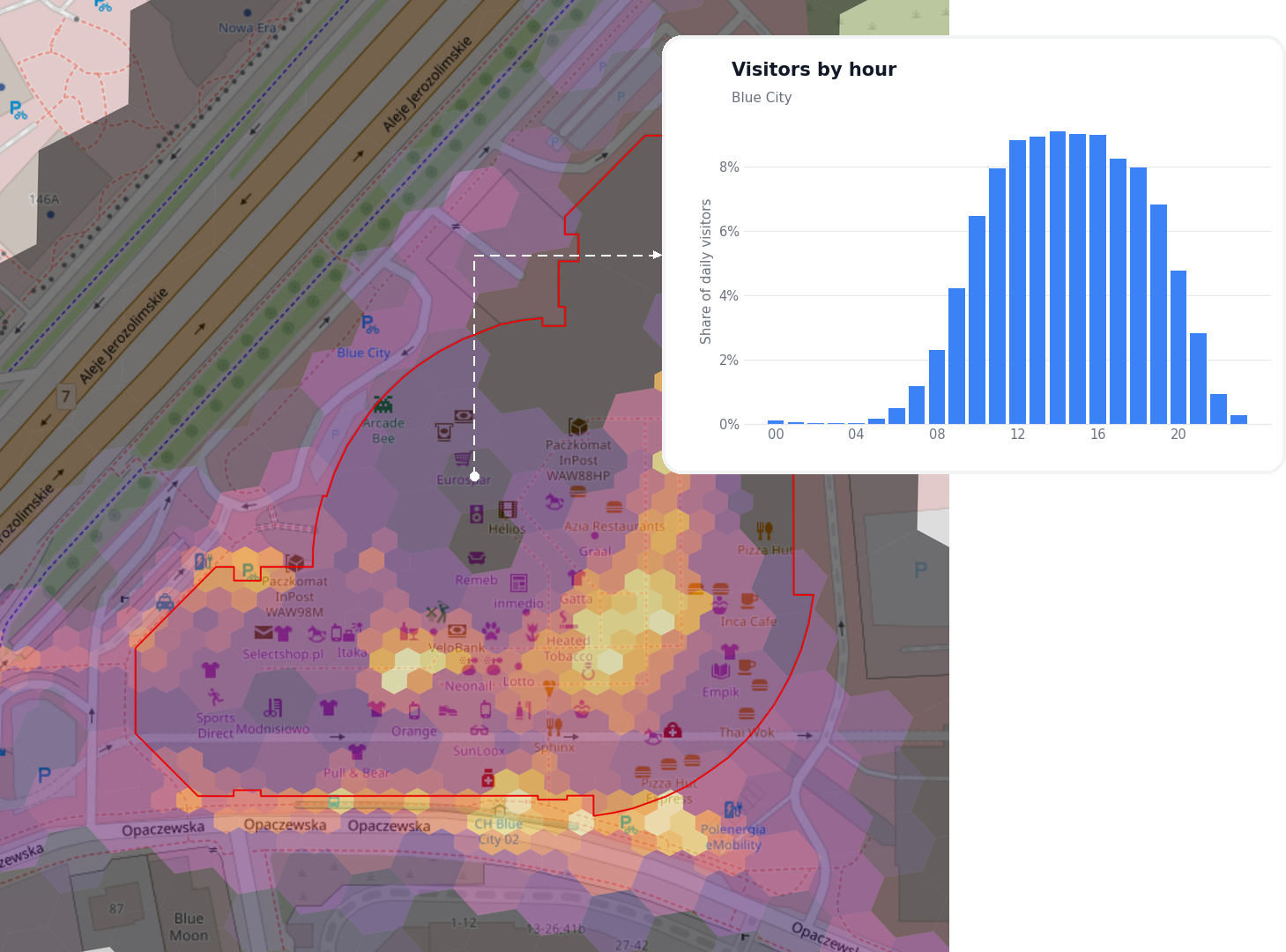
10. Blue City, Warsaw: 31,350 Daily Visitors
Blue City is a postmodernist shopping centre situated at 179 Jerusalem Avenue (Aleje Jerozolimskie) in the Ochota district of Warsaw, drawing more than 31,000 visitors daily. Opened in 2004, it spans a total area of around 180,000 m², with more than 220 stores across eight storeys reaching a height of 55 metres. The heatmap’s busiest spot clusters around the main entrance along Jerusalem Avenue, reflecting its longstanding role as one of Warsaw’s most prominent retail destinations.
Leverage Footfall Data for Smarter Retail Site Selection
Poland’s footfall patterns show why expansion decisions should not rely on city size alone. Some of the strongest pedestrian hotspots appear in historic centres, resort towns and regional retail destinations, while Warsaw is only one part of the wider picture. For retailers, this means the shortlist should not start and end with capital-city assumptions. Each candidate site needs to be tested against the local catchment, transport access, competition, nearby POIs and the type of demand behind the numbers — commuter, tourist, leisure or everyday shopping.
TargomoLOOP brings these signals together on one map, helping expansion teams compare high streets, shopping centres and tourist-driven locations side by side. For companies that want to use location intelligence inside their own systems, TargomoAPI provides access to our geospatial data and analysis capabilities.
Whether you are entering Poland for the first time or optimising an existing network, granular footfall and tourist data can help identify where demand is strongest — from Warsaw and Kraków to regional cities, shopping centres and leisure destinations.
Ready to explore better locations with Targomo’s Footfall Data?
Book a demo to see how TargomoLOOP can support retail site selection, market entry and network expansion.
You May Also Be Interested in