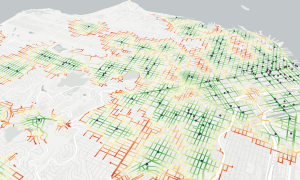











Choosing the right location is a key decision in retail expansion. Often, the busiest places are not always the most obvious. To support more confident retail site selection, this article ranks Netherlands’s top footfall spots using Targomo’s 2025 foot traffic data.
The analysis is split into three top 10 rankings. First, we identify the busiest street-level locations in Netherlands, with the highest average daily pedestrian flows. Second, we look specifically at tourist footfall, highlighting the places with the highest tourist flow. For both of these rankings, each figure refers to the busiest measured point in a small area, such as a street segment, square or intersection within roughly a 20-metre radius. The mall ranking uses a different metric: total average daily visitors across each shopping centre.
Terminology note: In this article, footfall refers to estimated pedestrian activity in a specific street segment. In Dutch, commonly used terms include voetgangersstroom and voetgangersverkeer. Visitors refers to people who spend at least 5 minutes in a specific place. In Dutch, commonly used terms include bezoekers, aantal bezoekers, and bezoekersaantallen.
Jump to:
Top 10 Footfall Spots in Netherlands by Daily Pedestrian Traffic
Amsterdam leads the Netherlands in footfall, with Damrak recording more than 43,000 pedestrians daily, while the remaining top locations are spread across a diverse range of cities including The Hague, Utrecht, Rotterdam, Maastricht, and Groningen. Notably, several locations — including Lijnbaan in Rotterdam, Heiligeweg in Amsterdam, and Grote Staat in Maastricht — record broadly similar counts of around 26,000, suggesting a competitive middle tier of high-street destinations rather than a steep drop-off from the top. For expansion teams, this ranking pinpoints the specific streets and junctions — such as the Voldersgracht crossing on Grote Marktstraat or the Demer intersection on Marktstraat in Eindhoven — where pedestrian density is actually highest, allowing site decisions to be made at block level rather than city level.
| City | Place | Daily Footfall |
|---|---|---|
| Amsterdam | Damrak | 43,400 |
| The Hague (Den Haag) | Grote Marktstraat | 30,490 |
| Utrecht | Lange Elisabethstraat | 26,410 |
| Rotterdam | Lijnbaan | 25,960 |
| Amsterdam | Heiligeweg | 25,910 |
| Maastricht | Grote Staat | 25,810 |
| Groningen | Guldenstraat | 22,270 |
| Eindhoven | Marktstraat | 22,020 |
| Arnhem | Vijzelstraat | 17,200 |
| Breda | Eindstraat | 17,150 |
1. Damrak, Amsterdam: 43,400 Daily Footfall
Damrak is Amsterdam’s main thoroughfare running from Central Station south towards Dam Square, lined with hotels, exchange offices, and souvenir shops that draw a constant flow of pedestrians throughout the day. The peak footfall zone sits at the intersection with Oudebrugsteeg, just north of the Beurs van Berlage — the city’s former stock exchange — where Damrak and Nieuwendijk converge and foot traffic from multiple directions meets. Parallel to the busy Nieuwendijk shopping street and within easy reach of the Red Light District, this stretch acts as a natural funnel for people moving through the heart of the city centre. With more than 43,000 pedestrians recorded here, Damrak comfortably leads the Netherlands in our footfall data.

2. Grote Marktstraat, The Hague (Den Haag): 30,490 Daily Footfall
Grote Marktstraat is The Hague’s main pedestrian shopping street, running through the heart of the city centre and connecting a dense cluster of high-street retailers, department stores, and eateries. The busiest point sits at the crossroads with Voldersgracht and the entrance to the Passage — the city’s elegant 19th-century covered arcade — where foot traffic from multiple routes converges at once. Nearby anchors include De Bijenkorf, HEMA, and the Spuimarkt area, all of which draw a steady stream of shoppers throughout the day. With around 30,000 pedestrians recorded at this junction, Grote Marktstraat ranks among the most commercially active stretches in the Netherlands.

3. Lange Elisabethstraat, Utrecht: 26,410 Daily Footfall
Lange Elisabethstraat is a compact but well-trafficked pedestrian street in the heart of Utrecht’s city centre, linking the area around Vredenburg to the Steenweg and Bakkerstraat retail corridors. The busiest point sits where the street meets Voor Clarenburg and Achter Clarenburg, forming a natural crossing point between the shopping core and the historic Mariaplaats neighbourhood. Nearby retailers including HEMA, Rituals, and a string of independent shops keep foot traffic steady throughout the day. With around 26,000 pedestrians recorded at this junction, the street punches well above its modest length in terms of commercial footfall.

4. Lijnbaan, Rotterdam: 25,960 Daily Footfall
Lijnbaan is Rotterdam’s best-known pedestrian shopping street, running through the city centre as one of Europe’s first purpose-built car-free retail strips. The peak footfall point sits at the crossing with Van Oldenbarneveltplaats, where Lijnbaan intersects with the east–west flow of pedestrians heading towards the Beurstraverse — the city’s covered shopping arcade — and De Bijenkorf department store. Retailers such as JD Sports, Stradivarius, and Bershka line the stretch on either side of this junction, keeping foot traffic high throughout the day. With around 26,000 pedestrians recorded here, Lijnbaan remains the commercial backbone of Rotterdam’s city centre.

5. Heiligeweg, Amsterdam: 25,910 Daily Footfall
Heiligeweg is a short but well-connected pedestrian shopping street in central Amsterdam, running between the busy Kalverstraat retail corridor and the Singel canal near Koningsplein. The peak footfall point falls at the western end of the street where it meets the Singel and Koningsplein, a crossing point that pulls in pedestrians from Kalverstraat, the Flower Market (Bloemenmarkt), and Reguliersdwarsstraat all at once. Retailers such as Uniqlo and the Kalverpassage shopping arcade sit within easy reach, helping to sustain a steady flow of people throughout the day. With around 26,000 pedestrians recorded at this junction, Heiligeweg draws a substantial share of foot traffic from one of Amsterdam’s most commercially dense neighbourhoods.

6. Grote Staat, Maastricht: 25,810 Daily Footfall
Grote Staat is Maastricht’s principal pedestrian shopping street, connecting the city’s historic core with a dense run of high-street retailers that includes Zara, C&A, The Body Shop, and Mango. The busiest stretch sits roughly mid-street, where Sporenstraat intersects from the south and foot traffic from Vrijthof square and the Hellige Geest area converges into a single corridor. De Bijenkorf anchors the eastern end of the street, drawing additional pedestrians through from Vijfharingenstraat and beyond. With around 26,000 pedestrians recorded along this stretch, Grote Staat serves as the commercial spine of Maastricht’s city centre.

7. Guldenstraat, Groningen: 22,270 Daily Footfall
Guldenstraat is a short pedestrian connector in the heart of Groningen’s shopping core, linking the Grote Markt square to the busy Vismarkt and Pelsterstraat retail corridors. The peak concentration of foot traffic falls at the junction with Waagstraat and Herestraat — a crossing point where several of the city centre’s main pedestrian routes meet simultaneously. Retailers including TK Maxx, Rituals, and FEBO sit close to this spot, while Starbucks and Swarovski mark the eastern side of the intersection. With around 22,000 pedestrians recorded here, this compact crossroads punches well above its size as a focal point for the city’s commercial activity.

8. Marktstraat, Eindhoven: 22,020 Daily Footfall
Marktstraat is Eindhoven’s main pedestrian shopping street, running through the city centre and connecting the Markt square to the Heuvel Galerie shopping mall. The busiest point falls at the crossing where Demer meets Marktstraat, just in front of retailers such as WE and Pijnenburg Juweliers, where foot traffic from Nieuwe Emmasingel and the broader city centre converges. Jan van Hooffstraat and Rechtestraat feed additional pedestrians into the area from the south, reinforcing the junction’s role as a central node for the city’s commercial core. With around 22,000 pedestrians recorded at this crossing, Marktstraat remains the primary retail artery in Eindhoven.

9. Vijzelstraat, Arnhem: 17,200 Daily Footfall
Vijzelstraat is a busy pedestrian shopping street in the heart of Arnhem’s city centre, running between Jansplaats and the Marienburgstraat junction where it meets Ketelstraat and Bakkerstraat. The hottest spot falls precisely at this crossroads, where foot traffic from Grote Oord, Ketelstraat, and the broader retail core converges in a single busy node — with retailers such as Primark, H&M, Swarovski, and Hunkemöller all within a few metres. The Iris Galerie shopping arcade and nearby JD Sports pull additional pedestrians into the area throughout the day. With around 17,000 pedestrians recorded at this junction, Vijzelstraat sits at the commercial heart of Arnhem’s city centre.

10. Eindstraat, Breda: 17,150 Daily Footfall
Eindstraat is Breda’s main pedestrian shopping street, running through the city centre and connecting the Grote Markt to the Ginnekenstraat and Houtmarkt area. The busiest point falls at the crossing with Karnemelkstraat, where foot traffic from Nieuwstraat to the north and Ginnekenstraat to the south converges into a single busy corridor, with retailers such as Rituals, Superdry, and McDonald’s all within a few metres. Halstraat and Houtmarkt feed additional pedestrians into the area from the east, reinforcing the junction’s role as the central node of Breda’s retail core. With around 17,000 pedestrians recorded at this crossing, Eindstraat draws a steady flow of people through the heart of the city throughout the day.

Top 10 Tourist Hotspots by Foot Traffic in Netherlands
These locations rank by tourist footfall — pedestrians who live more than 50 kilometres away. Only places where tourists account for at least 70% of total footfall are included, to surface destinations with a genuinely tourist-driven pedestrian profile.
Amsterdam accounts for three of the top five locations, with Damrak alone recording over 32,000 tourist pedestrians daily — a concentration that reflects how tightly international visitor flows remain anchored to the city’s historic core. Beyond Amsterdam, the ranking reveals strong tourist footfall in smaller leisure destinations like Valkenburg, Renesse, and De Koog on Texel, where a single street can capture almost the entire flow of visitors passing through an area. For expansion teams, the ranking offers a practical shortlist of the streets in the Netherlands where pedestrian demand is most reliably driven by leisure rather than local habit — making it a useful starting point for assessing where tourist-oriented retail and hospitality concepts are most likely to find a ready audience.
| City | Place | Daily Footfall | Daily Tourist Footfall |
|---|---|---|---|
| Amsterdam | Damrak | 43,400 | 32,030 |
| Amsterdam | Heiligeweg | 20,450 | 14,380 |
| The Hague (Den Haag) | Scheveningen Boulevard (Strandweg) | 10,630 | 7,530 |
| Valkenburg | Muntstraat | 6,840 | 5,620 |
| Amsterdam | Prinsengracht | 7,400 | 5,330 |
| Zaanse Schans | Kalverringdijk, Zaanse Schans | 5,720 | 5,030 |
| Renesse | Hogezoom, Renesse | 4,990 | 4,390 |
| De Koog, Texel | Dorpsstraat, De Koog | 4,020 | 3,810 |
| Middelburg | Langeviele, Middelburg | 4,170 | 3,180 |
| Den Burg, Texel | Stenenplaats, Den Burg | 4,280 | 3,080 |
1. Damrak, Amsterdam: 32,030 Daily Tourists
Already covered in our overall footfall ranking, Damrak earns its place here too — with more than 32,000 of its daily pedestrians classified as tourists, the stretch between Central Station and the Beurs van Berlage is as much a sightseeing corridor as it is a shopping street.
2. Heiligeweg, Amsterdam: 14,380 Daily Tourists
Already featured in our overall ranking, Heiligeweg pulls in around 14,000 tourist pedestrians daily — drawn by the Bloemenmarkt on the Singel, the nearby Kalverstraat shopping corridor, and the canal-side atmosphere around Koningsplein.

3. Scheveningen Boulevard (Strandweg), The Hague: 7,530 Daily Tourists
Scheveningen is The Hague’s seaside district, and the busiest point on its seafront promenade falls at the Pierplein junction — where Strandweg crosses the access routes from the beach, and the Scheveningen Pier meets the boulevard. Beach clubs, restaurants, the Palace Promenade Shopping centre, and the nearby Kurhaus hotel keep the area lively across the seasons. With around 7,500 tourist pedestrians recorded daily, the data reflects just how strongly the North Sea coast draws people away from the city centre and out to the waterfront.

4. Muntstraat, Valkenburg: 5,620 Daily Tourists
Muntstraat is the main pedestrian shopping street running through the heart of Valkenburg aan de Geul, a small town in South Limburg that draws a remarkably high share of tourist footfall for its size. The peak concentration of people falls mid-street near De Munt, where Muntstraat connects westward to Grendelplein and eastward towards Grotestraat Centrum — a natural corridor lined with restaurants, souvenir shops, and café terraces. Kasteel Valkenburg, the ruined hilltop castle visible from the town centre, is one of the main draws pulling people through this stretch. With around 5,600 tourist pedestrians recorded daily, Muntstraat punches well above its modest scale as a leisure destination.

5. Prinsengracht, Amsterdam: 5,330 Daily Tourists
Prinsengracht is one of Amsterdam’s most celebrated canal streets, and the peak footfall point sits just north of the Anne Frank House — where Leliegracht crosses the canal at Grote Brouwerssluis, forming a natural pause point for people moving along the waterfront. The Anne Frank House is the primary draw here, consistently ranking among the most visited cultural sites in the Netherlands, and the surrounding Jordaan neighbourhood adds further appeal with its independent shops, brown cafés, and canal views. With tourists accounting for the majority of the around 5,300 daily pedestrians recorded at this stretch, the data reflects how strongly a single cultural landmark can shape foot traffic patterns along an entire canal-side corridor.

6. Kalverringdijk, Zaanse Schans, Zaanse Schans: 5,030 Daily Tourists
Kalverringdijk is the main path running through Zaanse Schans, the open-air heritage site just north of Amsterdam where preserved windmills, wooden houses, and traditional craft workshops line the banks of the River Zaan. The busiest stretch sits along the dike between De Gekroonde Poelenburg windmill to the north and the Blik Op Cacao and Experience Henri Willig attractions to the south — a section that captures the full flow of people moving between the site’s main draws. The Zaanse Schans is one of the most photographed landscapes in the Netherlands, and with tourists accounting for the vast majority of the around 5,700 daily pedestrians recorded here, the data reflects how completely the site is shaped by leisure rather than local traffic.

7. Hogezoom, Renesse, Renesse: 4,390 Daily Tourists
Hogezoom is the main leisure strip running through the centre of Renesse, a small seaside village on the Zeeland island of Schouwen-Duiveland that draws a disproportionately large number of day-trippers and holidaymakers each summer. The busiest stretch falls mid-street around the junction with Wilhelminaweg, where café terraces, beach shops, and eateries such as Davila’s Kitchen & Bar and Eetcafe Anders line both sides of the road. Renesse has long been popular with Dutch beachgoers heading for the nearby North Sea coast, and Hogezoom functions as the natural gathering point before and after time on the sand. With around 4,400 tourist pedestrians recorded here daily, the footfall data captures just how completely this otherwise quiet village is shaped by leisure traffic.

8. Dorpsstraat, De Koog, De Koog, Texel: 3,810 Daily Tourists
De Koog is the main resort village on the island of Texel, and the busiest stretch of its central Dorpsstraat falls around the Dorpsplein square — where Sportshop Texel, La Cascade, and a cluster of café terraces draw people off the street and into the heart of the village. Texel is the largest of the Dutch Wadden Islands and one of the country’s most popular coastal getaways, pulling in beachgoers, cyclists, and nature lovers throughout the warmer months. With the North Sea beaches just a short walk to the west and the island’s dune landscape and nature reserves drawing people out of their holiday parks and campsites, Dorpsstraat functions as the natural gathering point for those passing through. Around 3,800 of the street’s daily pedestrians are here for leisure rather than errands, underlining just how thoroughly De Koog’s footfall is shaped by the rhythms of island tourism.

9. Langeviele, Middelburg, Middelburg: 3,180 Daily Tourists
Langeviele is the main pedestrian shopping street running through the heart of Middelburg, the historic capital of the Zeeland province, and the busiest point sits mid-street near the junction with Lange Geere — where the retail corridor narrows and foot traffic from the surrounding streets converges. The area draws people exploring Middelburg’s remarkably well-preserved medieval centre, with the Abbey Tower (Lange Jan) and the ornate Town Hall (Stadhuis) just a short walk away. Boutiques, gift shops, and cafés line both sides of the street, catering to the many people who make their way into the city centre from the surrounding coastal resorts and campsites of Zeeland. With around 3,200 of its daily pedestrians here for leisure rather than everyday errands, Langeviele reflects how strongly Middelburg’s historic character pulls people into its compact city centre.

Rank 10: Stenenplaats, Den Burg, Den Burg, Texel: 3,080 Daily Tourists
Stenenplaats is the central square at the heart of Den Burg, the main town on the island of Texel, where Weverstraat, Hogerstraat, and Binnenburg converge into a compact but well-trafficked crossing point lined with shops, cafés, and local businesses including Etos and Mantje Texel. Den Burg serves as the everyday hub for the island’s residents but also pulls in a steady stream of people exploring Texel by bike or on foot, particularly those making their way between the ferry terminal and the island’s beaches, nature reserves, and dune landscapes. With around 3,100 of its daily pedestrians here for leisure rather than routine errands, the square reflects how the rhythms of island life and low-key coastal tourism quietly overlap at the centre of Texel’s largest settlement.

Top 10 Shopping Malls in Netherlands by Daily Visitors
Rotterdam places two malls in the top four, with Zuidplein and Alexandrium Shopping Centre together underlining the city’s outsized weight in Dutch retail traffic. Outside the major cities, cross-border destinations such as Designer Outlet Roermond and suburban centres like Winkelcentrum Vier Meren in Hoofddorp demonstrate that high visitor volumes are not limited to urban cores. For expansion teams, ranking malls by measured daily visitors rather than floor area or location prestige reveals where genuine footfall exists, helping prioritise markets such as Rotterdam or identify underestimated catchments like Nieuwegein and Breda.
Note: Hoog Catharijne The Mall was excluded from the list because it is integrated within the main train station. As a result, our data cannot reliably distinguish mall visitors from regular train station visitors.
| City | Mall | Daily Visitors |
|---|---|---|
| Roermond | Designer Outlet Roermond | 38,660 |
| Leidschendam | Westfield Mall of the Netherlands | 35,890 |
| Rotterdam | Zuidplein | 32,770 |
| Rotterdam | Alexandrium Shopping Center | 26,170 |
| Amsterdam | Amsterdamse Poort | 22,760 |
| The Hague (Den Haag) | Spuimarkt | 19,440 |
| Hoofddorp | Winkelcentrum Vier Meren | 18,380 |
| Nieuwegein | Cityplaza | 17,470 |
| Breda | De Barones | 15,130 |
| Utrecht | Woonboulevard Utrecht | 14,830 |
1. Designer Outlet Roermond, Roermond: 38,660 Daily Visitors
Designer Outlet Roermond is the busiest shopping destination in the Netherlands, drawing tens of thousands of visitors daily. The outlet centre occupies a distinctive mock-medieval village setting on the edge of Roermond, housing hundreds of international brand stores. Its cross-border appeal brings a large share of visitors from Germany and Belgium, making it one of the most visited outlet centres in Europe.

2. Westfield Mall of the Netherlands, Leidschendam: 35,890 Daily Visitors
Westfield Mall of the Netherlands is the largest shopping centre in the Netherlands, covering a total retail floor area of more than 117,000 m². It opened in March 2021 after a major redevelopment of the former Leidsenhage centre, which had stood on the site since 1971. The busiest activity is concentrated around the central retail areas, drawing around 35,000 visitors daily.

3. Zuidplein, Rotterdam: 32,770 Daily Visitors
Zuidplein is one of the busiest shopping centres in the Netherlands, drawing around 33,000 visitors daily. Located in the south of Rotterdam, it serves as a major retail and transit hub for the surrounding neighbourhoods. The heaviest visitor concentration clusters around the main entrance and central atrium area.

Rank 4: Alexandrium Shopping Center, Rotterdam: 26,170 Daily Visitors
Alexandrium Shopping Centre sits in the east of Rotterdam, drawing more than 26,000 visitors on a typical day. The busiest activity clusters around the main entrances along Grote Beer, reflecting its role as one of the Netherlands’ most visited retail destinations. It ranks fourth nationally, cementing its status as a major commercial hub for the wider Rotterdam region.

5. Amsterdamse Poort, Amsterdam: 22,760 Daily Visitors
Amsterdamse Poort is a large urban shopping centre in the Amsterdam Zuidoost district, serving one of the city’s most densely populated neighbourhoods. It draws around 22,000 visitors daily, making it one of the busiest retail destinations in the Netherlands. The heaviest concentration of visitors clusters around the central Bijlmerplein area, reflecting its role as a key community hub for the Bijlmer.

6. Spuimarkt, The Hague: 19,440 Daily Visitors
Spuimarkt is a city-centre shopping complex located on the Spui in The Hague (Den Haag), drawing around 19,000 visitors daily. The heatmap shows the busiest activity concentrated around the main Spui entrance, reflecting its role as a key retail destination in the heart of the city. It ranks sixth among shopping centres in the Netherlands.

7. Winkelcentrum Vier Meren, Hoofddorp: 18,380 Daily Visitors
Winkelcentrum Vier Meren is a large regional shopping centre in Hoofddorp, serving the Haarlemmermeer area just west of Amsterdam. It attracts around 18,000 visitors daily, making it one of the busiest retail destinations in the Netherlands. The busiest activity clusters around the central Polderplein area at the heart of the complex.

8. Cityplaza, Nieuwegein: 17,470 Daily Visitors
Cityplaza is a large covered shopping centre located in the heart of Nieuwegein, a modern city just south of Utrecht. It draws around 17,000 visitors daily, making it one of the busiest retail destinations in the Netherlands. The busiest activity clusters near the central areas of the mall, reflecting its broad mix of fashion, sports, and everyday retail.

9. De Barones, Breda: 15,130 Daily Visitors
De Barones is a city-centre shopping mall located on Nieuweweg in the heart of Breda. It draws around 15,000 visitors daily, making it one of the busiest retail destinations in the Netherlands. The heatmap shows the highest concentration of visitor activity clustered around the main entrance on Nieuweweg.

10. Woonboulevard Utrecht, Utrecht: 14,830 Daily Visitors
Woonboulevard Utrecht is a large out-of-town retail park in Utrecht specialising in home furnishings, interior design, and DIY goods. It attracts more than 14,000 visitors daily, making it one of the busiest retail destinations of its kind in the Netherlands. The heatmap shows the highest concentration of visitors around the main entrance area along Hollantlaan.

Terminology note: In this article, footfall refers to estimated pedestrian activity in a specific street segment. In Dutch, commonly used terms include voetgangersstroom and voetgangersverkeer. Visitors refers to people who spend at least 5 minutes in a specific place. In Dutch, commonly used terms include bezoekers, aantal bezoekers, and bezoekersaantallen.
Use Footfall Data for Smarter Retail Site Selection
Footfall data is a powerful starting point for retail expansion. It shows where people move, which streets attract the highest pedestrian flows, and how shopping centres compare by daily visitors. But the busiest location is not always the best location for every concept. A strong site decision also depends on catchments, accessibility, local demographics, competitors and complementary POIs, and visitor behaviour.
With TargomoLOOP, expansion teams can view footfall data in context and compare locations more confidently. For teams that want to integrate location intelligence into their own systems, TargomoAPI provides access to our geospatial data and analysis capabilities.
Whether you are opening a first store in the Netherlands or optimising an existing network, combining retail expansion strategy with granular Netherlands footfall data reduces guesswork. Our foot traffic and tourist datasets help teams compare streets, districts, and malls, so every site decision is grounded in measured demand.
Ready to explore better locations with Targomo’s Footfall Data?
Book a demo to see how TargomoLOOP can support retail site selection, market entry and network expansion.
You May Also Be Interested in