







Retail site selection has always relied on experience, local market knowledge and commercial judgement. Expansion managers often know when a street, district, or property feels promising, and leadership teams need to understand whether that opportunity is worth the investment.
A strong retail location depends on more than one visible signal. Footfall, catchment potential, customer fit, competition, surrounding points of interest, and network impact all influence whether a site can perform.
TargomoLOOP helps retail teams bring these factors together in one platform: evaluate store locations, compare alternatives, understand network impact, and turn location analysis into clear recommendations for stakeholders.
For expansion managers, this supports faster and more consistent site evaluation. For leadership, it creates a clearer basis for deciding where expansion should happen next.
What Is Retail Site Selection?
Retail site selection is the process of identifying, analysing, and choosing store locations based on customer demand, accessibility, competition, catchment potential, expected performance, and network fit.
For expansion decision-makers, retail site selection usually means answering several questions at once:
- Can potential customers reach the site?
- Does the area match the retail concept of the business?
- What does the surrounding market look like?
- How strong is the competition nearby?
- How will the new store impact the whole network?
- How does this site compare with other options available?
Modern retail site selection brings these questions into one structured evaluation. It helps teams move from individual impressions to a clearer view of site potential.
Why Retail Location Decisions Are Complex
Retail location decisions are shaped by external factors as much as internal expansion plans. Property availability, timing, local market dynamics, and competitor activity all influence which sites are realistic options.
Beyond evaluating individual sites, retail teams need to identify untapped expansion opportunities, assess the potential of the new openings, how they affect existing stores, and manage cannibalisation risks. TargomoLOOP supports these decisions through one holistic platform, helping retail teams assess locations more consistently and make stronger recommendations
Analyse the Right Catchment Layer
Catchment analysis shows the potential reach of a retail location. In TargomoLOOP, retail teams can look at different catchment layers depending on the store format, location type and customer behaviour.
The three layers are:
- Micro catchment: The immediate area around the site, including street-level demand, storefront visibility and nearby footfall. (E.g. convenience stores, kiosks, impulse-driven retail.)
- Local catchment: The surrounding neighbourhood, including residents, workers, visitors and daily routines. (E.g. supermarkets, pharmacies, neighbourhood retailers.)
- Macro catchment: The wider trade area, often shaped by driving time, public transport access or destination-led demand. (E.g. furniture stores, DIY retailers, large specialist stores.)
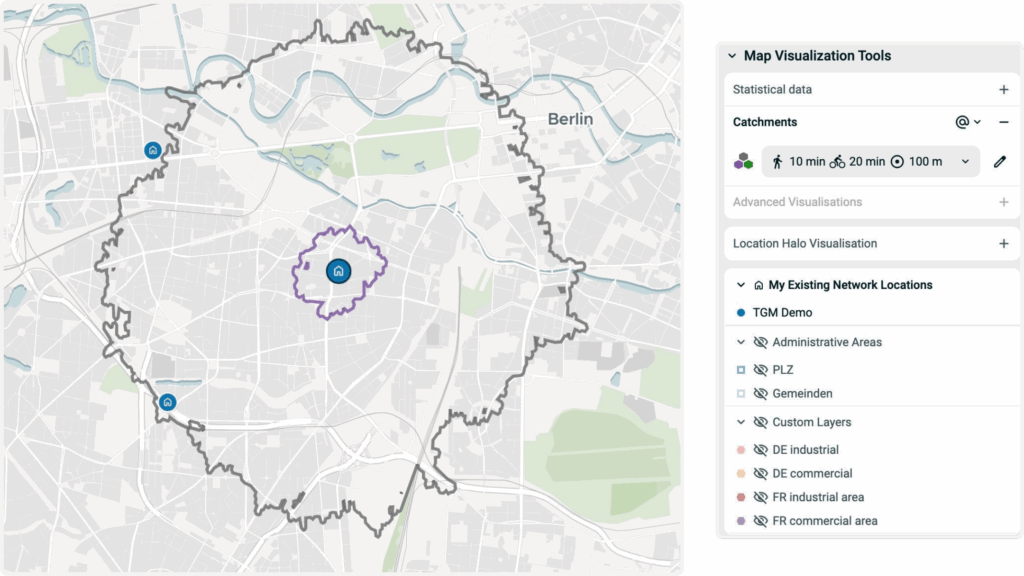
For retail site selection, these layers help teams assess locations according to how customers shop and how far they are willing to travel. The relevant catchment depends on the retail concept, and many formats benefit from analysing several layers together. Targomo explains the micro, local and macro catchment approach in more detail in its catchment area analysis guide.
Check Whether the Area Matches the Retail Concept
Strong retail locations need both visibility and the right customer potential. A street with high footfall can be attractive, but the surrounding demand still needs to match the concept. A convenience format, a premium fashion brand and a destination store will each depend on different customer patterns.
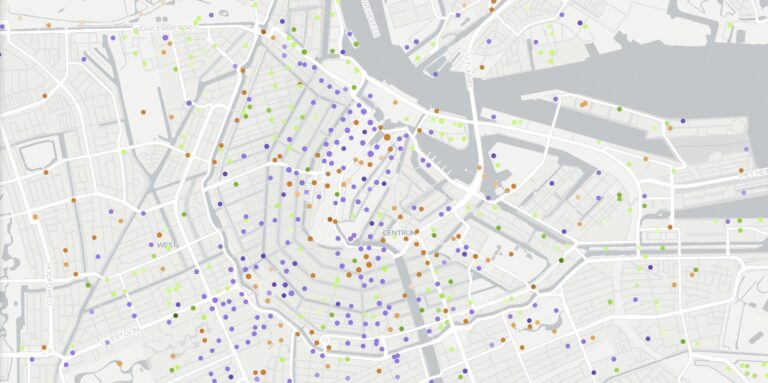
TargomoLOOP helps retail teams understand the local demand around a site by combining relevant location signals, such as:
- footfall and visitor flow
- socio-demographic characteristics
- tourism and visitor demand
- vehicle traffic
- public transport access
- nearby points of interest
- data tailored to your retail concept and specific requirements
The value lies in seeing these factors together. Expansion decision-makers can understand whether a location is busy, whether the right audience is nearby, and whether the area fits the store format. This makes site evaluation easier to compare across different streets, districts, or cities.
Understand Competitors and the Surrounding Retail Environment
A retail site is shaped by its surroundings. Competitors, complementary stores, offices, hotels, transport stops, parking, cafés, restaurants and shopping centres can all influence how attractive a location is. TargomoLOOP helps map these factors around a candidate site and understand the wider business environment before making a location decision.
Competition can signal different things. In one area, nearby competitors may show that the location already attracts the right shoppers. In another, the market may be crowded and offer limited room for another store. The same applies to complementary businesses. A store can benefit from nearby retailers, transit hubs, offices, or leisure destinations that bring relevant visitors into the area.
With TargomoLOOP, retail teams can understand whether a location is isolated, underserved, well-positioned, or already highly competitive.
Identify High-Potential Expansion Areas
Retail expansion decisions often start with understanding where the strongest opportunities lie.
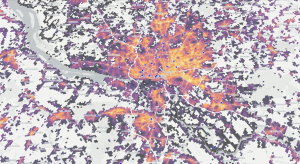
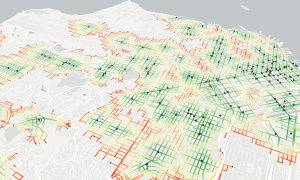
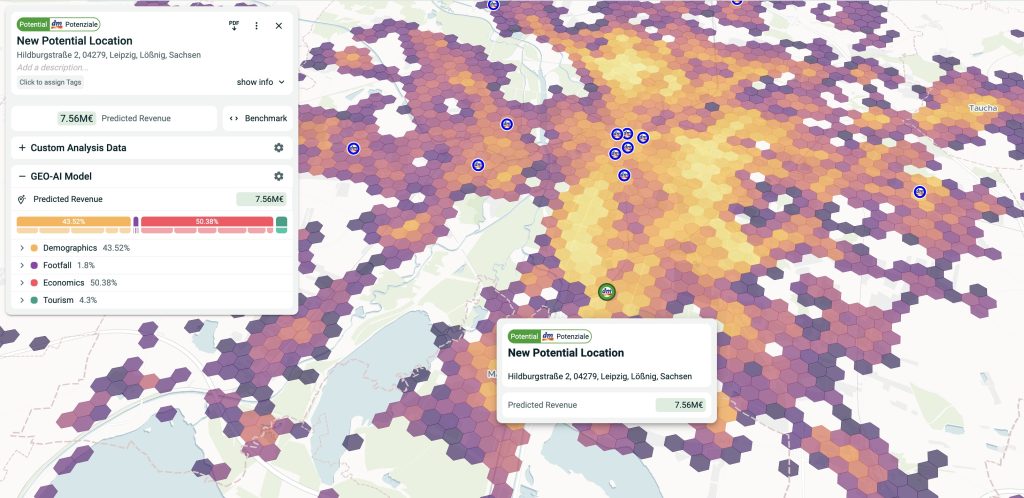
TargomoLOOP helps retailers identify high-potential expansion areas through heatmaps and white spot analysis. Heatmaps visualise patterns in demand and market potential, making it easier to spot underserved areas in seconds. White spot analysis can also be used to search larger markets for locations that meet specific criteria, taking existing network coverage and competition into account.
This helps retailers narrow down their search, prioritise promising districts or markets, and focus their expansion efforts where opportunities are strongest.
Compare Candidate Sites More Consistently
When evaluating potential retail locations, comparing them against existing stores or competitors provides valuable context. A candidate site may have stronger footfall, better accessibility, or a more suitable customer base than similar locations.
With TargomoLOOP’s benchmarking, retailers can compare potential sites with their existing network or competitor locations using consistent criteria. This helps identify strengths, potential risks, and opportunities for improvement.
Check Whether a New Store Strengthens the Network
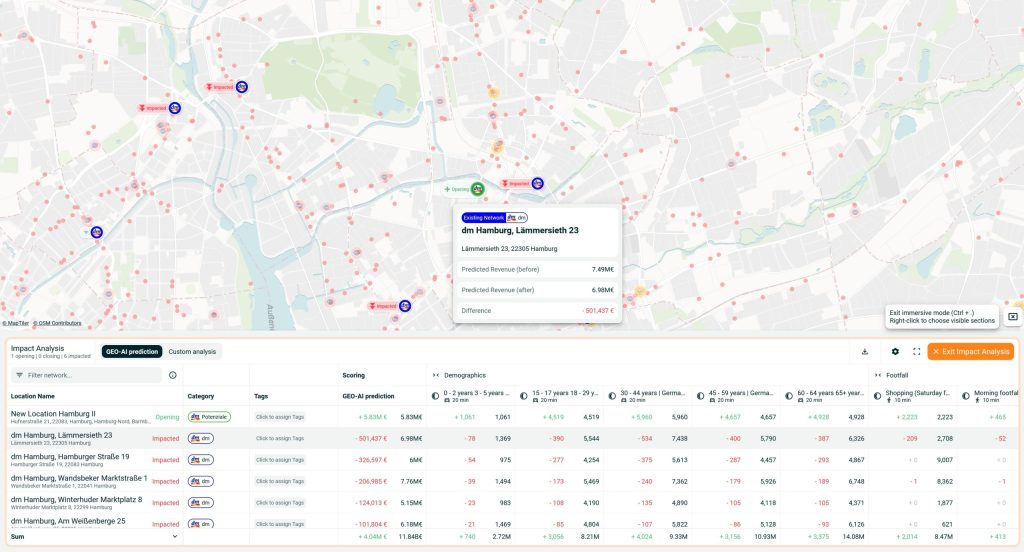
A promising new store can strengthen market coverage and reach additional customers, but it may also draw demand away from existing locations. Understanding this impact is particularly important for retailers with extensive store networks.
With TargomoLOOP’s Impact Analysis, retailers can assess how changes to their network may affect existing locations, identify potential cannibalisation risks, and evaluate different scenarios, such as:
- Opening a new store
- Relocating an existing location
- Closing an underperforming store
- Expanding into an already covered market
This helps retailers evaluate the wider impact of each decision and plan network growth and optimisation more strategically.
Add GeoAI Forecasts for Higher-Stakes Decisions
For some location decisions, site analysis needs an additional forecasting layer.
GeoAI adds performance predictions to the retail site selection process. It helps estimate what a site or scenario could achieve, using business-specific KPIs such as revenue, sales, or guest count.
This is especially useful when expansion teams need to compare several opportunities, prioritise markets or support investment decisions with a forecast.
GeoAI can help answer questions such as:
- What revenue, sales or guest count could this site generate?
- How does this candidate compare with other potential locations?
- What are the success drivers of a specific location?
- How could a new opening affect the wider network?
GeoAI adds predictive insight to the analytical work already done in TargomoLOOP. It helps to connect location context with expected business performance, supporting decisions that require stronger evidence and clearer prioritisation.
Turn Site Analysis into a Clear Recommendation
At the end of the site selection process, expansion managers need insights they can easily share with internal stakeholders. The analysis should be clear enough for real estate, expansion, operations, finance, and leadership teams to understand the recommendation and discuss the next step.
TargomoLOOP helps turn location analysis into exportable, stakeholder-ready reports, so teams can share key findings without rebuilding the business case manually.
Reports can be configured around the questions that matter most for the team, such as location potential, local demand, competitor context, network impact or more, also exportable as PowerPoint or PDF. This makes it easier to create consistent site evaluations while still adapting the output to different markets, formats or decision committees.
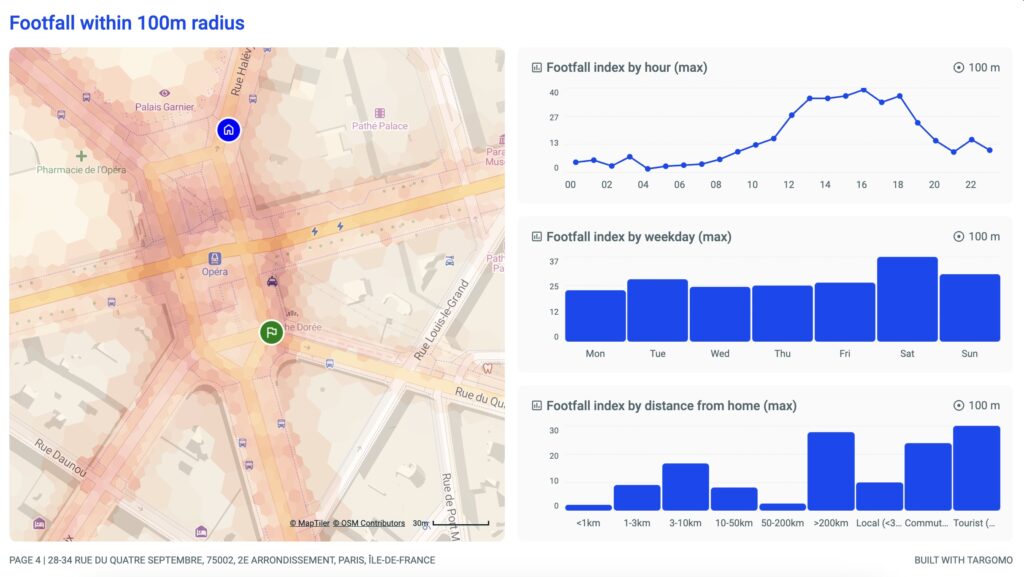
A good report should help stakeholders quickly understand why a site is attractive, what risks need to be considered and how it compares with other options.
Better Retail Site Selection Starts with a Clearer View of Each Location
Retail site selection will always involve experience, analytics, and local market knowledge. TargomoLOOP helps retail teams bring these inputs together and turn them into clearer location decisions.
From early market screening to candidate site evaluation, network impact analysis and stakeholder reporting, TargomoLOOP supports the full site selection workflow in one platform. For higher-stakes decisions, GeoAI adds performance forecasts to support prioritisation and investment planning.
The result is a clearer approach to retail site selection: one that helps expansion managers reduce risk, explain decisions and choose store locations with more confidence.
Ready to evaluate your next expansion opportunity?
Book a demo with our specialists straight away.
FAQ: Retail Site Selection
- What should retailers look for in retail site selection software?
Retail site selection software should support both individual location assessments and broader network planning. Key considerations include data quality, geographic coverage, customisable analysis, integration with existing business data, and clear reporting for investment decisions.
- What data is available in TargomoLOOP?
TargomoLOOP provides access to location data, including socio-demographics, footfall, car traffic, CASAFARI real estate data, points of interest and more. Retailers can also integrate their own store and performance data for more tailored analysis. Explore the available datasets on the Targomo Data page.
- Can TargomoLOOP support international retail expansion?
Yes. TargomoLOOP allows businesses to analyse locations and store networks across multiple cities and countries. Targomo provides datasets covering more than 30 countries, with availability varying by dataset and market.
- Can Targomo predict sales before a new retail store opens?
Yes. GeoAI, integrated into TargomoLOOP, uses a prediction model trained on the retailer’s business data and location factors to forecast revenue, sales or other relevant KPIs for potential stores. Learn more about GeoAI.
- Which retail brands trust Targomo?
Targomo works with brands including Smyths Toys, freenet, Neuroth, KIKO Milano, denns Biomarkt, Revolut and more.
- Does TargomoLOOP support industries beyond retail?
Yes. TargomoLOOP also supports restaurants, fitness and health, real estate marketplaces, and the public sector. Businesses and organisations use location intelligence to evaluate potential sites, analyse accessibility and demand, and optimise their location networks or infrastructure.
You May Also Be Interested in